Liu Xiaodan, He Sisi, Peng Wentao, Liao Ling, Li Danyao, Chen Jiaying
School of Civil Engineering, Guangxi University of Science and Technology, Liuzhou, 545006, China.
University Engineering Research Center of Digital and Intelligent Construction and Management, Guangxi, 545006, China.
Sci Rep. 2025 Jul 10;15(1):24819. doi: 10.1038/s41598-025-09859-2.
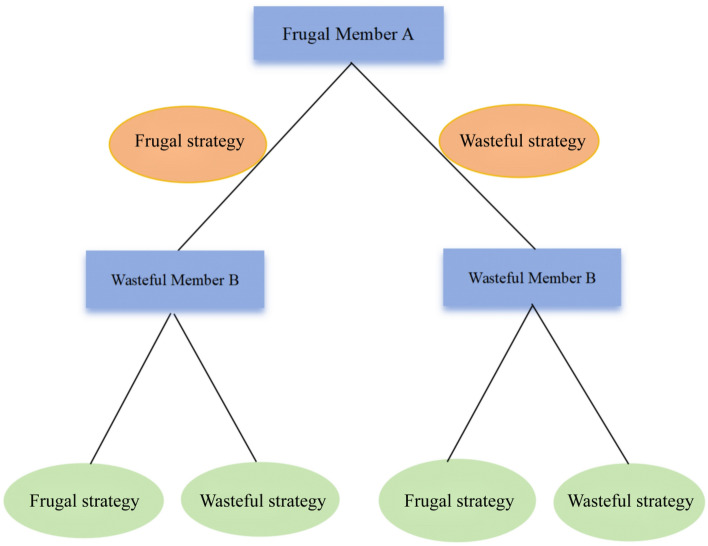
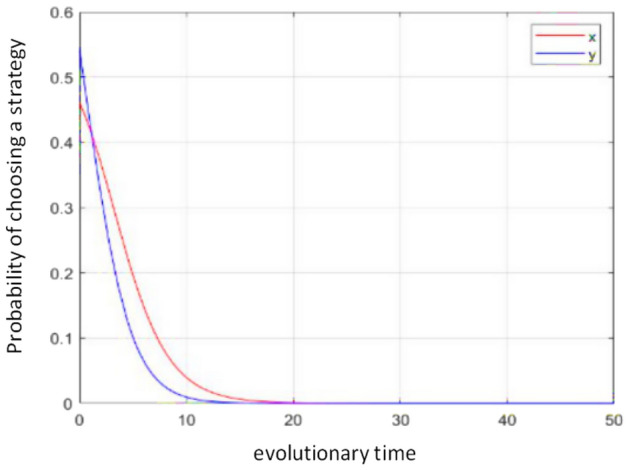
Guiding residents of shared living spaces to implement energy-saving behaviors can help improve building energy efficiency and promote the realization of the Carbon Peaking and Carbon Neutrality Goals. Since there are different subjects with different energy-use behaviors in shared living spaces, exploring how these heterogeneous subjects interact with each other is the key to guiding the energy-saving behaviors of residents in shared living spaces. Therefore, based on the evolutionary game theory, this study quantifies the utility of heterogeneous subjects under different combinations of strategies from five dimensions: social, environmental, economic and comfort needs, and effort, and constructs a mechanism model of the interaction and evolution of energy-use behaviors of heterogeneous subjects in shared living spaces. Subsequently, the student dormitory is taken as an example, data are obtained through questionnaires and matlab is used to analyze the interactive evolution process of heterogeneous subjects' energy-use behaviors, findings demonstrate that enhancing the likelihood of heterogeneous individuals adopting energy-saving strategies can be achieved through various means. When the time spent with roommates is 0-1 year, effective approaches encompass enhancing interpersonal relationships, diminishing comfort levels, heightening attention to energy-related concerns, escalating the cost associated with energy consumption, mitigating the effort required for habituating energy-use changes, bolstering perceived behavioral control, and augmenting perceived behavioral control. These efforts serve to render energy-use behaviors of heterogeneous subjects more efficacious. Furthermore, when the time spent with roommates is 1-2 years, adjustments such as judiciously reducing comfort levels or elevating the costs associated with energy consumption can be implemented. Finally, when the time spent with roommates is 2-3 years, interventions involve fostering collective consensus on energy conservation, diminishing comfort levels, or reinforcing individual norms.
引导共享居住空间的居民实施节能行为有助于提高建筑能源效率,促进碳达峰和碳中和目标的实现。由于共享居住空间中存在不同的主体,其能源使用行为各异,探索这些异质主体如何相互作用是引导共享居住空间居民节能行为的关键。因此,本研究基于演化博弈理论,从社会、环境、经济、舒适需求和努力五个维度量化不同策略组合下异质主体的效用,并构建共享居住空间异质主体能源使用行为的互动演化机制模型。随后,以学生宿舍为例,通过问卷调查获取数据,并用Matlab分析异质主体能源使用行为的互动演化过程,结果表明可以通过多种方式提高异质个体采用节能策略的可能性。当与室友相处时间为0 - 1年时,有效的方法包括加强人际关系、降低舒适度、提高对能源相关问题的关注度、提高能源消耗成本、减少适应能源使用变化所需的努力、增强感知行为控制。这些努力有助于使异质主体的能源使用行为更有效。此外,当与室友相处时间为1 - 2年时,可以进行适当降低舒适度或提高能源消耗成本等调整。最后,当与室友相处时间为2 - 3年时,干预措施包括促进节能方面的集体共识、降低舒适度或强化个人规范。