Šíchová Klára, Mallarino Barbara, Janečková Lucie, Palivec Petr, Vágnerová Magdaléna, Vejmola Čestmír, Nikolič Marek, Ladislavová Lucie, Mazochová Kristýna, Ryšánek Pavel, Šíma Martin, Šafanda Adam, Hiep Bui Quang, Koutrouli Isis Rita Anzel, Kuchař Martin, Páleníček Tomáš
Psychedelic Research Centre, National Institute of Mental Health, Topolová 748, Klecany 250 67, Czech Republic.
Forensic Laboratory of Biologically Active Substances, Department of Chemistry of Natural Compounds, University of Chemistry and Technology Prague, Technická 5, Prague 6 166 28, Czech Republic.
Int J Neuropsychopharmacol. 2025 Aug 1;28(8). doi: 10.1093/ijnp/pyaf041.
Hexahydrocannabinol (HHC) is a new psychoactive substance known for its mind-altering effects and temporary legal status. It is widely used in parts of the Europe and United Kingdom as a legal alternative to ∆9-tetrahydrocannabinol, yet little research has explored its effects and safety. This study examined how HHC is processed in the body, its toxicity, and its impact on behavior in male Wistar rats.
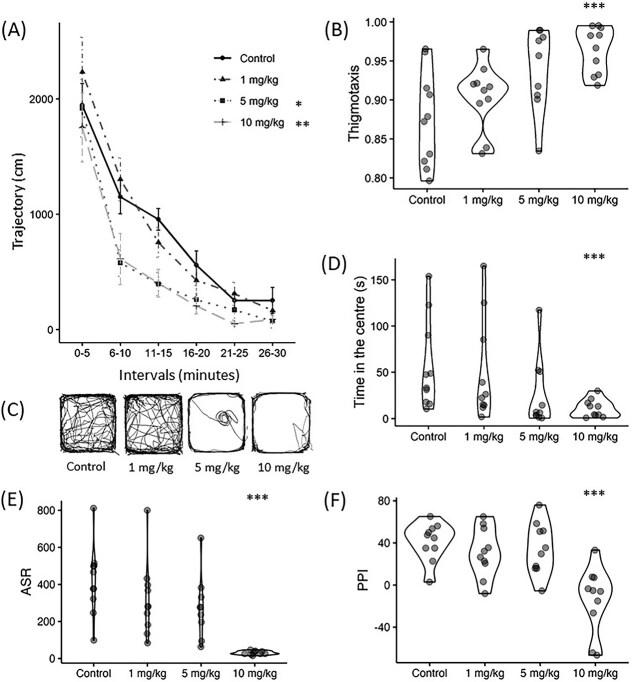
A 1:1 mixture of (9R)-HHC and (9S)-HHC was administered via intragastric gavage at doses of 1, 5, and 10 mg/kg. Behavioral effects were assessed using the open field test and the prepulse inhibition of acoustic startle response.
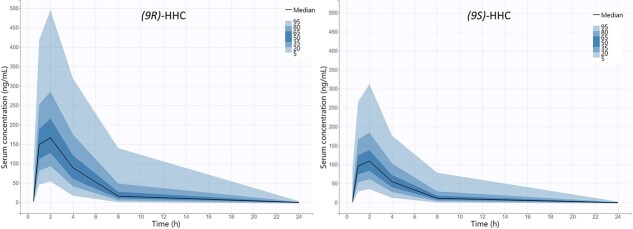
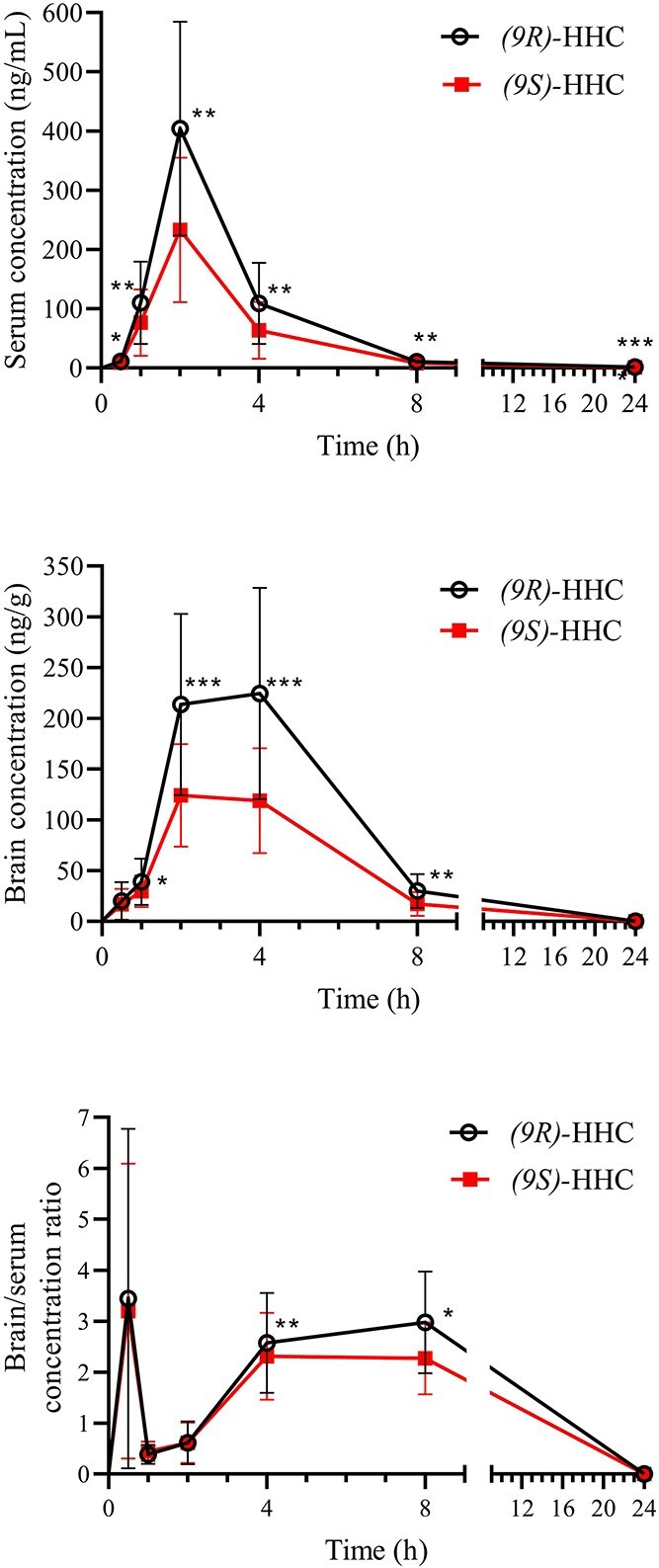
Two hours after the highest dose (10 mg/kg), peak concentrations of HHC were detected in blood and brain tissue. The Organization for Economic Co-operation and Development 423 toxicity test classified HHC as a Category 4 substance, estimating a lethal dose of 1000 mg/kg. Compared to controls (administered by sunflower oil), 10 mg/kg HHC reduced movement, increased anxiety, and impaired sensory processing.
Overall, HHC crosses the blood-brain barrier, exhibits mild toxicity, and induces behavioral effects similar to tetrahydrocannabinol. Its dose-dependent anxiogenic properties and impact on information processing highlight the importance of the appropriate dosing in any potential therapeutic use.
六氢大麻酚(HHC)是一种新型精神活性物质,以其改变意识的作用和暂时的合法地位而闻名。在欧洲部分地区和英国,它被广泛用作Δ9-四氢大麻酚的合法替代品,但很少有研究探讨其效果和安全性。本研究考察了HHC在雄性Wistar大鼠体内的代谢过程、毒性及其对行为的影响。
通过灌胃给予(9R)-HHC和(9S)-HHC的1:1混合物,剂量分别为1、5和10mg/kg。使用旷场试验和声惊吓反应的预脉冲抑制来评估行为效应。
在最高剂量(10mg/kg)给药两小时后,在血液和脑组织中检测到HHC的峰值浓度。经济合作与发展组织423毒性试验将HHC归类为4类物质,估计致死剂量为1000mg/kg。与对照组(给予葵花籽油)相比,10mg/kg的HHC减少了活动、增加了焦虑并损害了感觉处理能力。
总体而言,HHC可穿过血脑屏障,具有轻度毒性,并产生与四氢大麻酚相似的行为效应。其剂量依赖性的致焦虑特性以及对信息处理的影响凸显了在任何潜在治疗用途中适当给药的重要性。