Hu Cong, Li Heli, Cui Jinru, Li Yunjie, Zhang Feiyan, Li Hao, Luo Xiaoping, Hao Yan
Division of Child Healthcare, Department of Pediatrics, Tongji Hospital, Tongji Medical College, Huazhong University of Science and Technology, Wuhan, China.
Tongji Medical College, Huazhong University of Science and Technology, Wuhan, China.
Transl Psychiatry. 2025 Jul 11;15(1):239. doi: 10.1038/s41398-025-03452-x.
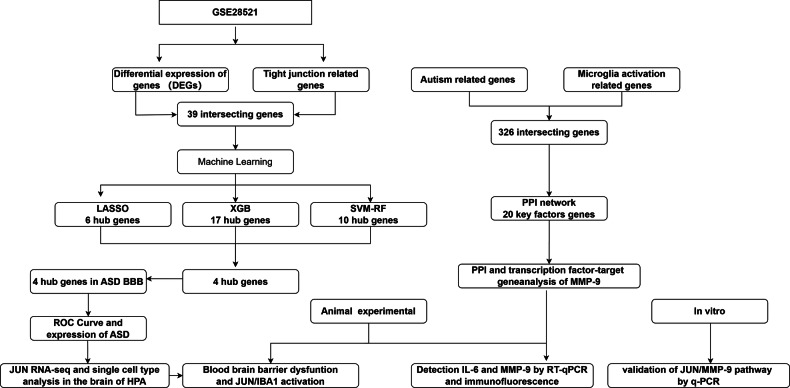
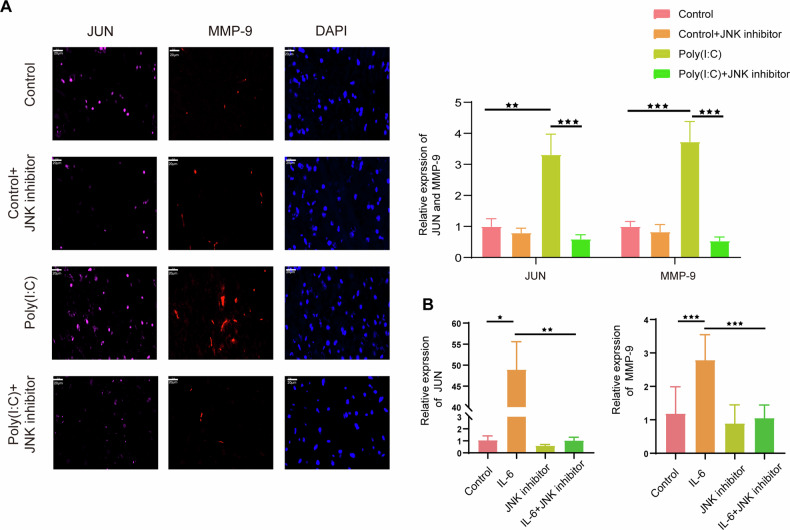
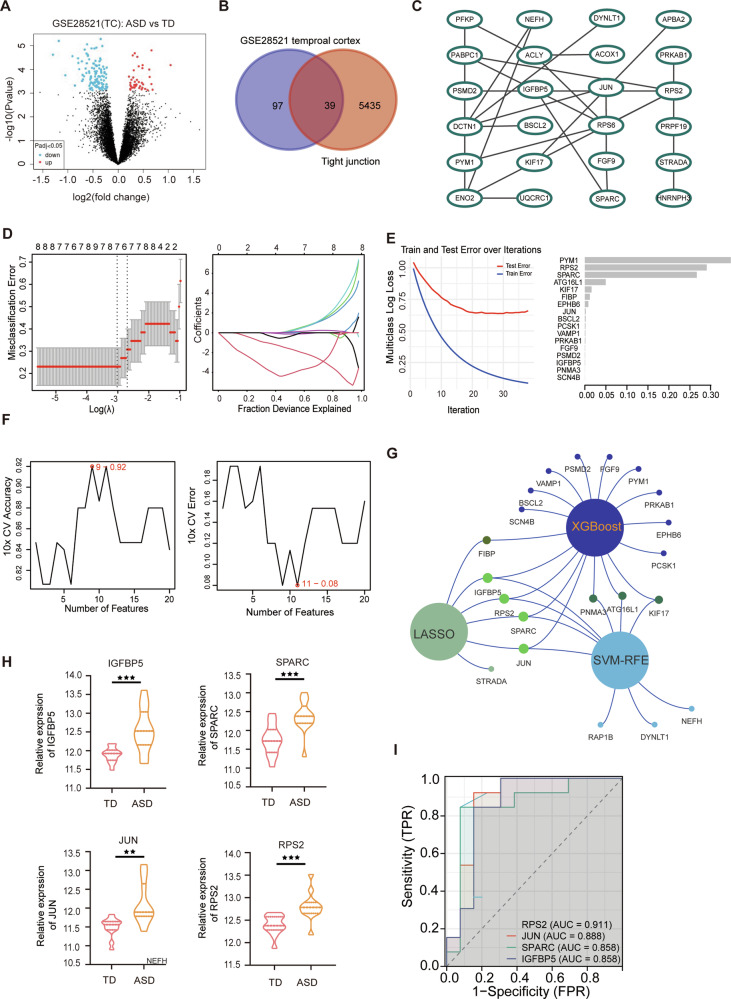
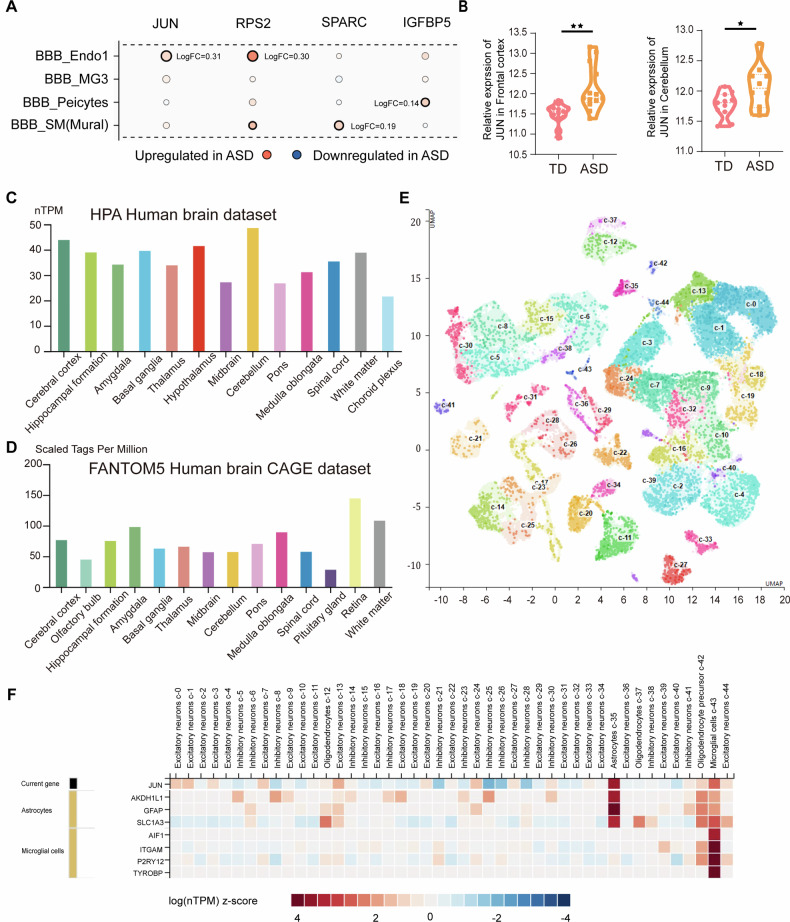
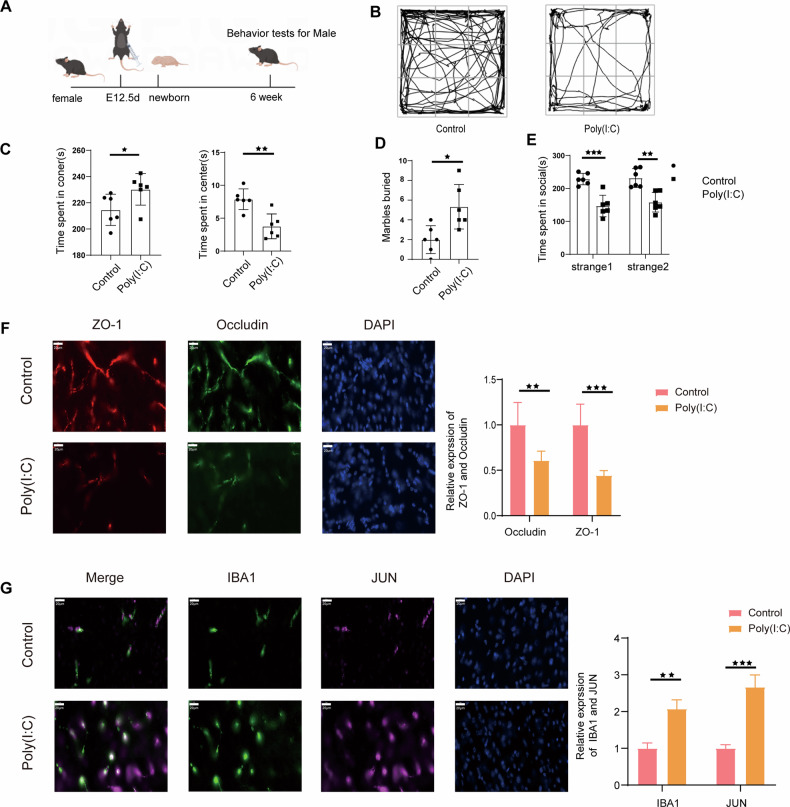
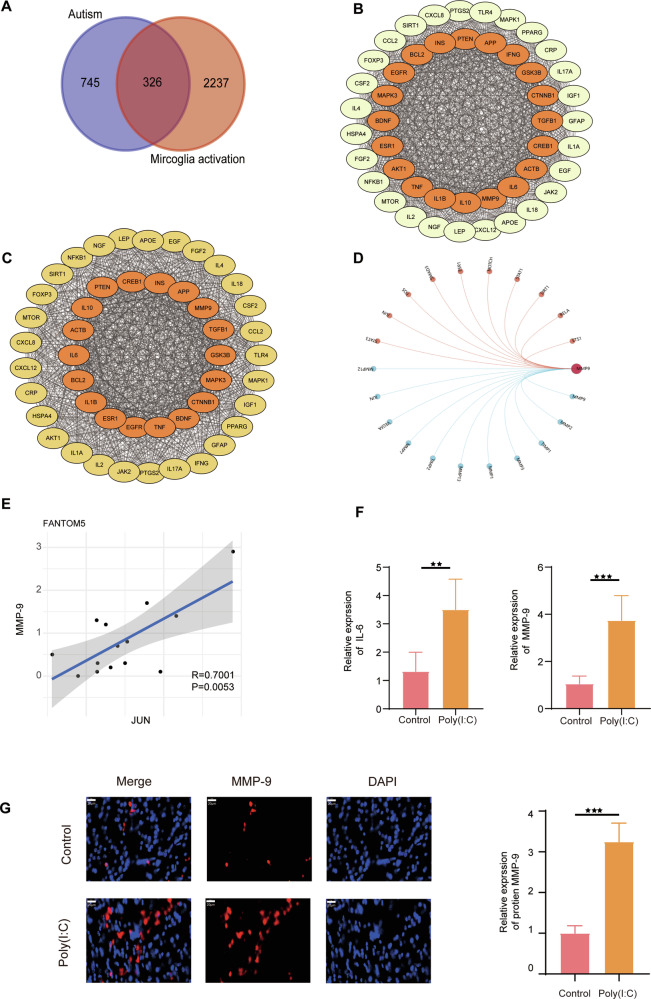
Autism Spectrum Disorder (ASD) is a complex neurodevelopmental condition characterized by social communication deficits and restricted, repetitive behaviors. Growing evidence implicates neuroinflammation-induced blood-brain barrier (BBB) dysfunction as a key pathogenic mechanism in ASD, although the underlying molecular pathways remain poorly understood. This study aimed to identify critical genes linking BBB function and neuroinflammatory activation, with the ultimate goal of evaluating potential therapeutic targets. Through integrative analysis combining differential gene expression profiling with three machine learning algorithms - Least Absolute Shrinkage and Selection Operator (LASSO) regression, Support Vector Machine Recursive Feature Elimination (SVM-RFE), and RandomForest combined with eXtreme Gradient Boosting (XGBoost) - we identified four hub genes, with JUN emerging as a core regulator. JUN demonstrated strong associations with both BBB integrity and microglial activation in ASD pathogenesis. Using a maternal immune activation (MIA) mouse model of ASD, we observed significant downregulation of cortical tight junction proteins ZO-1 and occludin, confirmed through immunofluorescence and qPCR analysis. Bioinformatics analysis revealed a close correlation between JUN and IL-6/MMP-9 signaling in ASD-associated microglial activation. These findings were validated in vivo, with immunofluorescence and qPCR demonstrating elevated IL-6 and MMP-9 expression in ASD mice. Pharmacological intervention using ventricular JNK inhibitor administration effectively downregulated JUN and MMP-9 expression. In vitro studies using IL-6-stimulated BV-2 microglial cells replicated these findings, showing JNK inhibitor-mediated suppression of JUN and MMP-9 upregulation. These results collectively identify the IL-6/JUN/MMP-9 pathway as a specific mediator of barrier dysfunction in ASD, representing a promising target for personalized therapeutic interventions.
自闭症谱系障碍(ASD)是一种复杂的神经发育疾病,其特征为社交沟通缺陷以及局限的重复行为。越来越多的证据表明,神经炎症诱导的血脑屏障(BBB)功能障碍是ASD的关键致病机制,尽管其潜在的分子途径仍知之甚少。本研究旨在确定连接BBB功能和神经炎症激活的关键基因,最终目标是评估潜在的治疗靶点。通过将差异基因表达谱分析与三种机器学习算法——最小绝对收缩和选择算子(LASSO)回归、支持向量机递归特征消除(SVM-RFE)以及结合极端梯度提升(XGBoost)的随机森林——相结合的综合分析,我们确定了四个枢纽基因,其中JUN成为核心调节因子。JUN在ASD发病机制中与BBB完整性和小胶质细胞激活均表现出强烈关联。使用ASD的母体免疫激活(MIA)小鼠模型,我们观察到皮质紧密连接蛋白ZO-1和闭合蛋白显著下调,这通过免疫荧光和qPCR分析得到证实。生物信息学分析揭示了JUN与ASD相关小胶质细胞激活中的IL-6/MMP-9信号之间存在密切相关性。这些发现在体内得到验证,免疫荧光和qPCR显示ASD小鼠中IL-6和MMP-9表达升高。通过脑室注射JNK抑制剂进行药物干预有效地下调了JUN和MMP-9的表达。使用IL-6刺激的BV-2小胶质细胞进行的体外研究重复了这些发现,表明JNK抑制剂介导了对JUN和MMP-9上调的抑制。这些结果共同确定IL-6/JUN/MMP-9途径是ASD中屏障功能障碍的特定介质,代表了个性化治疗干预的一个有前景的靶点。