Lee Jaewang, Seo Youngin, Roh Jong-Lyel
Department of Otorhinolaryngology-Head and Neck Surgery, CHA Bundang Medical Center, CHA University, Seongnam 13496, Republic of Korea.
Logsynk, Seoul 06153, Republic of Korea.
Int J Mol Sci. 2025 Jul 4;26(13):6452. doi: 10.3390/ijms26136452.
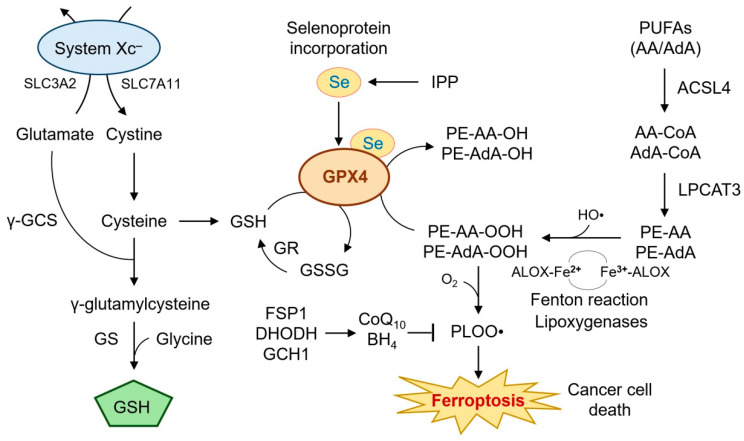
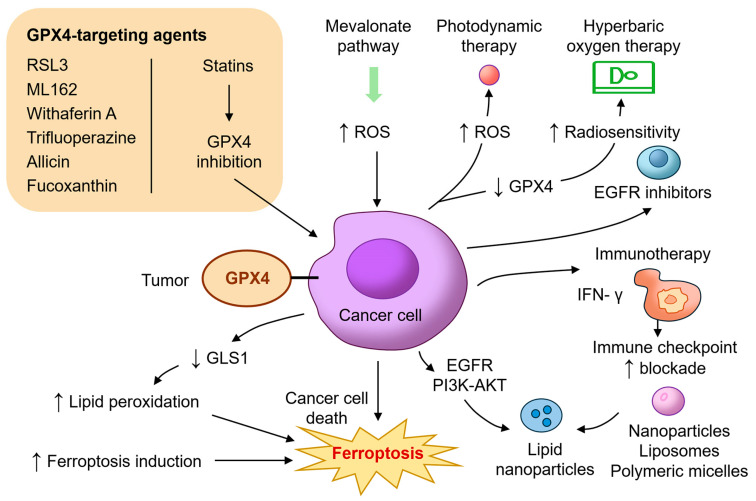
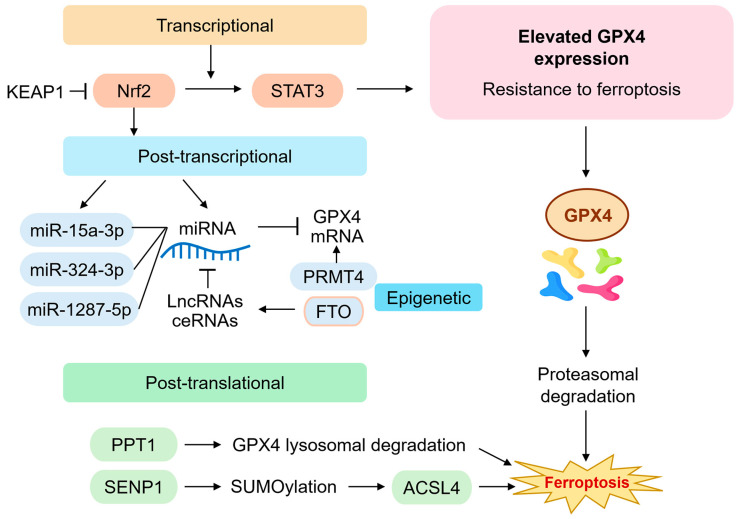
Ferroptosis, a regulated form of iron-dependent lipid peroxidation-induced cell death, has emerged as a compelling therapeutic strategy to overcome treatment resistance in head and neck cancer (HNC). Glutathione peroxidase 4 (GPX4), a selenoenzyme responsible for detoxifying phospholipid hydroperoxides, plays a central role in blocking ferroptosis and is frequently upregulated in therapy-resistant HNC subtypes. In this review, we examine the multifaceted regulation of GPX4 expression and function, including transcriptional, post-transcriptional, epigenetic, and proteostatic mechanisms. We explore how GPX4 suppression through pharmacologic inhibitors (e.g., RSL3, withaferin A, statins), metabolic stress, or combined therapies (e.g., radiotherapy, EGFR inhibitors, immunotherapy) induces ferroptosis and resensitizes resistant tumors. We also summarize emerging biomarkers, including GPX4, ACSL4, SLC7A11, and NCOA4, that predict ferroptosis sensitivity and may guide patient selection for ferroptosis-targeted therapies. Single-cell and spatial transcriptomics reveal significant intratumoral heterogeneity in ferroptosis susceptibility, underscoring the need for precision approaches. Despite promising preclinical data, challenges such as drug delivery, toxicity, and resistance mechanisms remain. Nevertheless, the ferroptosis-GPX4 axis represents a unique vulnerability in HNC that can be therapeutically exploited. Integrating ferroptosis modulation into personalized oncology may transform outcomes for patients with refractory disease.
铁死亡是一种由铁依赖性脂质过氧化诱导的受调控的细胞死亡形式,已成为克服头颈癌(HNC)治疗耐药性的一种引人注目的治疗策略。谷胱甘肽过氧化物酶4(GPX4)是一种负责解毒磷脂氢过氧化物的硒酶,在阻断铁死亡中起核心作用,并且在治疗耐药的HNC亚型中经常上调。在这篇综述中,我们研究了GPX4表达和功能的多方面调控,包括转录、转录后、表观遗传和蛋白质稳态机制。我们探讨了通过药理抑制剂(如RSL3、白藜芦醇A、他汀类药物)、代谢应激或联合疗法(如放疗、表皮生长因子受体抑制剂、免疫疗法)抑制GPX4如何诱导铁死亡并使耐药肿瘤重新敏感。我们还总结了新兴的生物标志物,包括GPX4、长链脂酰辅酶A合成酶4(ACSL4)、溶质载体家族7成员11(SLC7A11)和核受体辅激活因子4(NCOA4),它们可预测铁死亡敏感性,并可能指导针对铁死亡靶向治疗的患者选择。单细胞和空间转录组学揭示了铁死亡易感性在肿瘤内存在显著异质性,强调了精准方法的必要性。尽管临床前数据很有前景,但药物递送、毒性和耐药机制等挑战仍然存在。然而,铁死亡-GPX4轴代表了HNC中一种独特的脆弱性,可以被用于治疗。将铁死亡调节整合到个性化肿瘤学中可能会改变难治性疾病患者的治疗结果。