Merighi Stefania, Fernandez Mercedes, Nigro Manuela, Travagli Alessia, Caldon Filippo, Salati Simona, Borea Pier Andrea, Cadossi Ruggero, Varani Katia, Gessi Stefania
Department of Translational Medicine, University of Ferrara, 44121 Ferrara, Italy.
Igea Biophysics Laboratory, 41012 Carpi, Italy.
Int J Mol Sci. 2025 Jul 5;26(13):6495. doi: 10.3390/ijms26136495.
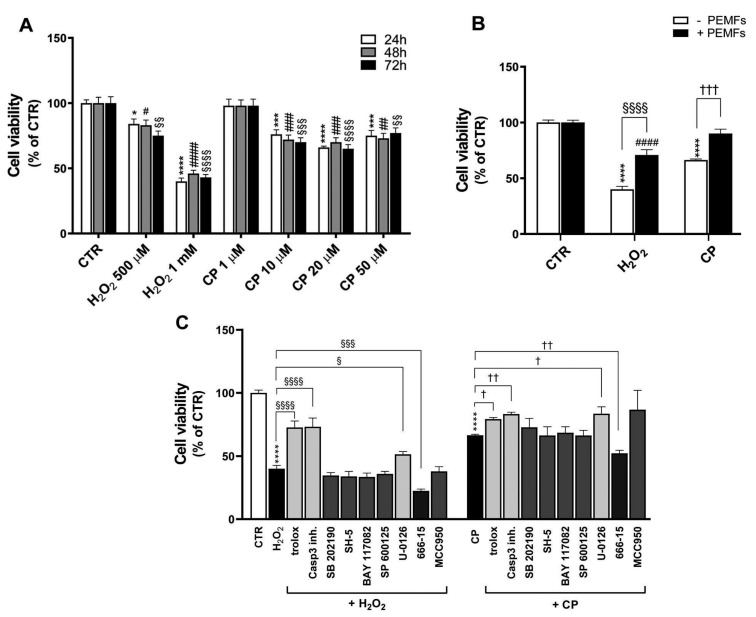
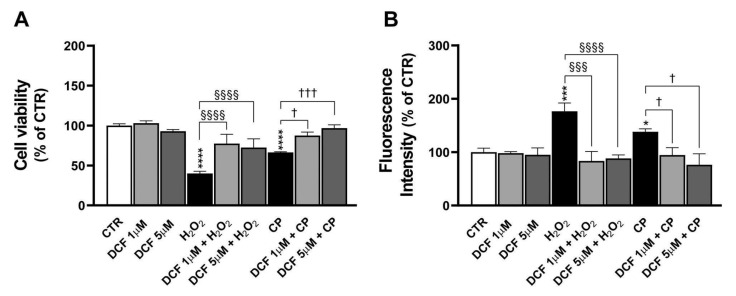
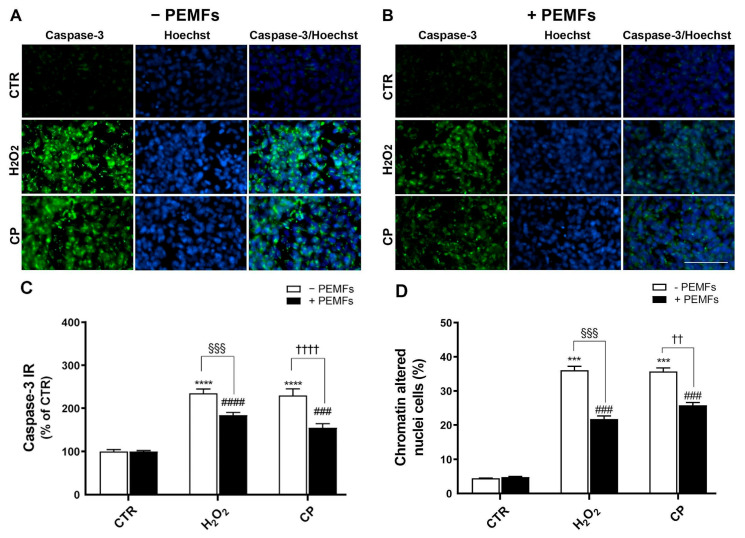
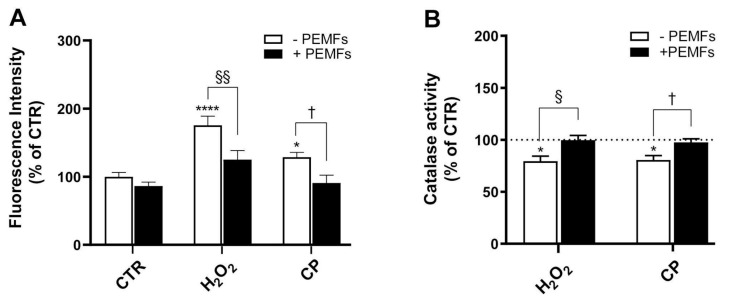
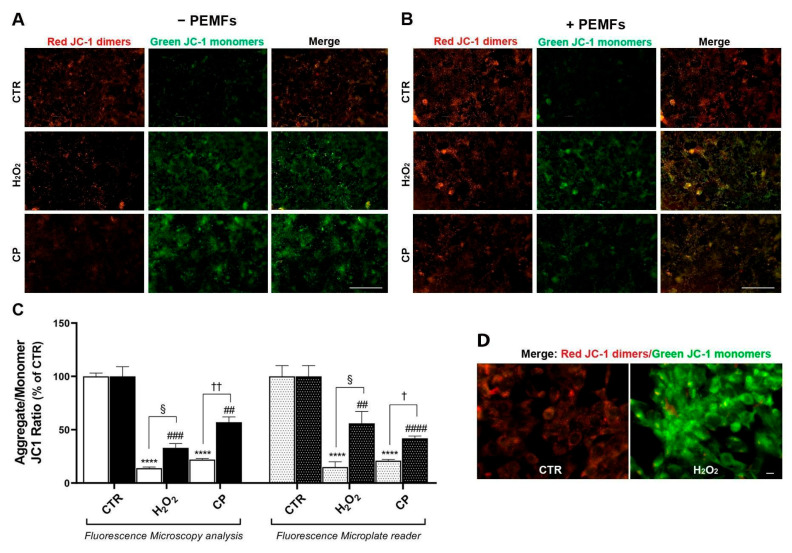
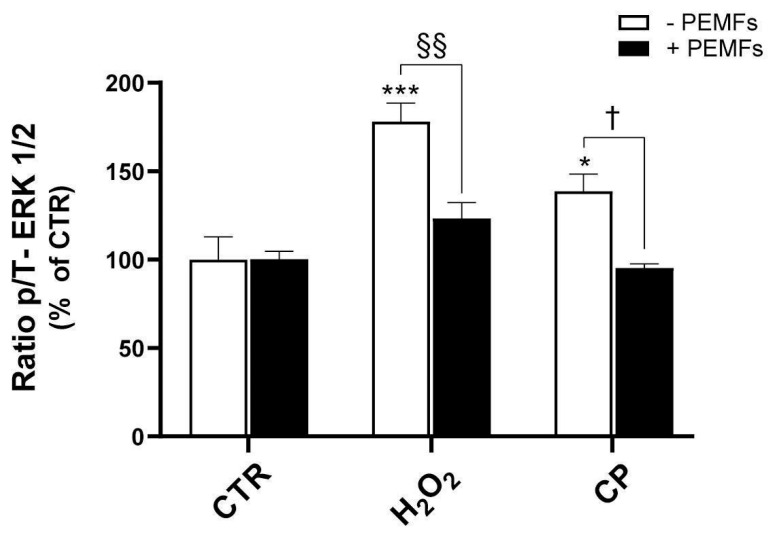
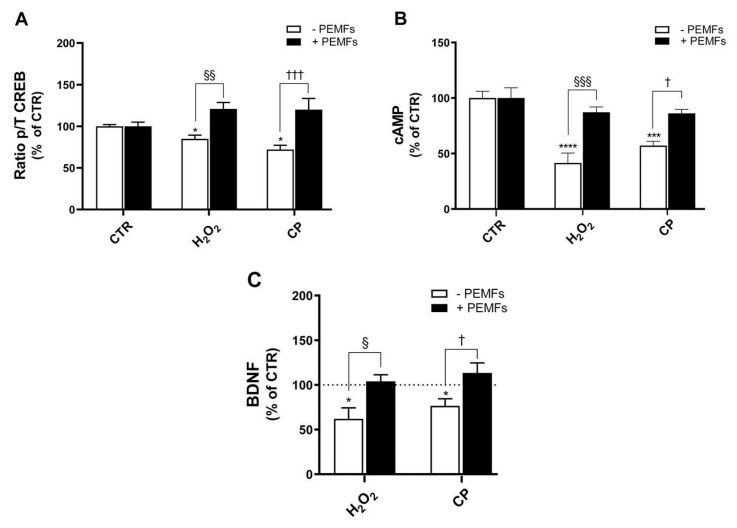
Alzheimer's disease (AD), the most prevalent form of neurodegenerative dementia, is characterized by progressive cognitive decline and neuronal loss. Despite advances in pharmacological treatments, current therapies remain limited in efficacy and often induce adverse effects. Increasing evidence highlights oxidative stress, mitochondrial dysfunction, and disrupted neurotrophic signaling as key contributors to AD pathogenesis. Pulsed electromagnetic fields (PEMFs) are emerging as a non-invasive, multifactorial approach with promising biological effects. In this study, we investigated the neuroprotective potential of PEMFs in NGF-differentiated PC12 cells exposed to hydrogen peroxide (HO) or amyloid-β peptide (Aβ), both of which model pathological features of AD. PEMF treatment significantly counteracted HO- and Aβ-induced cytotoxicity by restoring cell viability, reducing reactive oxygen species production, and improving catalase activity. Furthermore, PEMFs preserved the mitochondrial membrane potential and decreased caspase-3 activation and chromatin condensation. Mechanistically, PEMFs inhibited ERK phosphorylation and enhanced cAMP levels, CREB phosphorylation, and BDNF expression, pathways known to support neuronal survival and plasticity. In conclusion, these findings suggest that PEMFs modulate multiple stress response systems, promoting neuroprotection under oxidative and amyloidogenic conditions.
阿尔茨海默病(AD)是神经退行性痴呆最常见的形式,其特征为进行性认知衰退和神经元丧失。尽管药物治疗取得了进展,但目前的疗法在疗效上仍然有限,且常常会引发不良反应。越来越多的证据表明,氧化应激、线粒体功能障碍以及神经营养信号传导紊乱是AD发病机制的关键因素。脉冲电磁场(PEMFs)正作为一种具有潜在生物学效应的非侵入性、多因素方法而崭露头角。在本研究中,我们调查了PEMFs对暴露于过氧化氢(HO)或淀粉样β肽(Aβ)的经神经生长因子(NGF)分化的PC12细胞的神经保护潜力,HO和Aβ均可模拟AD的病理特征。PEMF治疗通过恢复细胞活力、减少活性氧生成以及提高过氧化氢酶活性,显著对抗了HO和Aβ诱导的细胞毒性。此外,PEMFs维持了线粒体膜电位,降低了半胱天冬酶-3的激活以及染色质凝聚。从机制上来说,PEMFs抑制了细胞外信号调节激酶(ERK)磷酸化,并提高了环磷酸腺苷(cAMP)水平、cAMP反应元件结合蛋白(CREB)磷酸化以及脑源性神经营养因子(BDNF)表达,这些通路已知可支持神经元存活和可塑性。总之,这些发现表明PEMFs可调节多种应激反应系统,在氧化和淀粉样蛋白生成条件下促进神经保护。