Wang Yuhan, Cao Guangxu, Zeng Huimin, Zhi Yong, Xu Mengting, Wang Ying, Liu Min, Ruan Yetian, Tse Ka Yu, Zhang Qingfeng, Gao Jinli, Han Zhiqiang, Li Fang
Department of Obstetrics and Gynecology, Shanghai East Hospital, School of Medicine, Tongji University, Shanghai, China.
Department of Obstetrics and Gynecology, Tongji Hospital, Tongji Medical College, Huazhong University of Science and Technology, Wuhan, Hubei, China.
J Cancer. 2025 Jun 20;16(9):2857-2876. doi: 10.7150/jca.114505. eCollection 2025.
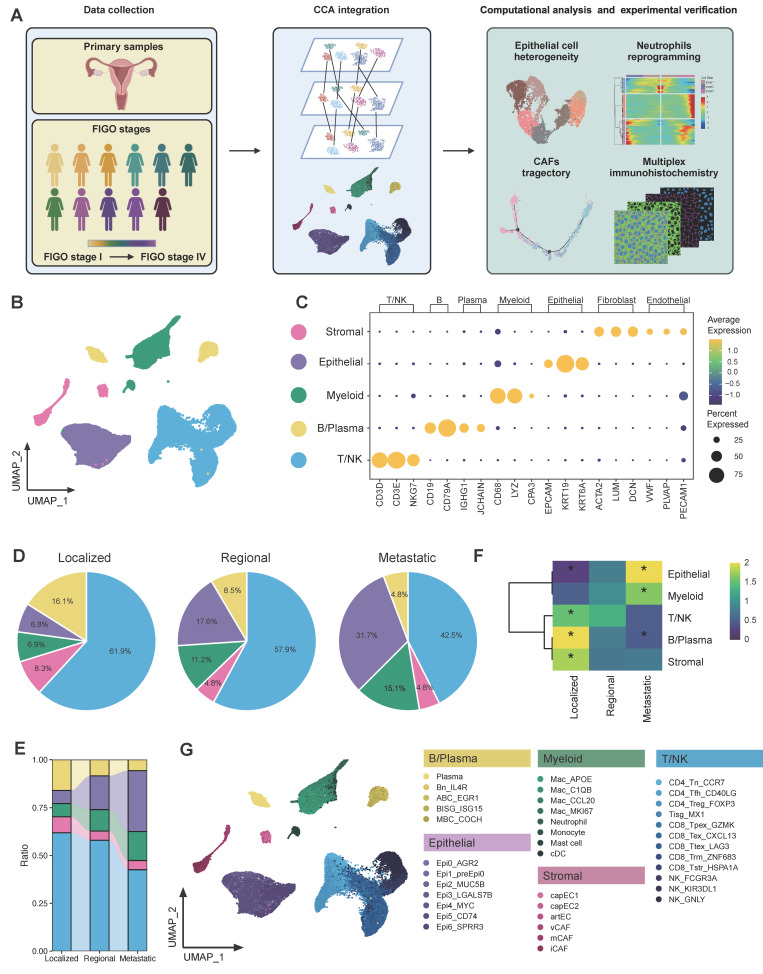
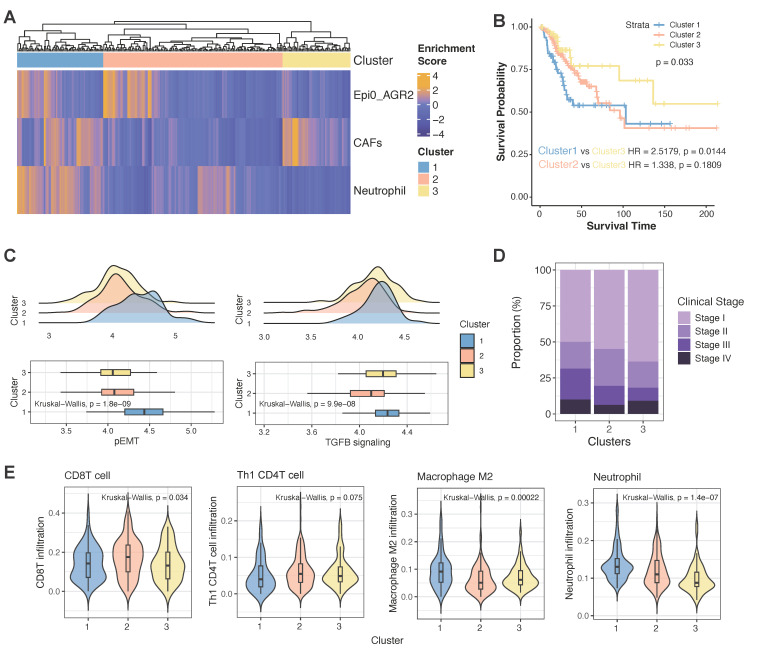
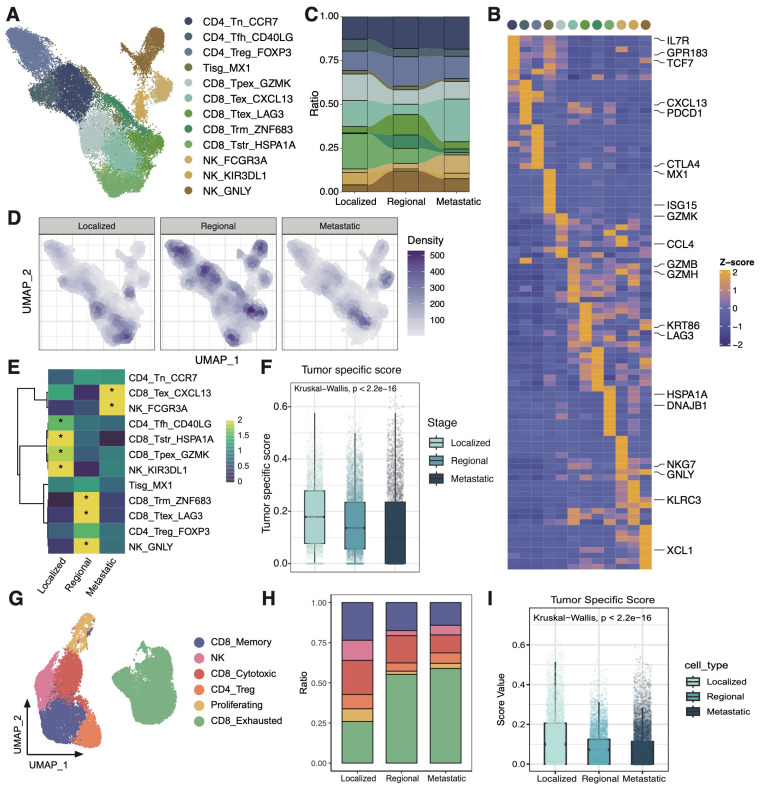
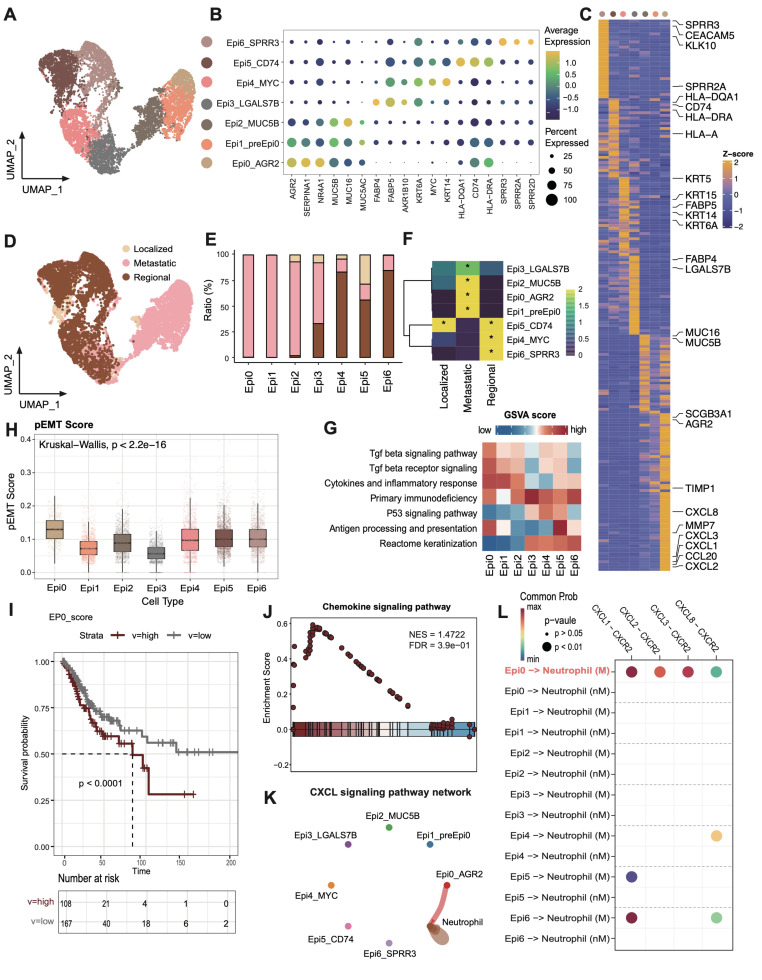
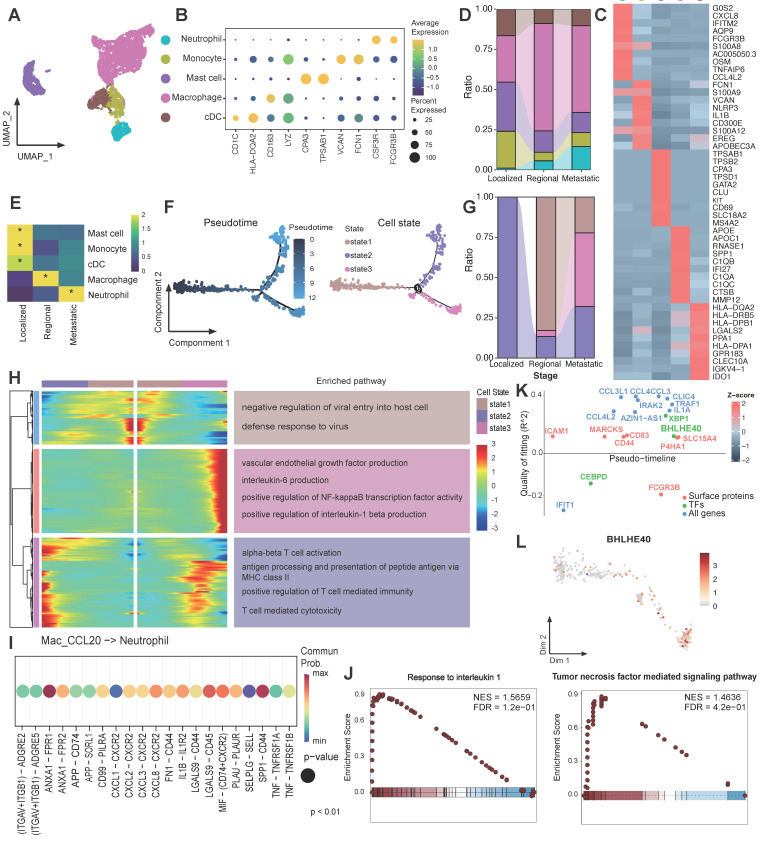
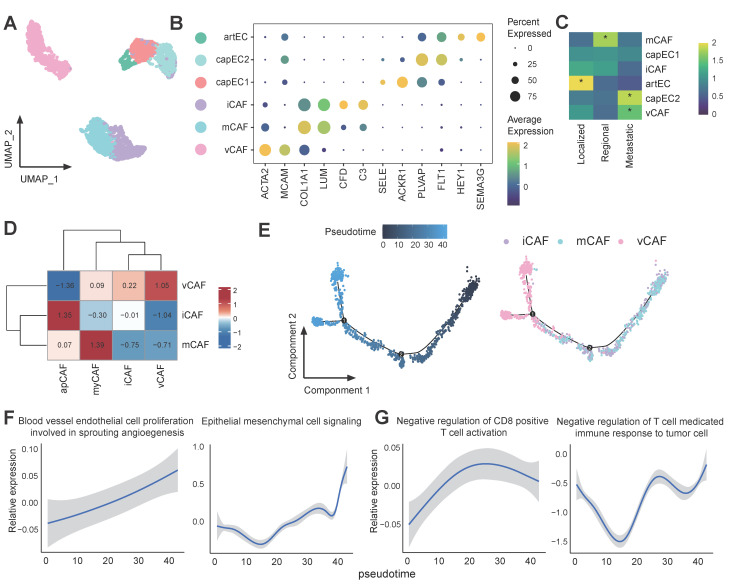
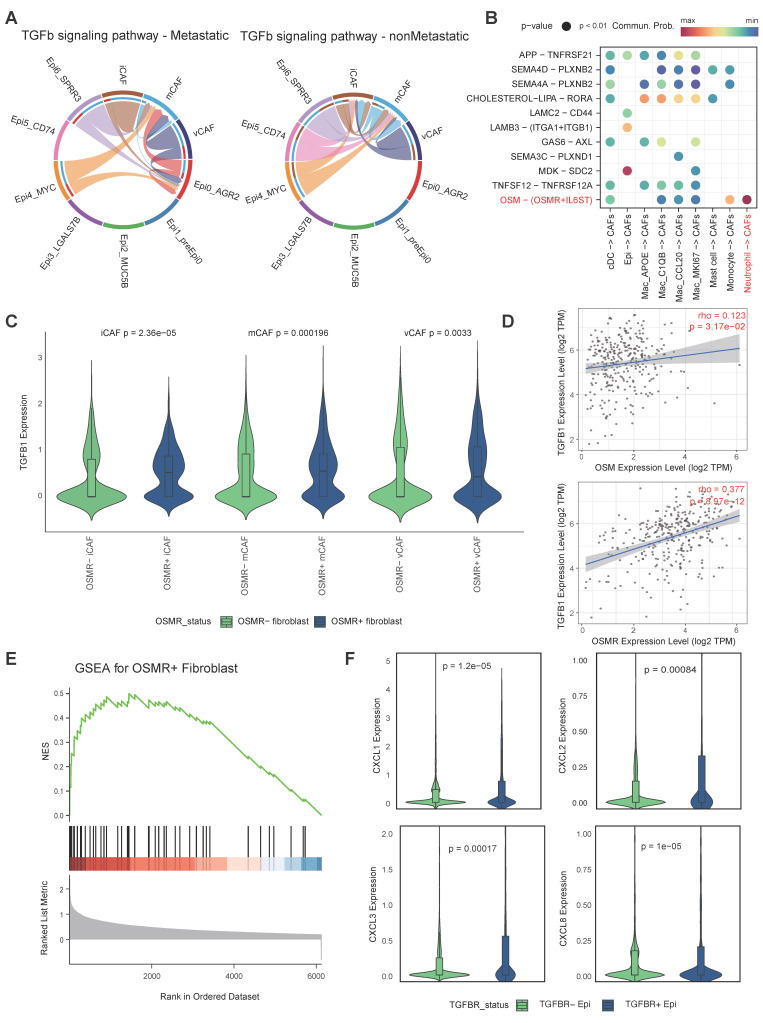
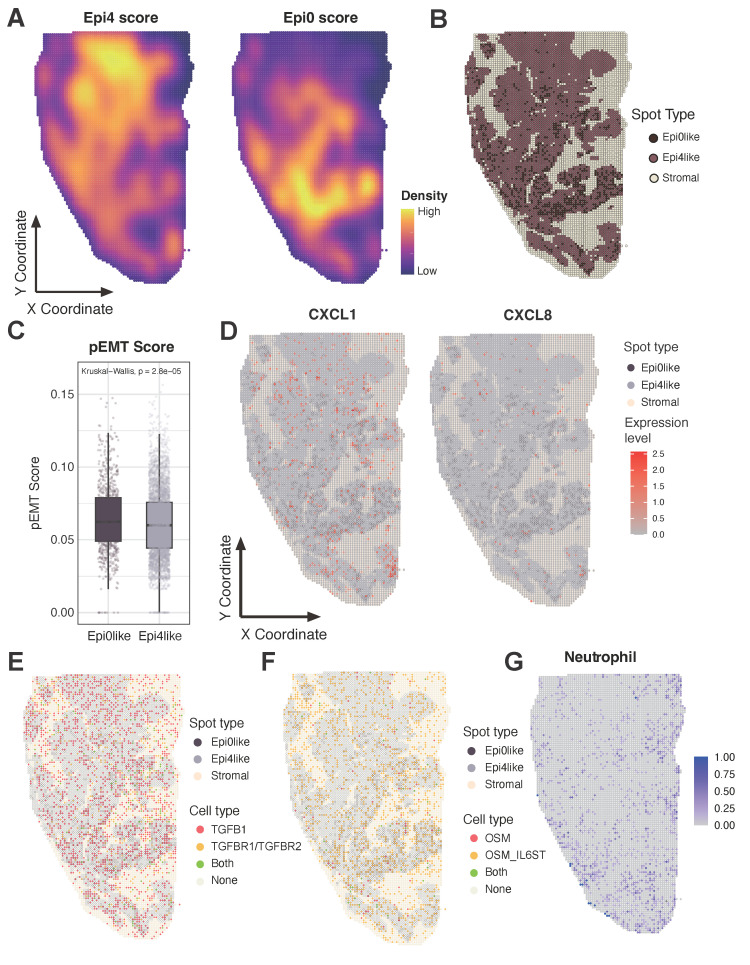
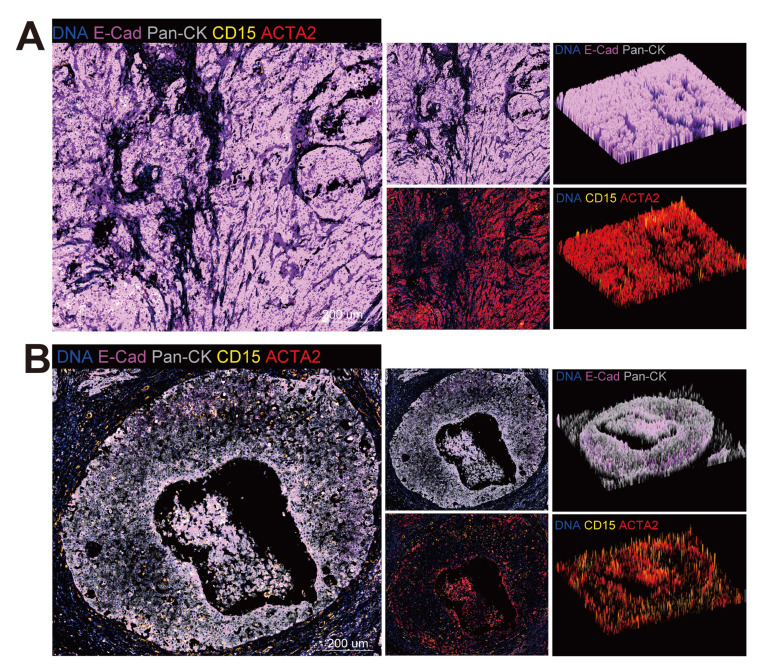
While cervical cancer (CC) prognosis depends on tumor staging, the spatiotemporal evolution of tumor microenvironment (TME) heterogeneity during metastatic progression remains poorly characterized at single-cell resolution. We employed an integrative multi-omics approach, combining single-cell RNA sequencing (scRNA-seq; n = 11), spatial transcriptomics (ST), and bulk RNA-seq data from the TCGA-CESC cohort (n = 304), to systematically map TME remodeling across CC progression stages. scRNA-seq was performed on primary lesions from patients with localized (n = 3), regional (n = 4), and metastatic (n = 4) diseases, with in-depth analyses focusing on cellular characteristics, cell type composition alterations, functional changes, differentiation trajectories, and cell-cell interaction networks. These findings were further validated using spatial transcriptomics, bulk RNA-seq data, and multiple immunohistochemistry (mIHC) experiments. ScRNA-seq data revealed that the TME of the metastatic group displayed a distinct immunosuppressive phenotype. Three key subclusters closely linked to TME remodeling in this group were identified. Notably, a novel metastasis-associated epithelial subpopulation (Epi0_AGR2), characterized by both epithelial-mesenchymal transition (EMT) and chemokine secretory phenotypes, was discovered. Gene Set Variation Analysis (GSVA) revealed that transforming growth factor β (TGF-β) signaling activation served as its primary transcriptional driver. Additionally, a neutrophil subset with pro-tumor and immunosuppressive properties, as well as a cancer-associated fibroblasts (CAFs) subset that promoted angiogenesis, were enriched in the metastatic group. Cell-cell interaction analysis and spatial mapping further revealed the formation of coordinated Epi0-neutrophil-CAFs niches, which established TGF-β-CXCL1/2/8-OSM/OSMR feedforward loops. Importantly, a computational model derived from the TME metastatic niche signature demonstrated significant prognostic stratification in the TCGA cohort (HR = 2.5179, p = 0.0144). In all, this study provides the first comprehensive delineation of stage-specific TME dynamics in CC, revealing TGF-β-driven cellular cooperativity as a metastatic switch. The joint framework establishes a potential clinically translatable tool for precision prognosis and therapeutic targeting.
虽然宫颈癌(CC)的预后取决于肿瘤分期,但在转移进展过程中肿瘤微环境(TME)异质性的时空演变在单细胞分辨率下仍未得到充分表征。我们采用了一种整合多组学方法,结合单细胞RNA测序(scRNA-seq;n = 11)、空间转录组学(ST)以及来自TCGA-CESC队列的批量RNA-seq数据(n = 304),以系统地描绘CC进展阶段的TME重塑。对局限性(n = 3)、区域性(n = 4)和转移性(n = 4)疾病患者的原发性病变进行了scRNA-seq,并深入分析了细胞特征、细胞类型组成变化、功能改变、分化轨迹和细胞间相互作用网络。使用空间转录组学、批量RNA-seq数据和多重免疫组织化学(mIHC)实验进一步验证了这些发现。scRNA-seq数据显示,转移组的TME表现出独特的免疫抑制表型。在该组中鉴定出了与TME重塑密切相关的三个关键亚群。值得注意的是,发现了一个新的转移相关上皮亚群(Epi0_AGR2),其特征为上皮-间质转化(EMT)和趋化因子分泌表型。基因集变异分析(GSVA)表明,转化生长因子β(TGF-β)信号激活是其主要转录驱动因素。此外,转移组中富集了具有促肿瘤和免疫抑制特性的中性粒细胞亚群以及促进血管生成的癌症相关成纤维细胞(CAF)亚群。细胞间相互作用分析和空间映射进一步揭示了协调的Epi0-中性粒细胞-CAFs生态位的形成,该生态位建立了TGF-β-CXCL1/2/8-OSM/OSMR前馈环。重要的是,从TME转移生态位特征导出的计算模型在TCGA队列中显示出显著的预后分层(HR = 2.5179,p = 0.0144)。总之,本研究首次全面描绘了CC中阶段特异性的TME动态,揭示了TGF-β驱动的细胞协同作用作为转移开关。联合框架建立了一种潜在的可临床转化的工具,用于精准预后和治疗靶向。