
中医与阿尔茨海默病的桥梁:肠道微生物群在多靶点治疗机制中的关键作用
Bridging traditional Chinese medicine and Alzheimer's disease: the pivotal role of gut microbiota in multitarget therapeutic mechanisms.
作者信息
Wu Weidong, Meng Tianwei, Han Lichao, Jin Fangfang, Han Pengfei, Zhou Yanyan
机构信息
Key Laboratory of Basic Theory of Chinese Medicine, Heilongjiang University of Chinese Medicine, Harbin, China.
Department of Internal Medicine, Heilongjiang University of Chinese Medicine, Harbin, China.
出版信息
Front Pharmacol. 2025 Jun 27;16:1630205. doi: 10.3389/fphar.2025.1630205. eCollection 2025.
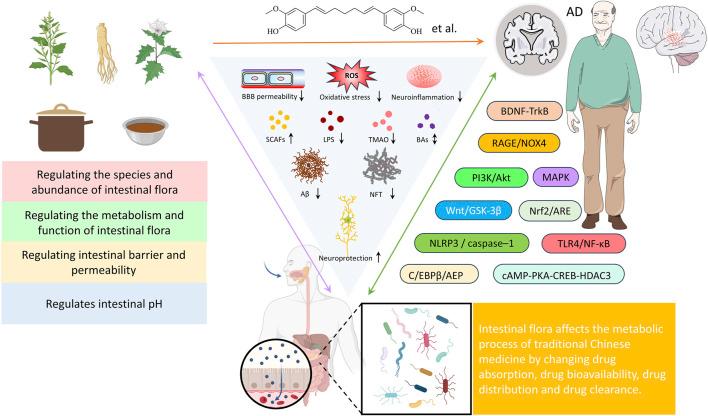
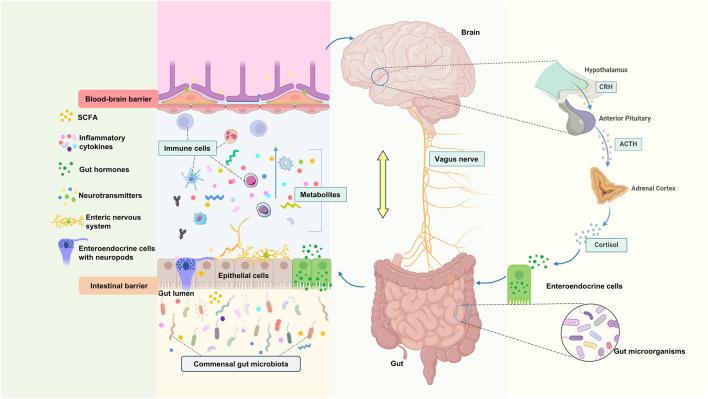
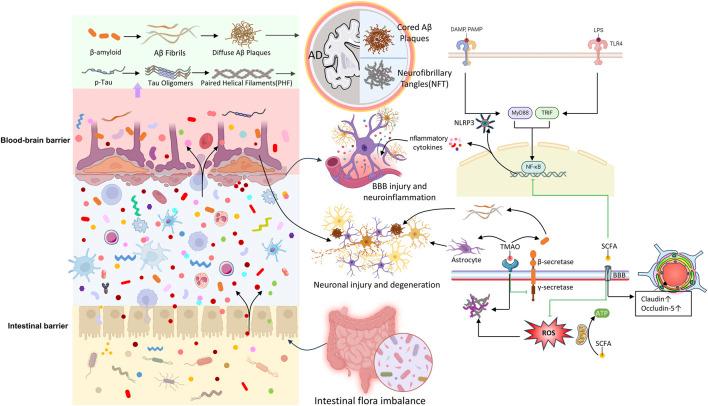
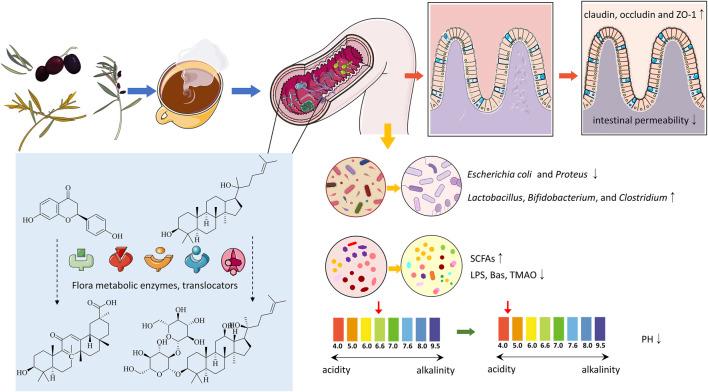
Microbiota-gut-brain axis communication represents another crucial pathway in the pathogenesis of Alzheimer's disease (AD), whereby gut microbiota significantly impacts AD pathology by modulating immune, metabolic, digestive, and neurological functions. Although research on treating AD through gut microbiota interventions is advancing, substantial breakthroughs remain limited. Given AD's complex pathological mechanisms, Traditional Chinese Medicine (TCM) presents a clear advantage with its multi-target effects. During the processes of TCM intake, absorption, and therapeutic action, the gut microbiota serves both as a mediator and as a therapeutic target. However, the mechanisms by which TCM interacts with gut microbiota to exert beneficial effects on AD remain largely unclarified. Here, we review the mechanisms through which TCM may intervene in AD from the perspective of gut microbiota, examining the potential mechanisms and clinical application prospects of Chinese herbal medicine in regulating the gut microbiome. This provides a novel theoretical foundation and methodological support for further research into herbal therapies for AD.
微生物群-肠道-脑轴通讯是阿尔茨海默病(AD)发病机制中的另一条关键途径,通过该途径,肠道微生物群可通过调节免疫、代谢、消化和神经功能,对AD病理产生显著影响。尽管通过肠道微生物群干预治疗AD的研究正在推进,但实质性突破仍然有限。鉴于AD复杂的病理机制,传统中医(TCM)凭借其多靶点效应具有明显优势。在中药摄入、吸收和治疗作用过程中,肠道微生物群既是介质又是治疗靶点。然而,中药与肠道微生物群相互作用从而对AD产生有益影响的机制仍 largely未阐明。在此,我们从肠道微生物群的角度综述中药可能干预AD的机制,探讨中药在调节肠道微生物组方面的潜在机制和临床应用前景。这为进一步研究AD的草药疗法提供了新的理论基础和方法学支持。

 Zotero 插件