Heimes Diana, Holz Nina Viktoria, Pabst Andreas, Becker Philipp, Hollinderbäumer Anke, Kloss-Brandstätter Anita, Müller-Winter Daniel, Stephan Daniel, Kämmerer Peer W
Department of Oral and Maxillofacial Surgery, University Medical Center Mainz, Augustusplatz 2, Mainz, 55131, Germany.
Department of Oral and Maxillofacial Surgery, Federal Armed Forces Hospital, Rübenacherstraße 170, Koblenz, 56072, Germany.
Clin Oral Investig. 2025 Jul 14;29(8):383. doi: 10.1007/s00784-025-06403-4.
Pain management is a significant challenge in dental care, making analgesics the most commonly prescribed drugs by dentists. Since many analgesics are available over the counter, data on their use in dental practice is imprecise. This study aimed to gather information on the prescription and recommendation patterns for systemic analgesics among dental practitioners.
A total of 1,746 dentists were contacted via email and letter and invited to participate in an online survey. The survey covered four sections: personal data, acute and chronic pain management, preemptive analgesia, and managing at-risk patients.
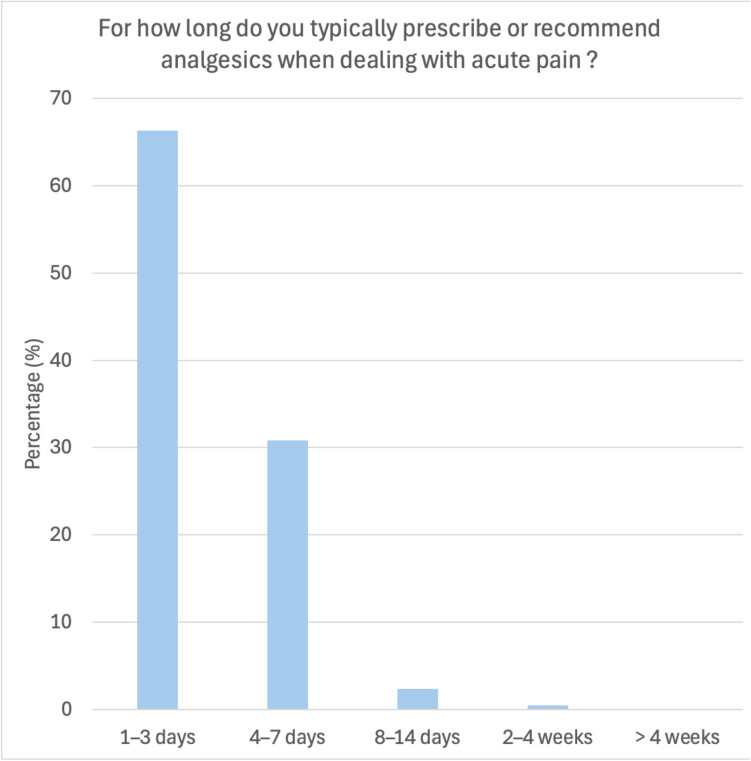
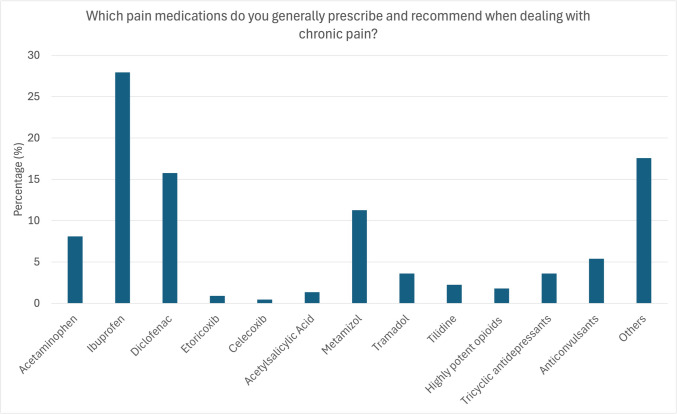
232 dentists participated in the survey. Ibuprofen, typically at 600 mg, was the most commonly recommended analgesic for both acute and chronic pain. For acute pain, analgesics were prescribed for 1-3 days on average. Two-thirds of respondents did not use preemptive analgesia, and of those who did, 96.56% recommended ibuprofen. Notably, in 22.16% of cases, contraindicated analgesics were recommended for patients with renal, liver, or cardiovascular conditions.
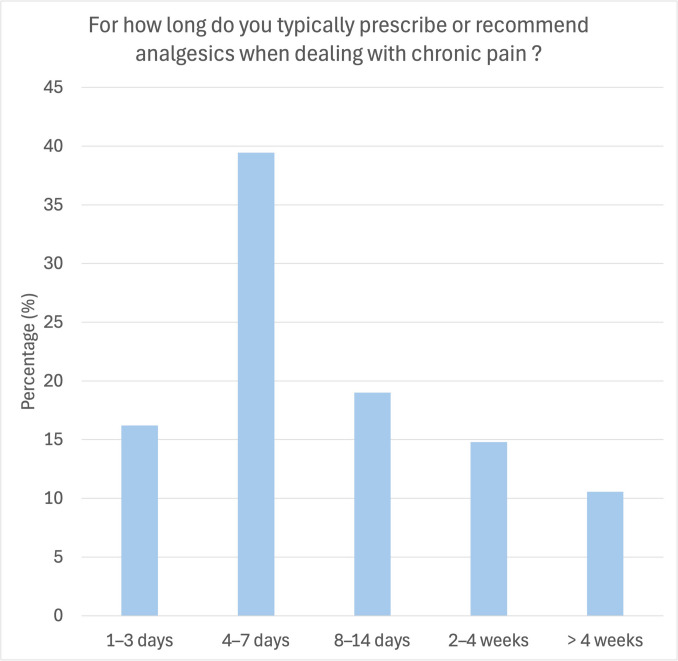
The analgesics recommended by dentists are limited in variety and often do not align with specific clinical indications. Nonsteroidal anti-inflammatory drugs, especially ibuprofen, are commonly used long-term, despite conflicting recommendations. A significant number of dentists prescribed contraindicated medications to at-risk patients. Only one-third utilized preemptive analgesia, underscoring the need for improved education and greater use of this approach in dental practice.
There is a clear need for enhanced training on analgesic use and preemptive analgesia to improve patient safety, particularly for those with risk factors.
疼痛管理是牙科护理中的一项重大挑战,这使得镇痛药成为牙医最常开具的药物。由于许多镇痛药无需处方即可获得,因此关于其在牙科实践中的使用数据并不精确。本研究旨在收集牙科从业者使用全身性镇痛药的处方和推荐模式的信息。
通过电子邮件和信件联系了总共1746名牙医,并邀请他们参加在线调查。该调查涵盖四个部分:个人数据、急性和慢性疼痛管理、超前镇痛以及管理高危患者。
232名牙医参与了调查。布洛芬(通常为600毫克)是急性和慢性疼痛最常推荐使用的镇痛药。对于急性疼痛,镇痛药平均开具1 - 3天。三分之二的受访者未使用超前镇痛,而使用超前镇痛的受访者中,96.56%推荐布洛芬。值得注意的是,在22.16%的病例中,给患有肾脏、肝脏或心血管疾病的患者推荐了禁忌使用的镇痛药。
牙医推荐的镇痛药种类有限,且往往与特定临床指征不符。尽管存在相互矛盾的建议,但非甾体抗炎药,尤其是布洛芬,仍经常被长期使用。相当数量的牙医给高危患者开具了禁忌药物。只有三分之一的人使用了超前镇痛,这突出表明在牙科实践中需要加强教育并更多地采用这种方法。
显然需要加强关于镇痛药使用和超前镇痛的培训,以提高患者安全性,特别是对于那些有风险因素的患者。