Martínez-Rodríguez Daniel, Salazar-Alonso Jonathan, Castro-Abrego Axel, Ávila-González Daniela, Martínez-Alarcón Omar, Molina-Hernández Anayansi, Martínez-Juárez Alejandro, Godoy-Morales Héctor Salvador, Lara-Barragán Diana Elizabeth, Portillo Wendy, Díaz-Martínez Nestor Emmanuel, García-López Guadalupe, Díaz Nestor Fabián
Departamento de Fisiología y Desarrollo Celular, Instituto Nacional de Perinatología Isidro Espinosa de Lo Reyes, Torre de Investigación 3Er Piso, Montes Urales 800, Colonia Lomas de Virreyes, Delegación Miguel Hidalgo, 11000, Mexico City, Mexico.
Unidad de Medicina Reproductiva, Hospital Angeles Pedregal, 10700, Mexico City, Mexico.
Histochem Cell Biol. 2025 Jul 14;163(1):76. doi: 10.1007/s00418-025-02400-6.
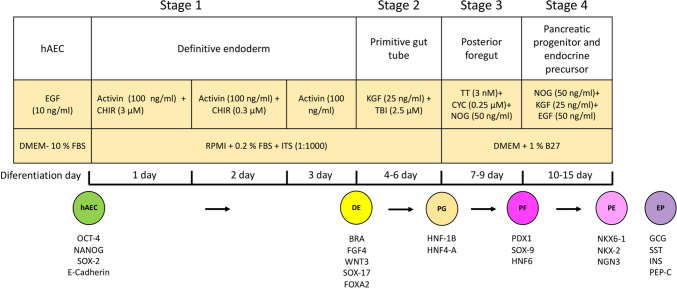
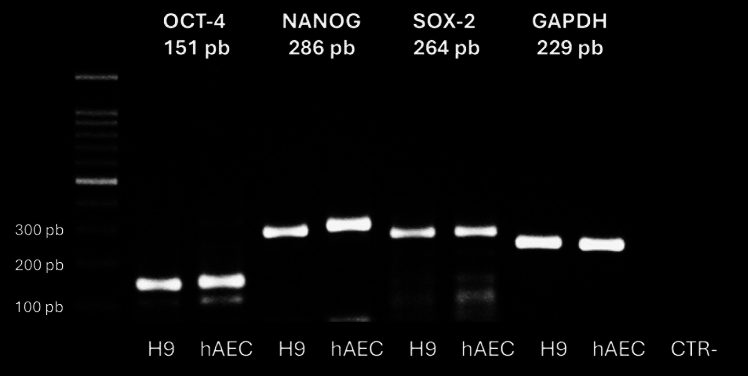
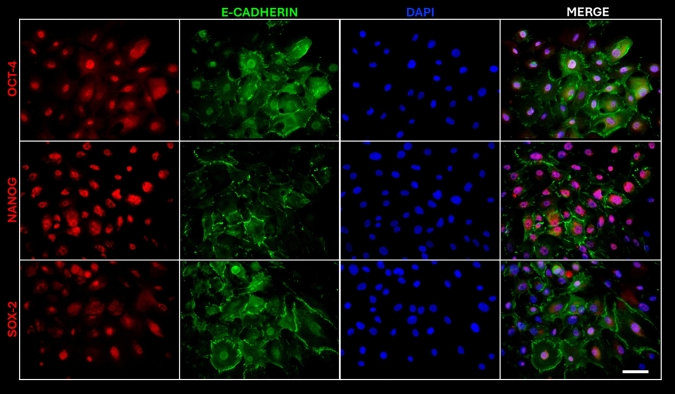
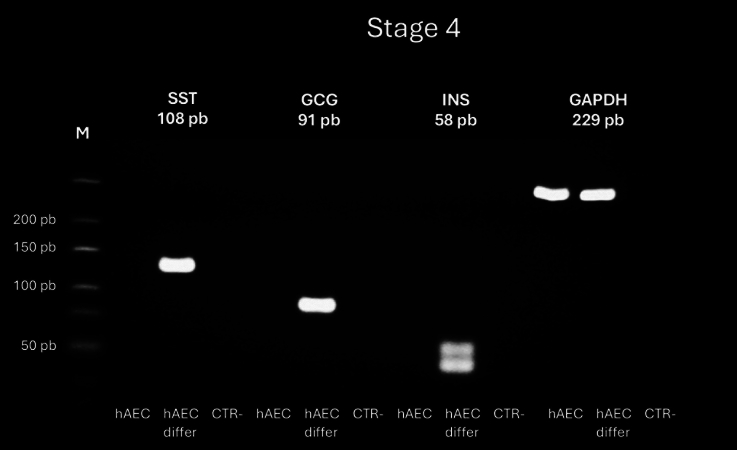
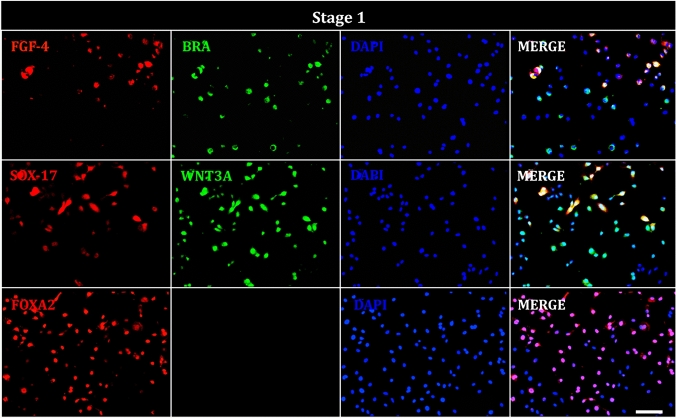
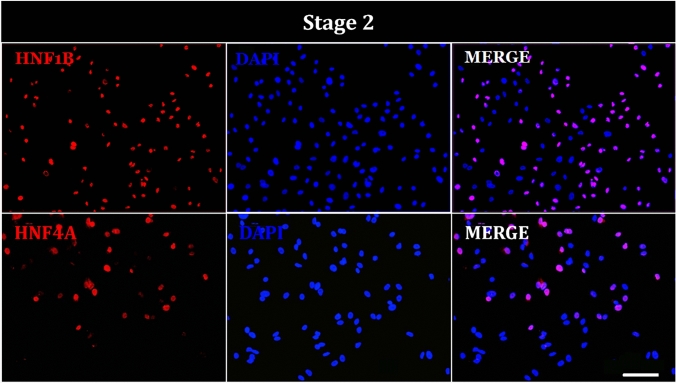
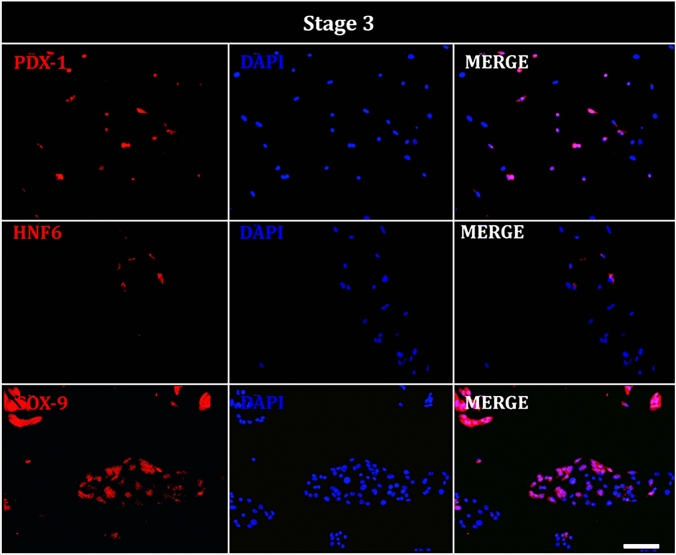
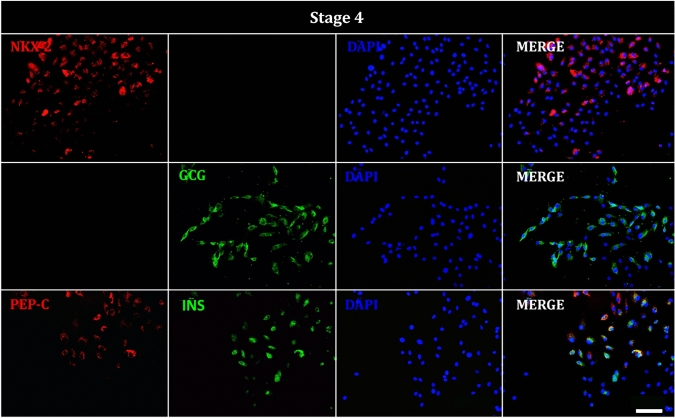
Diabetes mellitus (DM) is characterized by the loss or dysfunction pancreatic β-cells. Human amniotic epithelial cells (hAEC), which retain pluripotency markers and are readily obtainable from term placentas, represent a promising alternative source of stem cells. We investigated whether hAECs can be guided through pancreatic ontogeny to generate insulin-producing β-like cells. hAEC from uncomplicated term deliveries were expanded to passage 1 and exposed to a four-stage differentiation sequence that sequentially modulated Activin/WNT, KGF/TGF-β, retinoic-acid/hedgehog, and EGF/Noggin signaling. Stage progression was monitored by end-point RT-PCR and quantitative immunofluorescence for hallmark transcription factors. After definitive endoderm induction, 64% of cells were Brachyury positive and 71% were WNT3A positive; primitive-gut specification yielded 57% HNF1B cells. Posterior foregut commitment produced 75% PDX1 and 60% Sox9 nuclei and the final endocrine stage generated 74% NKX2.2 cells, with 71% showing cytoplasmatic insulin and 51% C-peptide staining; insulin/C-peptide co-localization was confirmed by double labelling. Thus a chemically defined, four-step protocol can convert term-derived hAEC into insulin-producing β-like cells, supporting their use as an accessible platform for diabetes modelling and future cell-replacement therapies.
糖尿病(DM)的特征是胰腺β细胞丧失或功能障碍。人羊膜上皮细胞(hAEC)保留多能性标志物且易于从足月胎盘获得,是一种很有前景的替代干细胞来源。我们研究了hAEC是否可以通过胰腺个体发育过程被引导生成产生胰岛素的β样细胞。来自无并发症足月分娩的hAEC扩增至第1代,并暴露于一个四阶段分化序列,该序列依次调节激活素/ WNT、角质形成细胞生长因子/转化生长因子-β、视黄酸/刺猬信号通路和表皮生长因子/诺金信号通路。通过终点逆转录聚合酶链反应(RT-PCR)和标志性转录因子的定量免疫荧光监测阶段进展。在确定内胚层诱导后,64%的细胞Brachyury呈阳性,71%的细胞WNT3A呈阳性;原始肠道特化产生57%的肝细胞核因子1β(HNF1B)细胞。前肠后部定向产生75%的胰腺十二指肠同源盒1(PDX1)和60%的性别决定区Y框蛋白9(Sox9)细胞核,最终内分泌阶段产生74%的NK2转录因子相关蛋白2(NKX2.2)细胞,其中71%的细胞显示细胞质胰岛素染色,51%的细胞显示C肽染色;通过双重标记证实了胰岛素/C肽共定位。因此,一个化学成分明确的四步方案可以将足月来源的hAEC转化为产生胰岛素的β样细胞,支持将其用作糖尿病建模和未来细胞替代疗法的可及平台。