Shu Jinlian, Li He, Li Hairong
Department of Nephrology, The Second People's Hospital of Hefei, Hefei Hospital Affiliated to Anhui Medical University, Hefei, Anhui, People's Republic of China.
Int J Gen Med. 2025 Jul 12;18:3851-3870. doi: 10.2147/IJGM.S530953. eCollection 2025.
IgA nephropathy (IgAN) is the most common primary glomerulonephritis worldwide. Aging is a major risk factor for progression of IgAN to end-stage renal disease. The purpose of this study was to identify and verify aging-related genes associated with IgAN through bioinformatics analysis.
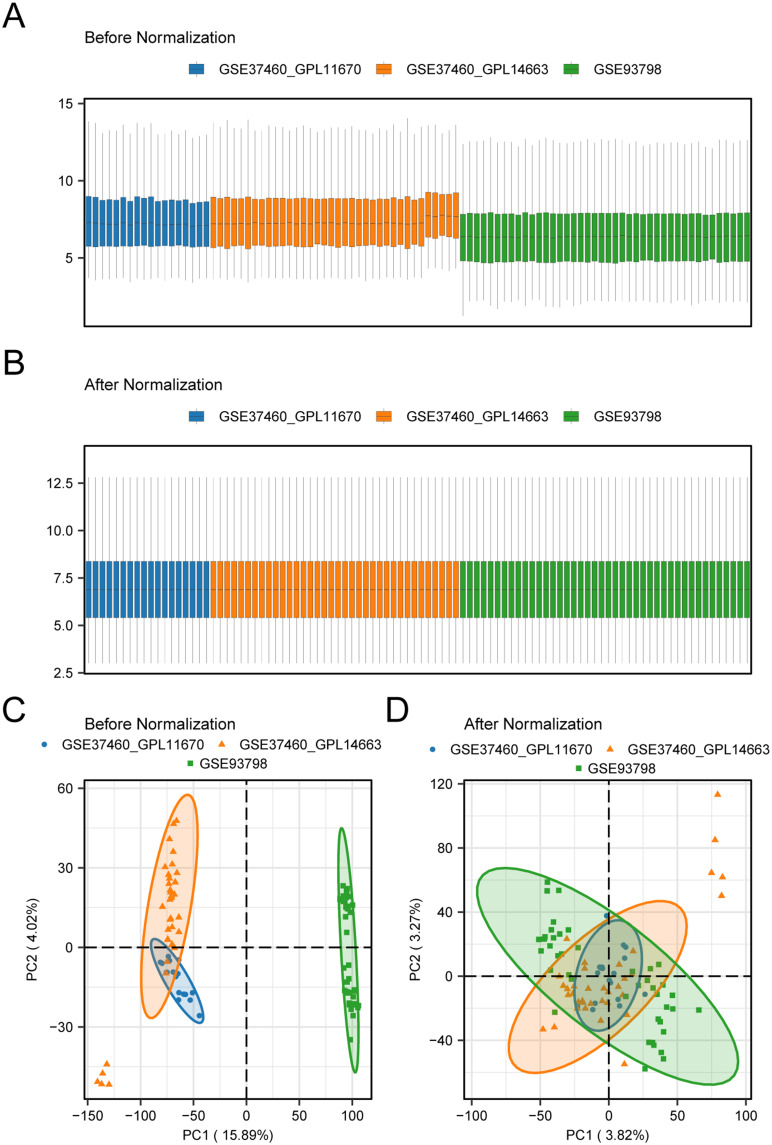
Microarray datasets of GSE93798 and GSE37460 were downloaded from the Gene Expression Omnibus (GEO) database. The aging-related DEGs (AR-DEGs) associated with IgAN were analyzed using R programming software, and then Gene Ontology (GO) analysis and Kyoto Encyclopedia of Genes and Genomes (KEGG) analysis were performed. The PPI network of AR-DEGs was then constructed, and hub genes were ranked using five methods of the cytoHubba plugin in Cytoscape software. CIBERSORT algorithm was used to evaluate immune infiltration and its relationship with hub genes. Next, Nephroseq V5 online platform was used to verify and analyze the mRNA expression patterns of hub genes in IgAN patients and normal controls.
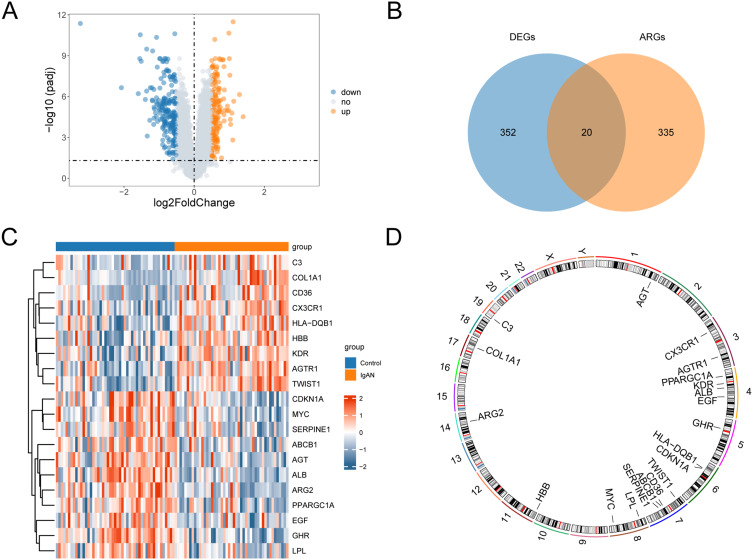
A total of 372 differentially expressed genes (DEGs) were identified, of which 158 were upregulated and 214 were downregulated. GO and KEGG enrichment analyses mainly focused on regulation of macrophage-derived foam cell differentiation and PI3K-Akt signaling pathway. Based on the results of PPI network analysis, eight hub genes were identified, including AGT, ALB, CD36, EGF, KDR, LPL, MYC, and PPARGC1A. Immune infiltration analysis indicated that CD36 was closely related to immune cell infiltration. Furthermore, the expression levels of these hub genes were validated using the Nephroseq V5 online platform. Further clinical samples confirmed that CD36 was highly expressed in renal tissues of IgAN patients.
These findings provide new insights into potential aging-related genes associated with IgAN, which may contribute to better understanding the pathogenesis of IgAN. CD36 may have diagnostic value for aging-related IgAN.
IgA肾病(IgAN)是全球最常见的原发性肾小球肾炎。衰老 是IgAN进展至终末期肾病的主要危险因素。本研究的目的是通过生物信息学分析鉴定和验证与IgAN相关的衰老相关基因。
从基因表达综合数据库(GEO)下载GSE93798和GSE37460的微阵列数据集。使用R编程软件分析与IgAN相关的衰老相关差异表达基因(AR-DEG),然后进行基因本体(GO)分析和京都基因与基因组百科全书(KEGG)分析。随后构建AR-DEG的蛋白质-蛋白质相互作用(PPI)网络,并使用Cytoscape软件中cytoHubba插件的五种方法对枢纽基因进行排名。使用CIBERSORT算法评估免疫浸润及其与枢纽基因的关系。接下来,使用Nephroseq V5在线平台验证和分析IgAN患者和正常对照中枢纽基因的mRNA表达模式。
共鉴定出372个差异表达基因(DEG),其中158个上调,214个下调。GO和KEGG富集分析主要集中在巨噬细胞衍生的泡沫细胞分化调控和PI3K-Akt信号通路。基于PPI网络分析结果,鉴定出8个枢纽基因,包括AGT、ALB、CD36、EGF、KDR、LPL、MYC和PPARGC1A。免疫浸润分析表明CD36与免疫细胞浸润密切相关。此外,使用Nephroseq V5在线平台验证了这些枢纽基因的表达水平。进一步的临床样本证实CD36在IgAN患者的肾组织中高表达。
这些发现为与IgAN相关的潜在衰老相关基因提供了新的见解,这可能有助于更好地理解IgAN的发病机制。CD36可能对衰老相关的IgAN具有诊断价值。