Chung Pei-Chi, Ku Kai-Yuan, Chu Sao-Yu, Chen Chen, Yu Hung-Hsiang
Institute of Cellular and Organismic Biology, Academia Sinica, Taipei, Taiwan.
bioRxiv. 2025 Jul 9:2025.07.07.663451. doi: 10.1101/2025.07.07.663451.
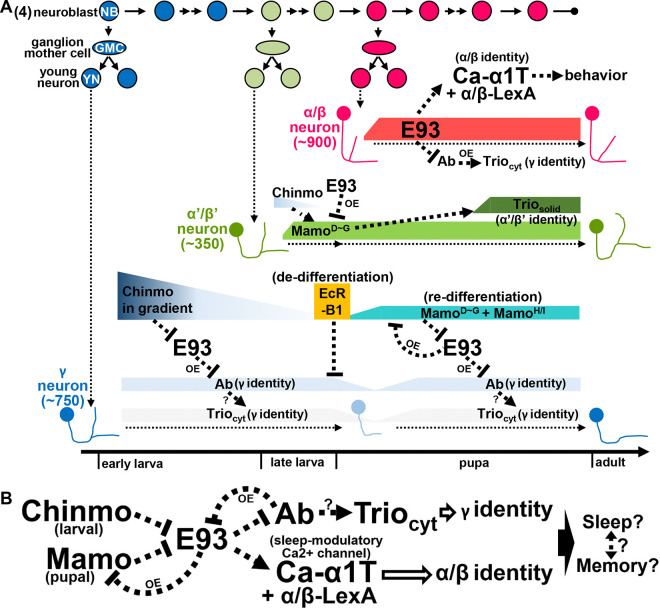
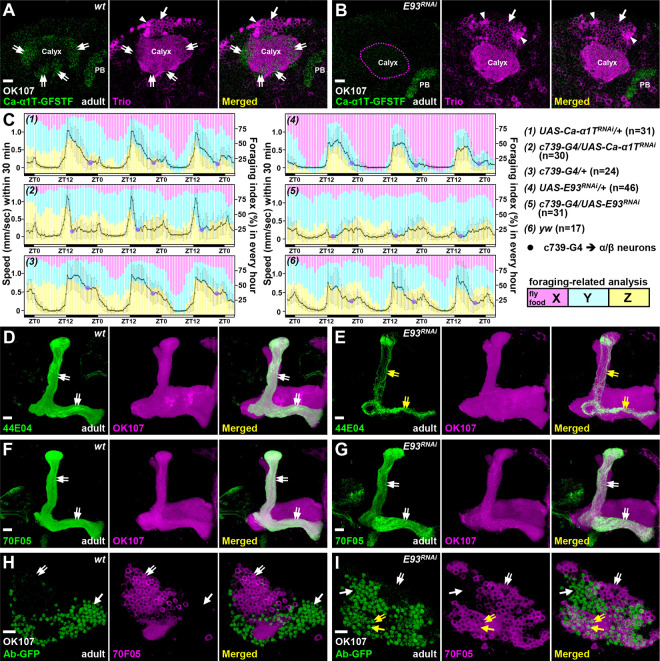
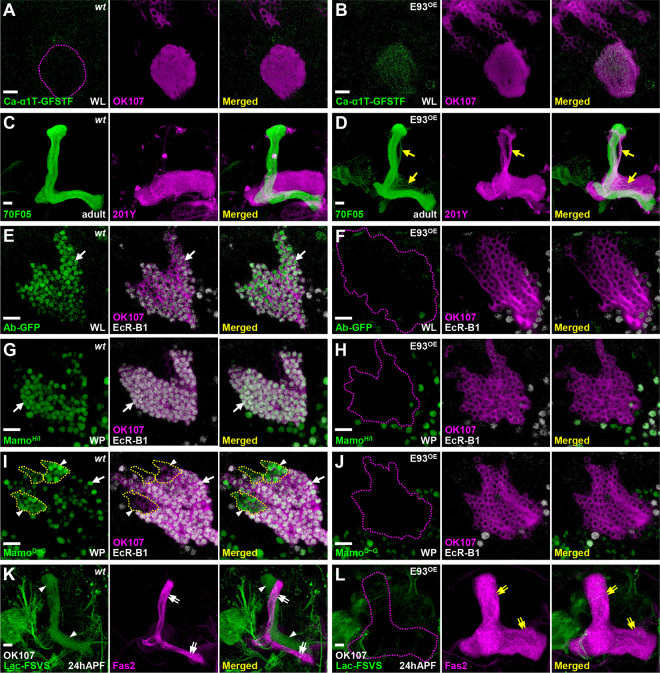
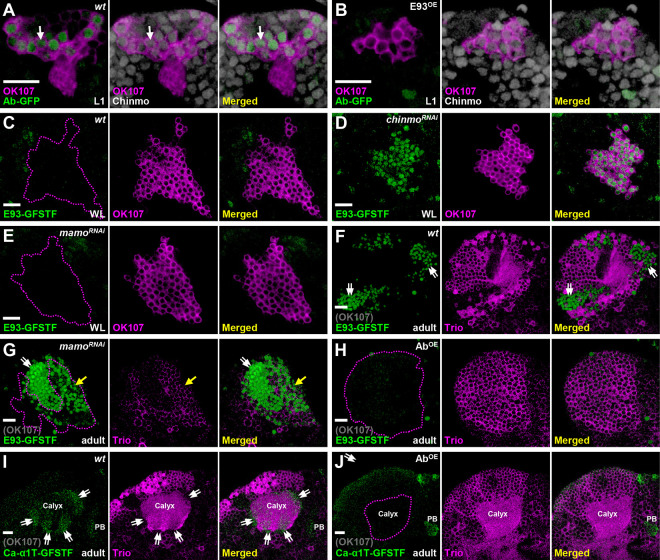
Revealing the molecular mechanisms underlying neuronal specification and acquisition of specific functions is key to understanding how the nervous system is constructed. In the brain, Kenyon cells (KCs) are sequentially generated to assemble the backbone of the mushroom body (MB). Broad-complex, tramtrack and bric-ȧ-brac zinc finger transcription factors (BTBzf TFs) specify early-born KCs, whereas the essential TFs for specifying late-born KCs remain unidentified. Here, we report that Pipsqueak domain-containing TF promotes the identity of late-born KCs by reciprocally regulating gene expression in KC subtypes. Moreover, not only regulates the expression of calcium channel in late-born KCs to functionally control animal behavior, but it also forms a genetic network with to specify the identities of KC subtypes. Our study provides crucial information linking KC subtype diversification to unique function acquisition in the adult MB.
揭示神经元特化及特定功能获得背后的分子机制是理解神经系统构建方式的关键。在大脑中,肯扬细胞(KCs)按顺序生成以组装蘑菇体(MB)的主干。广泛复合体、tramtrack和bric-à-brac锌指转录因子(BTBzf转录因子)决定早期生成的KCs,而决定晚期生成的KCs的关键转录因子仍未确定。在此,我们报告含Pipsqueak结构域的转录因子通过相互调节KC亚型中的基因表达来促进晚期生成的KCs的特性。此外,它不仅调节晚期生成的KCs中钙通道的表达以在功能上控制动物行为,还与形成一个遗传网络来确定KC亚型的特性。我们的研究提供了将KC亚型多样化与成年MB中独特功能获得联系起来的关键信息。