Liu Huanju, Jin Lihao, Wang Xiaoya, Shi Junling, He Yujie, Sun Ningxia, Yang Fu
Department of Medical Genetics, Naval Medical University, Shanghai, China.
Institute of Genetics, International School of Medicine, Zhejiang University, Hangzhou, Zhejiang, China.
Redox Biol. 2025 Jul 17;85:103776. doi: 10.1016/j.redox.2025.103776.
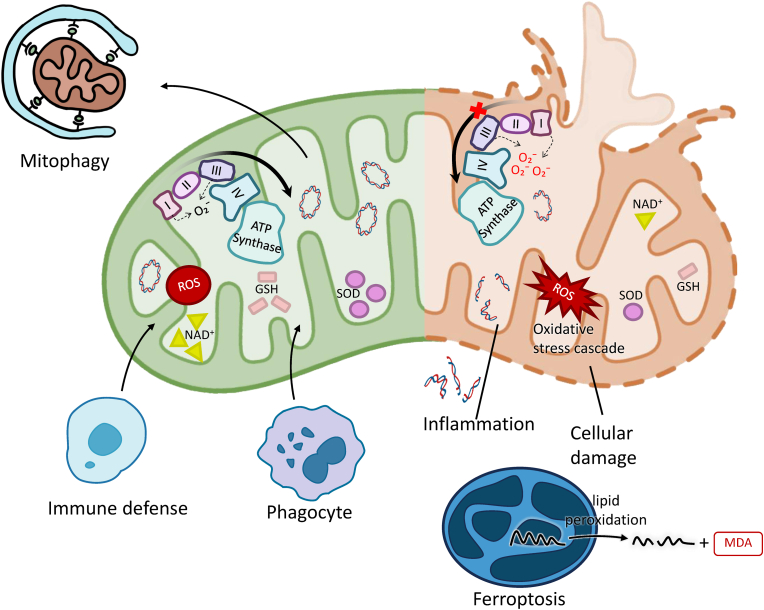
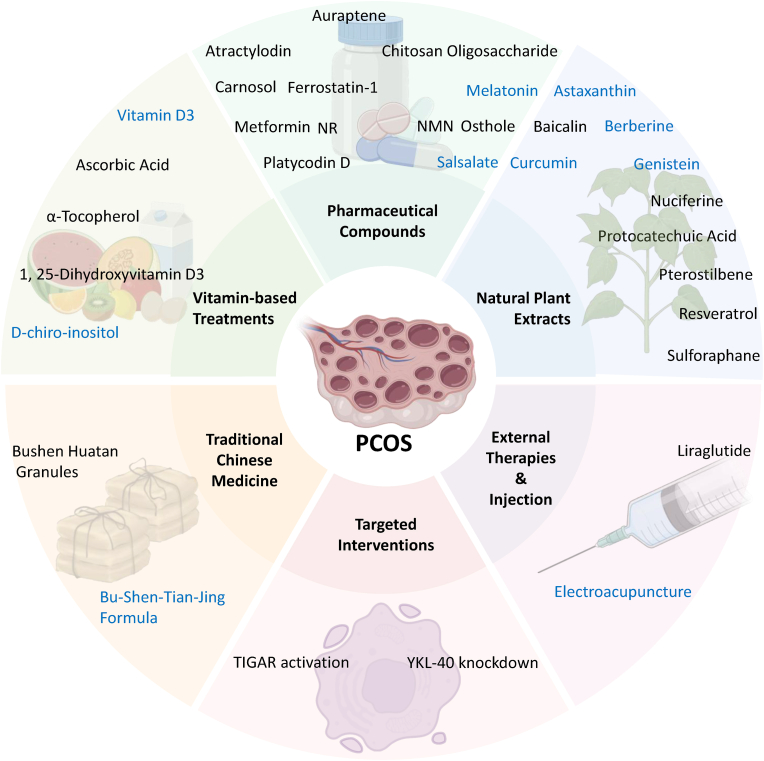
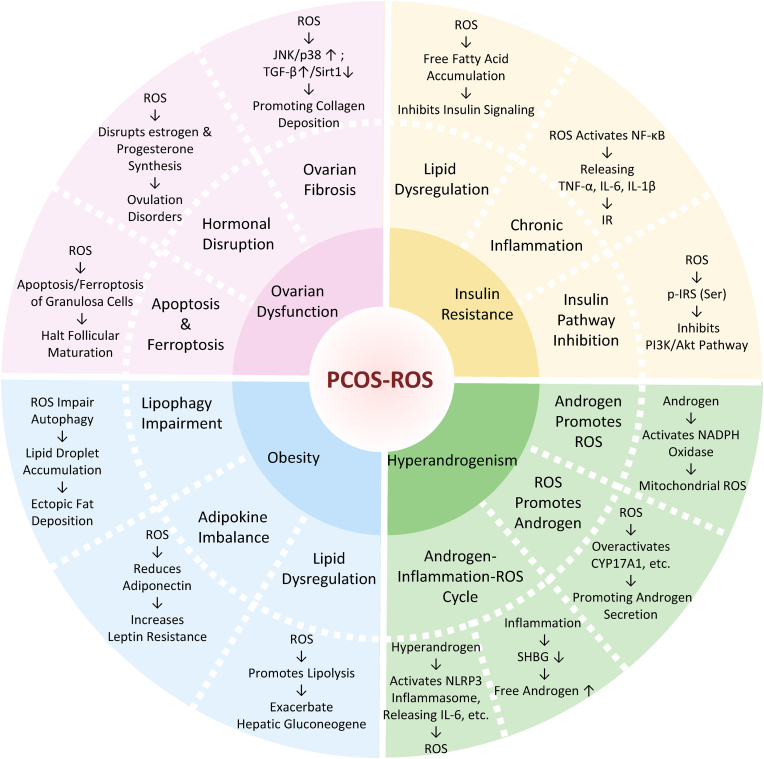
Polycystic ovary syndrome (PCOS), a common yet intricate endocrine disorder, presents persistent clinical challenges due to its complex pathogenesis. Reactive oxygen species (ROS), highly reactive molecules, have emerged as critical contributors to PCOS development and represent potential therapeutic targets. This review comprehensively explores the diverse roles of ROS in PCOS pathogenesis, particularly their contributions to metabolic dysfunction and hormonal imbalance. It further assesses the therapeutic potential of ROS-targeted interventions, summarizing antioxidant therapy advancements, underlying mechanisms, and current challenges. By consolidating recent research, this review highlights the profound significance of ROS in PCOS, aiming to inspire innovative pathogenesis research, improve clinical management, and establish a robust theoretical foundation for more effective PCOS treatment strategies.
多囊卵巢综合征(PCOS)是一种常见但复杂的内分泌紊乱疾病,由于其发病机制复杂,在临床上一直面临挑战。活性氧(ROS)作为高反应性分子,已成为PCOS发展的关键因素,并代表着潜在的治疗靶点。本文综述全面探讨了ROS在PCOS发病机制中的多种作用,特别是它们对代谢功能障碍和激素失衡的影响。此外,本文还评估了以ROS为靶点的干预措施的治疗潜力,总结了抗氧化治疗的进展、潜在机制和当前面临的挑战。通过整合最新研究,本文强调了ROS在PCOS中的重要意义,旨在激发创新的发病机制研究,改善临床管理,并为更有效的PCOS治疗策略奠定坚实的理论基础。