Ye Meng, Guo XiangJiang, Ni Qihong, Shi Zhenyu, Guo Lianrui, Gao Xixiang, Feng Zibo, Tong Zhu, Wang Xiang
Department of Vascular Surgery, Renji Hospital, School of Medicine, Shanghai Jiaotong University, Shanghai, China.
Department of Vascular Surgery, Zhongshan Hospital, Fudan University, Shanghai, China.
Eur J Med Res. 2025 Jul 22;30(1):653. doi: 10.1186/s40001-025-02904-w.
To evaluate the efficacy and safety of the S.M.A.R.T. Flex stents for treating femoropopliteal (FP) occlusive lesions, including complex Trans-Atlantic Inter-Society Consensus (TASC) II C/D and severely calcified lesions.
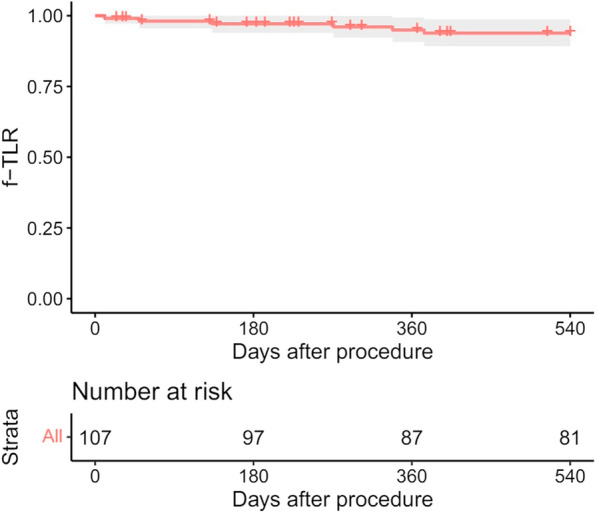
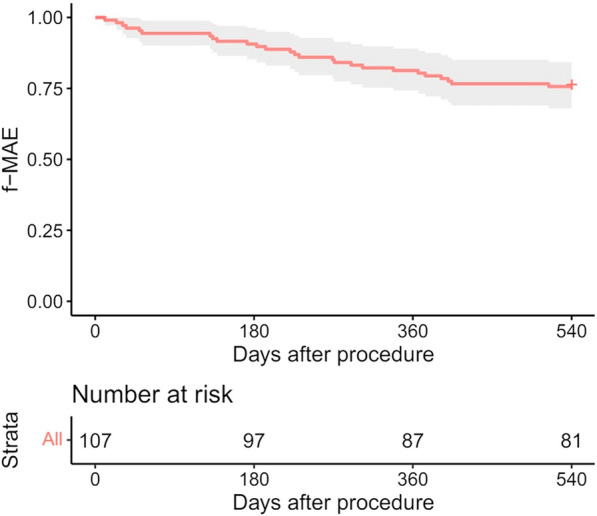
This retrospective study utilized the TALENT registry database (a prospective study), enrolling patients who underwent S.M.A.R.T. Flex implantation from January 2021 to July 2022. The primary effectiveness endpoint was the rate of freedom from clinically driven target lesion revascularization (CD-TLR) at 18 months, and the primary safety endpoint was the 18-month rate of freedom from major adverse events (all-cause death, above-the-ankle target limb amputation, or CD-TLR).
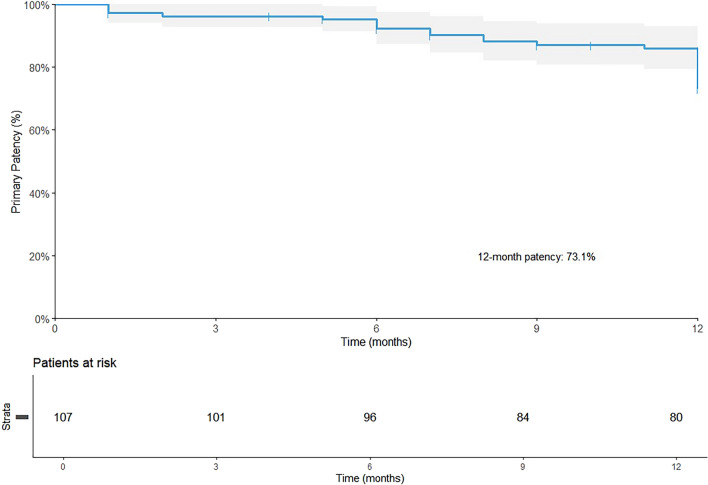
A total of 122 patients with 124 limbs were included, with an average follow-up of 617 days. The average lesion length was 24.9 ± 20.4 cm, and 73.8 and 54.1% of the lesions had chronic total occlusions and chronic limb-threatening ischemia, respectively. A total of 127 stents were placed in 107 limbs, with 1 stent placed in 88 limbs (82.2%), 2 stents placed in 18 limbs (16.8%), and 3 stents implanted in 1 limb (0.9%). In this study, 50.5% of the limbs were treated with DCBs, and 83.3% of the TASC C/D lesions were treated primarily with DCBs. The 12- month rate of primary patency was 73.1%. The 18-month rate of freedom from CD-TLR was 93.9% (95% CI: 89.2-98.8%), and the major adverse event-free rate was 75.7% (95% CI: 68.0-84.3%). A total of 92.5% of patients showed primary sustained clinical improvement, and the Vascular Quality of Life Questionnaire scores were significantly improved at 18 months compared with baseline.
The S.M.A.R.T. Flex stents demonstrate promising efficacy and safety as a treatment option for long-segment complex femoropopliteal artery lesions.
评估S.M.A.R.T. Flex支架治疗股腘(FP)闭塞性病变的疗效和安全性,包括复杂的跨大西洋两岸血管外科学会(TASC)II C/D级病变和严重钙化病变。
这项回顾性研究利用了TALENT注册数据库(一项前瞻性研究),纳入了2021年1月至2022年7月期间接受S.M.A.R.T. Flex植入术的患者。主要有效性终点是18个月时无临床驱动的靶病变血运重建(CD-TLR)率,主要安全性终点是18个月时无主要不良事件(全因死亡、踝关节以上靶肢体截肢或CD-TLR)率。
共纳入122例患者的124条肢体,平均随访617天。平均病变长度为24.9±20.4 cm,分别有73.8%和54.1%的病变为慢性完全闭塞和慢性肢体威胁性缺血。共107条肢体植入127枚支架,88条肢体植入1枚支架(82.2%),18条肢体植入2枚支架(16.8%),1条肢体植入3枚支架(0.9%)。在本研究中,50.5%的肢体采用药物涂层球囊(DCB)治疗,83.3%的TASC C/D级病变主要采用DCB治疗。12个月的原发通畅率为73.1%。18个月时无CD-TLR率为93.9%(95%CI:89.2-98.8%),无主要不良事件率为75.7%(95%CI:68.0-84.3%)。共有92.5%的患者显示出原发性持续临床改善,与基线相比,18个月时血管生活质量问卷评分显著改善。
S.M.A.R.T. Flex支架作为长段复杂股腘动脉病变的治疗选择,显示出有前景的疗效和安全性。