Piazzai Chiara, Petrone Alessio, Stefanini Andrea, D'Ascenzi Flavio, Olivotto Iacopo, Cameli Matteo
Unit Cardiomyopathies, Department of Clinical and Experimental Medicine, University of Florence, Florence, Italy.
Department of Medical Biotechnologies, Division of Cardiology, University of Siena, Siena, Italy.
Front Cardiovasc Med. 2025 Jul 8;12:1620313. doi: 10.3389/fcvm.2025.1620313. eCollection 2025.
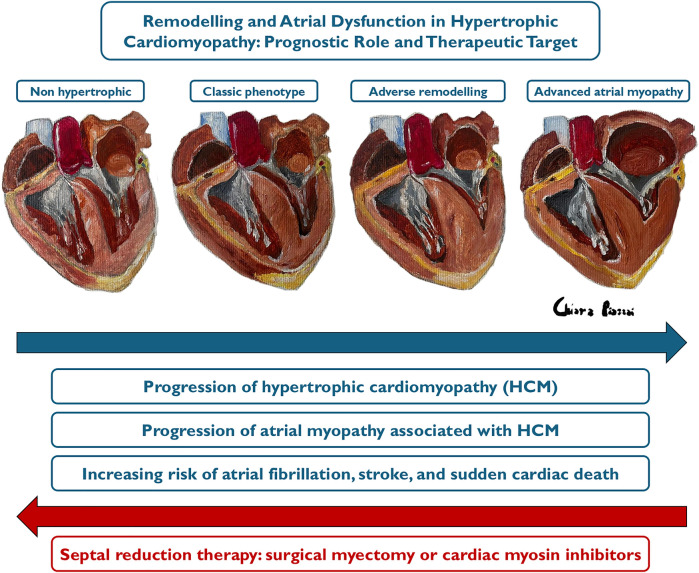
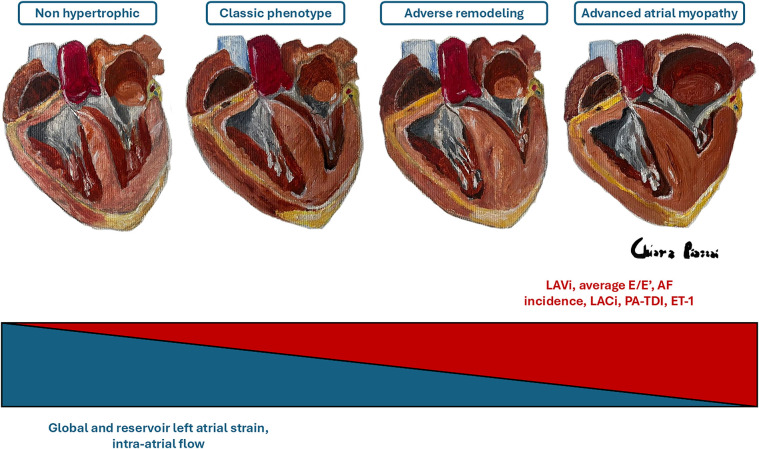
Hypertrophic cardiomyopathy (HCM) is a common genetic cardiac disease marked by abnormal ventricular hypertrophy. Recent studies have highlighted that left atrial (LA) remodelling-including dilation, fibrosis, and functional impairment-plays a key role in disease progression and prognosis, notably increasing the risk of atrial fibrillation (AF) and stroke.
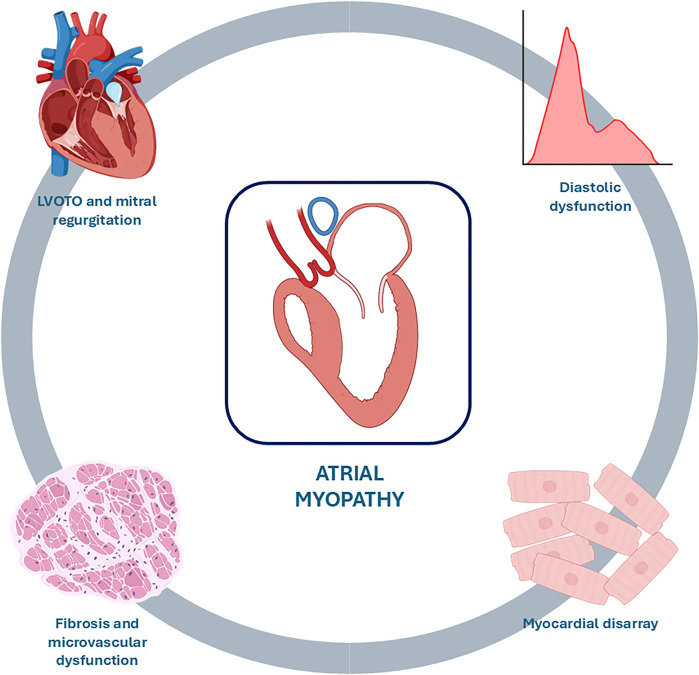
This review article systematically examines published clinical, imaging, and interventional studies. The analysis focuses on identifying the determinants of atrial myopathy, its relationship with diastolic dysfunction and left ventricular outflow tract obstruction (LVOTO), and the effects of therapeutic interventions such as septal reduction therapy and cardiac myosin inhibitors.
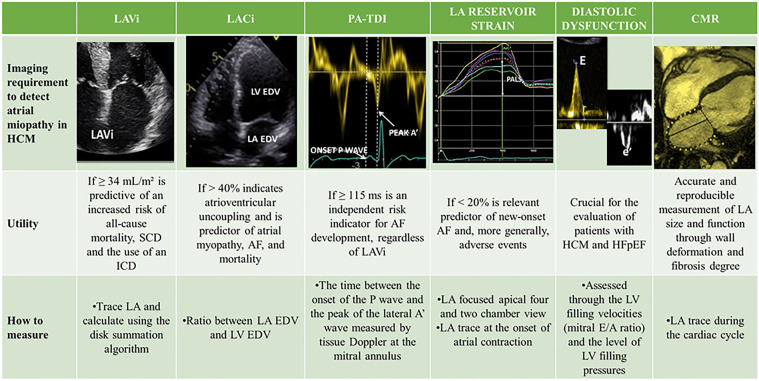
The findings reveal that LA remodelling in HCM is characterized by increased LA volume, reduced atrial strain, and prolonged conduction times-all of which are strongly linked to the onset and recurrence of AF. Moreover, interventions that reduce LVOTO (e.g., surgical myectomy) have been shown to induce LA reverse remodelling and improve diastolic parameters. Emerging therapies, like cardiac myosin inhibitors, also improve LV function but present complex effects on atrial performance, with some evidence suggesting a reduction in atrial strain that warrants further investigation.
Atrial remodelling is a significant marker of disease severity in HCM and an important independent predictor of adverse outcomes, including AF and cardioembolic events. Early detection through comprehensive multimodal imaging and timely therapeutic intervention can potentially mitigate these risks, making atrial myopathy both a critical prognostic factor and a promising therapeutic target.
肥厚型心肌病(HCM)是一种常见的遗传性心脏病,其特征为心室异常肥厚。最近的研究强调,左心房(LA)重塑——包括扩张、纤维化和功能障碍——在疾病进展和预后中起关键作用,尤其会增加心房颤动(AF)和中风的风险。
这篇综述文章系统地审视了已发表的临床、影像学和介入性研究。分析重点在于确定心房肌病的决定因素、其与舒张功能障碍及左心室流出道梗阻(LVOTO)的关系,以及诸如间隔减容治疗和心肌肌球蛋白抑制剂等治疗干预措施的效果。
研究结果显示,HCM中的LA重塑表现为LA容积增加、心房应变降低和传导时间延长——所有这些都与AF的发作和复发密切相关。此外,已证实减轻LVOTO的干预措施(如外科心肌切除术)可诱导LA逆向重塑并改善舒张参数。新兴疗法,如心肌肌球蛋白抑制剂,也可改善左心室功能,但对心房功能有复杂影响,有证据表明心房应变降低,这值得进一步研究。
心房重塑是HCM疾病严重程度的重要标志,也是包括AF和心源性栓塞事件在内的不良结局的重要独立预测因素。通过全面的多模态成像进行早期检测并及时进行治疗干预可能会降低这些风险,使心房肌病既是一个关键的预后因素,也是一个有前景的治疗靶点。