Lu Mingjun, Dai Ziqi, Lin Yixuan, Sun Changsheng, Li Shuo, Guo Zhuoqian, Liu Yongji, Liu Xiaobi, Li Shanlan, Liu Runping, Xu Bing, Lei Haimin
School of Chinese Pharmacy, Beijing University of Chinese Medicine, Beijing, 100102, People's Republic of China.
Int J Nanomedicine. 2025 Jul 18;20:9135-9153. doi: 10.2147/IJN.S512005. eCollection 2025.
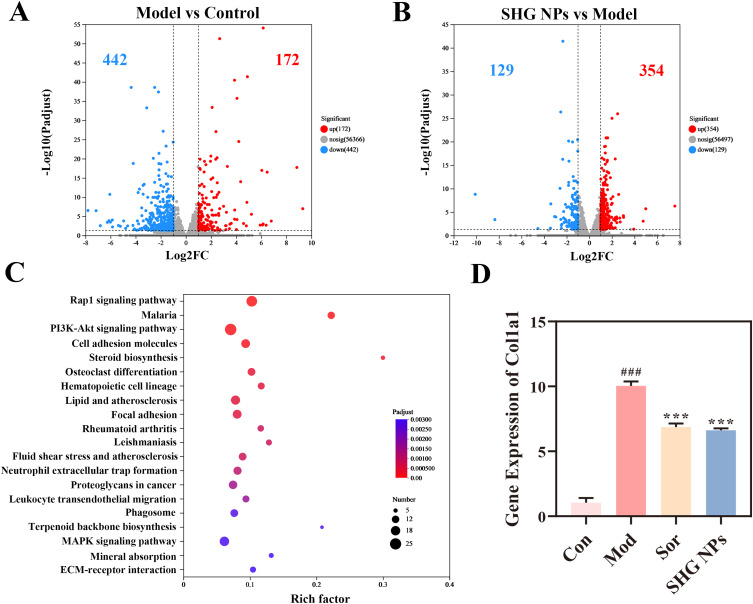
Sorafenib, a multi-kinase inhibitor, has emerged as a promising therapeutic agent for liver fibrosis due to its ability to target key signaling pathways involved in HSC activation. However, it may inadvertently exacerbate inflammatory responses at certain doses. Recent findings suggest that targeting the STING signaling pathway may provide an alternative strategy for slowing the progression of fibrosis.
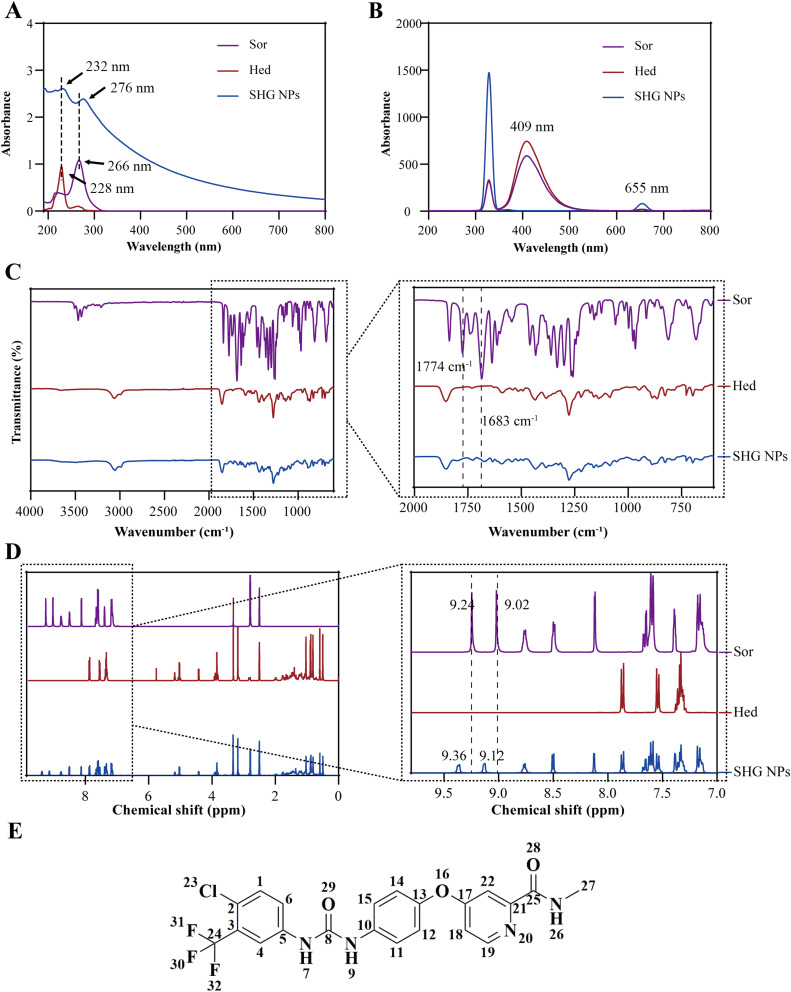
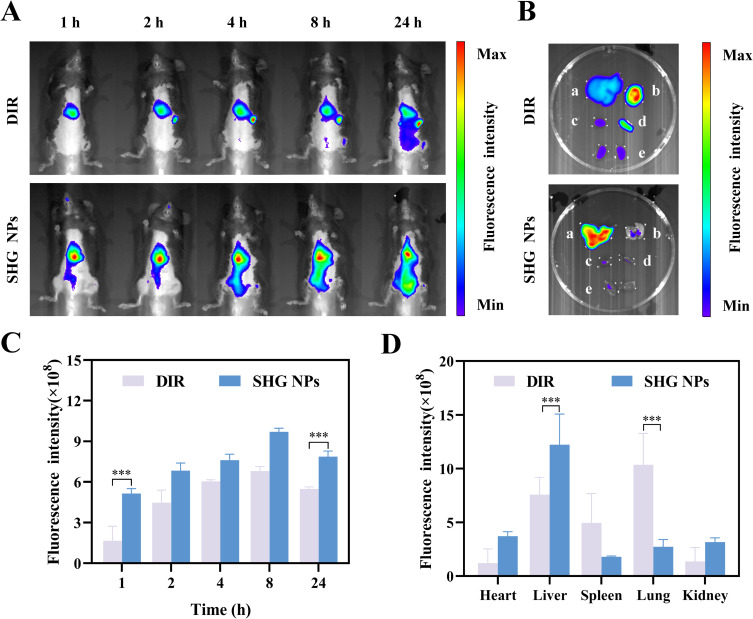
We synthesized liver-targeted co-assembled SHG nanoparticles (SHG NPs) that incorporate sorafenib and a hederagenin derivative (Hed), which acted as a STING pathway inhibitor. SHG NPs are preferentially endocytosed by hepatocytes via DSPE-PEG-Gal-mediated ASGPR targeting. After release from hepatocytes, sorafenib diffuses into adjacent HSCs through concentration gradients, effectively inhibiting PDGFR/TGF-β signaling. Hed exhibits dual-targeting characteristics: (1) its STING inhibitory activity selectively acts on macrophage-mediated inflammation; (2) the enhanced phagocytic capacity of Kupffer cells in fibrotic livers promotes non-specific uptake. This spatiotemporal release pattern, combined with pathway-specific pharmacodynamics, ensures synergistic anti-fibrotic effects.
In this study, SHG NPs have been successfully formulated with well-defined nanostructures and uniform sizes (115.1 nm). In vitro Sirius Red staining demonstrated that SHG NPs inhibited collagen deposition by 57.5 ± 2.3%, significantly higher than the inhibition observed with sorafenib alone (24.8 ± 1.8%). Furthermore, cell uptake studies confirmed enhanced uptake of SHG NPs in ASGPR-overexpressing cell lines, which was attributed to the presence of galactose on their surface. Additionally, in vivo anti-liver fibrosis activity experiments further confirmed that SHG NPs exhibit superior therapeutic efficacy compared to sorafenib.
Our research indicates that formulating sorafenib with a STING pathway inhibitor into liver-targeted nanoparticles represents a potentially effective strategy for the treatment of liver fibrosis.
索拉非尼是一种多激酶抑制剂,因其能够靶向肝星状细胞(HSC)激活过程中涉及的关键信号通路,已成为治疗肝纤维化的一种有前景的治疗药物。然而,在某些剂量下,它可能会无意中加剧炎症反应。最近的研究结果表明,靶向干扰素基因刺激蛋白(STING)信号通路可能为减缓纤维化进展提供一种替代策略。
我们合成了肝靶向共组装的二次谐波产生纳米颗粒(SHG NPs),其包含索拉非尼和一种常春藤皂苷元衍生物(Hed),后者作为一种STING通路抑制剂。SHG NPs通过二硬脂酰磷脂酰乙醇胺-聚乙二醇-半乳糖(DSPE-PEG-Gal)介导的去唾液酸糖蛋白受体(ASGPR)靶向作用被肝细胞优先内吞。从肝细胞释放后,索拉非尼通过浓度梯度扩散到相邻的肝星状细胞中,有效抑制血小板衍生生长因子受体(PDGFR)/转化生长因子-β(TGF-β)信号通路。Hed具有双重靶向特性:(1)其STING抑制活性选择性作用于巨噬细胞介导的炎症;(2)肝纤维化时库普弗细胞吞噬能力增强促进了非特异性摄取。这种时空释放模式,结合通路特异性药效学,确保了协同抗纤维化作用。
在本研究中,已成功制备出具有明确纳米结构和均匀尺寸(115.1 nm)的SHG NPs。体外天狼星红染色表明,SHG NPs抑制胶原沉积达57.5±2.3%,显著高于单独使用索拉非尼时观察到的抑制率(24.8±1.8%)。此外,细胞摄取研究证实SHG NPs在ASGPR过表达细胞系中的摄取增加,这归因于其表面存在半乳糖。另外,体内抗肝纤维化活性实验进一步证实,与索拉非尼相比,SHG NPs表现出更好的治疗效果。
我们的研究表明,将索拉非尼与一种STING通路抑制剂制成肝靶向纳米颗粒是一种治疗肝纤维化的潜在有效策略。