Ishigaki Takahiro, Okamoto Kazuma, Asada Satoshi, Sakaguchi Genichi
Department of Cardiovascular Surgery, KKR Sapporo Medical Center, Hokkaido, Japan.
Department of Surgery 1, Division of Cardiovascular Surgery, Hamamatsu University School of Medicine, Shizuoka, Japan.
Gen Thorac Cardiovasc Surg Cases. 2025 Jul 24;4(1):33. doi: 10.1186/s44215-025-00217-2.
The COR-KNOT device is widely used in minimally invasive cardiac surgery, and its efficacy in reducing operative time is well established. However, it has been associated with complications, such as valve leaflet perforation and prosthetic valve damage.
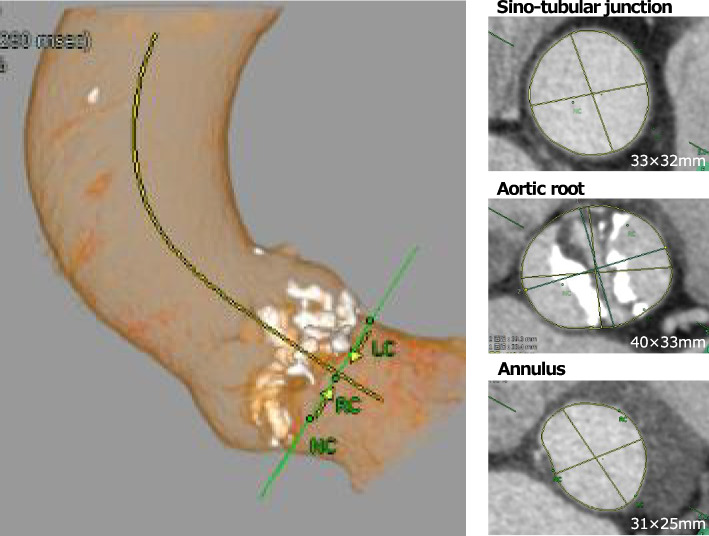
We report a rare case of aortic root injury caused by COR-KNOT usage. A 72-year-old man with severe aortic stenosis due to a bicuspid aortic valve and distorted aortic root anatomy underwent minimally invasive aortic valve replacement using the COR-KNOT. After aortotomy closure, vigorous bleeding from the aortic root was observed. Punctate injuries of the aortic root, corresponding to the COR-KNOT clip sites, were identified following re-aortic cross-clamping. The procedure was converted to median sternotomy, the aortic root injury was repaired with an autologous pericardial patch, and the bioprosthetic valve was re-implanted using hand-tied sutures. The patient recovered uneventfully.
This case highlights the importance of careful device selection and clip positioning in anatomically challenging cases to avoid life-threatening complications.
COR-KNOT装置广泛应用于微创心脏手术,其在缩短手术时间方面的疗效已得到充分证实。然而,它也与一些并发症相关,如瓣膜穿孔和人工瓣膜损伤。
我们报告一例因使用COR-KNOT装置导致主动脉根部损伤的罕见病例。一名72岁男性,因二叶式主动脉瓣导致严重主动脉瓣狭窄且主动脉根部解剖结构扭曲,接受了使用COR-KNOT装置的微创主动脉瓣置换术。主动脉切开闭合后,观察到主动脉根部大量出血。再次阻断主动脉后,发现主动脉根部有与COR-KNOT夹子放置部位相对应的点状损伤。手术转为正中胸骨切开术,用自体心包补片修复主动脉根部损伤,并用手工打结缝线重新植入生物人工瓣膜。患者顺利康复。
本病例强调了在解剖结构复杂的病例中,谨慎选择装置和夹子定位以避免危及生命的并发症的重要性。