Austin Grant L, Wang Feng, Le Steven Q, Sorensen Alexander, Li Shan, Foong Lai C, Singamsetty Srikanth, Wood Jill, Chou Tsui-Fen, Dickson Patricia I
Department of Pediatrics, Washington University School of Medicine, St. Louis, Missouri, United States of America.
Division of Biology and Biological Engineering, California Institute of Technology, Pasadena, California, United States of America.
PLoS One. 2025 Jul 25;20(7):e0328941. doi: 10.1371/journal.pone.0328941. eCollection 2025.
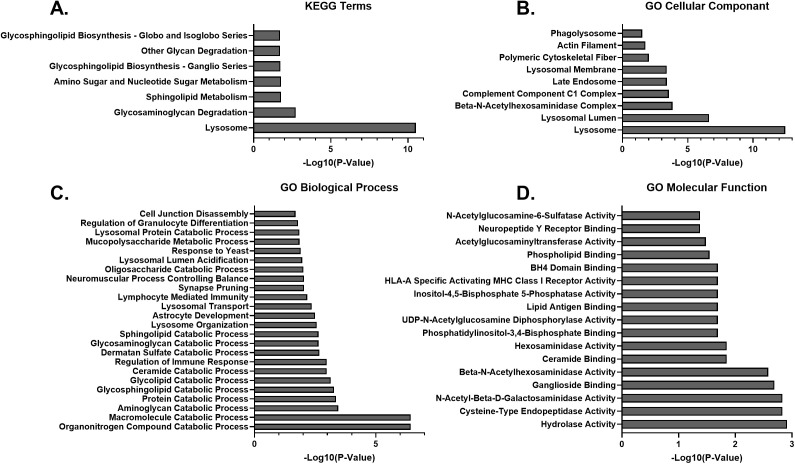
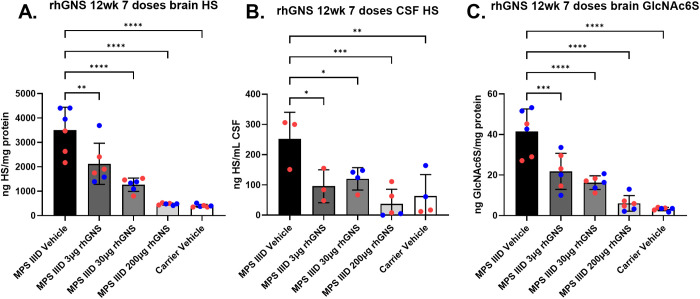
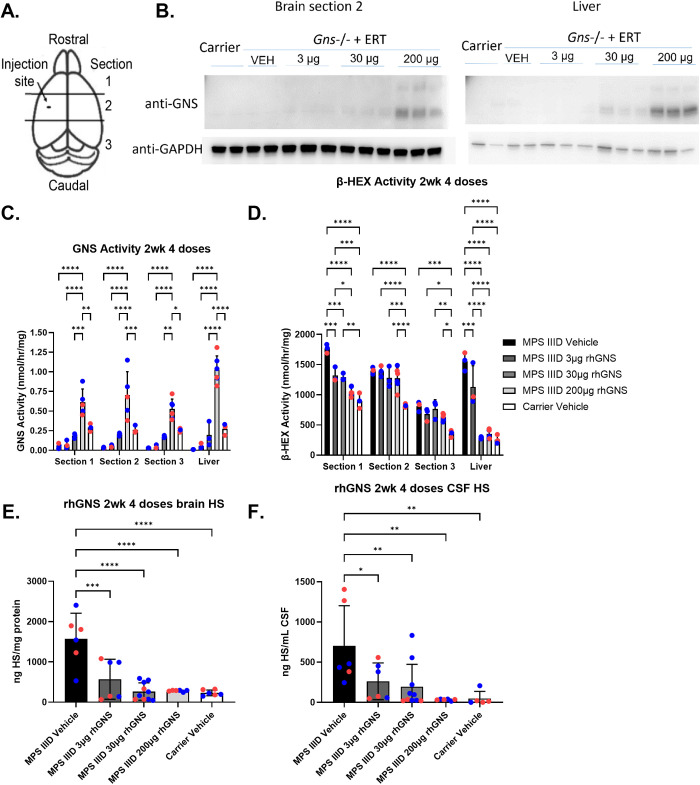
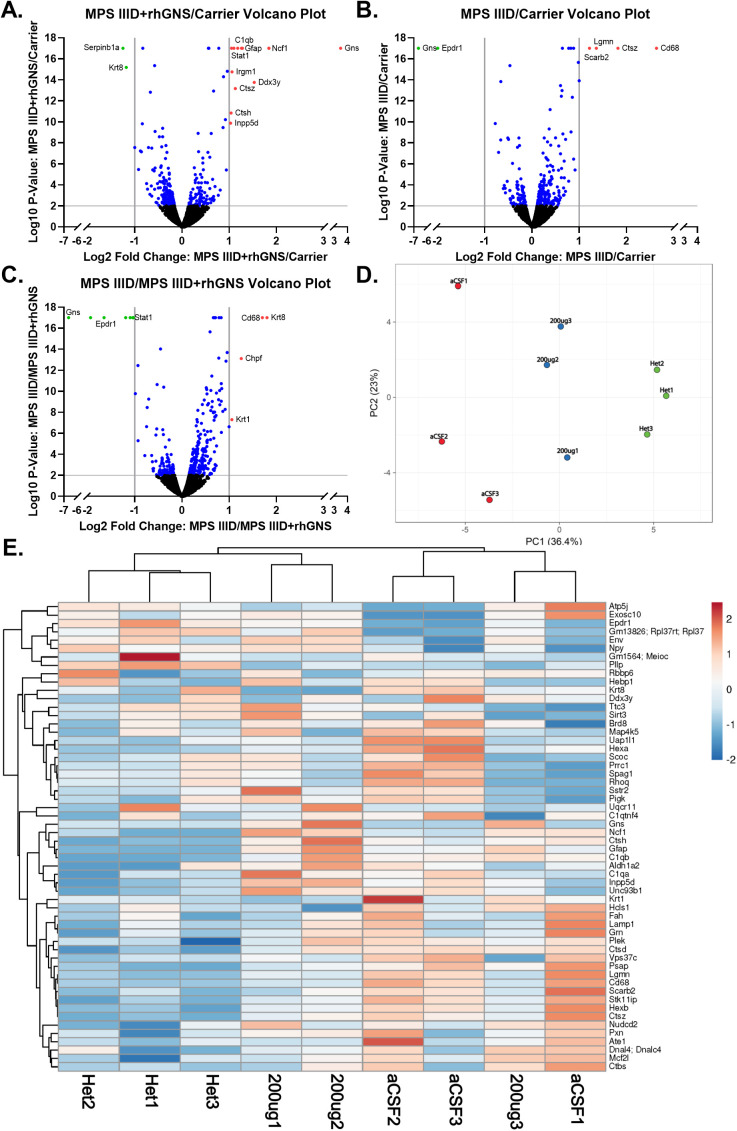
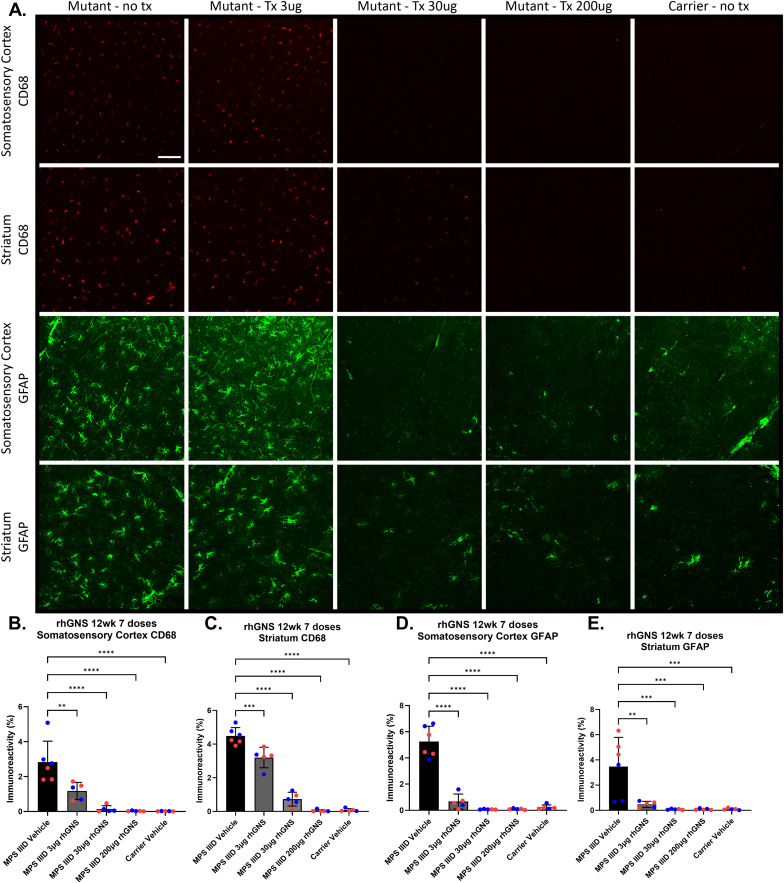
Mucopolysaccharidosis type IIID (MPS IIID; Sanfilippo D) is caused by biallelic pathogenic variants in N-acetylglucosamine-6-sulfatase (GNS), which participates in catabolism of heparan sulfate (HS) glycosaminoglycans. Characterization of MPS IIID disease at a cellular level has not been robustly achieved. We used unbiased quantitative proteomics to establish a cellular phenotype for MPS IIID mice. Recombinant human GNS (rhGNS), a variant of which previously demonstrated single dose efficacy in MPS IIID human fibroblasts and in MPS IIID neonatal mice, was used to establish a repeat dosing schedule to treat MPS IIID mice. Adult Gns KO mice or heterozygous carriers were treated via intracerebroventricular (ICV) injections and received 3, 30, or 200 μg rhGNS in 4 doses over 2 weeks or vehicle. Twenty-four hours after the final dose, HS in brain and CSF showed dose-dependent reductions, reaching carrier levels in the higher dose groups. Furthermore, the proteomic perturbations that we described were corrected by rhGNS treatment. Next, Gns KO or carrier adult mice were treated via ICV and received 3, 30 or 200 μg rhGNS or vehicle once every two weeks (Day 1, 15, 29, 43, 57, 71, 85) and were euthanized on day 91. Following treatment, total HS and MPS IIID-specific HS (GlcNAc6S) showed dose-dependent reductions in brain and CSF and markers of neuroinflammation were substantially reduced. ICV enzyme replacement therapy with rhGNS restores CNS pathology of adult MPS IIID mice even with treatment at 14-day intervals, demonstrating preclinical efficacy for MPS IIID.
IIID型黏多糖贮积症(MPS IIID;Sanfilippo D型)由N - 乙酰葡糖胺 - 6 - 硫酸酯酶(GNS)的双等位基因致病性变异引起,该酶参与硫酸乙酰肝素(HS)糖胺聚糖的分解代谢。尚未在细胞水平上对MPS IIID疾病进行充分表征。我们使用非靶向定量蛋白质组学来确定MPS IIID小鼠的细胞表型。重组人GNS(rhGNS),其一种变体先前已在MPS IIID人成纤维细胞和MPS IIID新生小鼠中显示出单剂量疗效,用于建立重复给药方案以治疗MPS IIID小鼠。成年Gns基因敲除小鼠或杂合携带者通过脑室内(ICV)注射进行治疗,在2周内分4剂接受3、30或200μg rhGNS或赋形剂。最后一剂后24小时,脑和脑脊液中的HS呈剂量依赖性降低,在高剂量组中达到携带者水平。此外,我们描述的蛋白质组扰动通过rhGNS治疗得到纠正。接下来,成年Gns基因敲除或携带小鼠通过ICV治疗,每两周(第1、15、29、43、57、71、85天)接受一次3、30或200μg rhGNS或赋形剂,并在第91天实施安乐死。治疗后,脑和脑脊液中的总HS和MPS IIID特异性HS(GlcNAc6S)呈剂量依赖性降低,神经炎症标志物也大幅减少。即使以14天的间隔进行治疗,用rhGNS进行ICV酶替代疗法也能恢复成年MPS IIID小鼠的中枢神经系统病理学,证明了对MPS IIID的临床前疗效。