• 文献检索
  • 文档翻译
  • 深度研究
  • 学术资讯
  • Suppr Zotero 插件Zotero 插件
  • 邀请有礼
  • 套餐&价格
  • 历史记录
应用&插件
Suppr Zotero 插件Zotero 插件浏览器插件Mac 客户端Windows 客户端微信小程序
定价
高级版会员购买积分包购买API积分包
服务
文献检索文档翻译深度研究API 文档MCP 服务
关于我们
关于 Suppr公司介绍联系我们用户协议隐私条款
关注我们

Suppr 超能文献

核心技术专利:CN118964589B侵权必究
粤ICP备2023148730 号-1Suppr @ 2026

文献检索

告别复杂PubMed语法,用中文像聊天一样搜索,搜遍4000万医学文献。AI智能推荐,让科研检索更轻松。

立即免费搜索

文件翻译

保留排版,准确专业,支持PDF/Word/PPT等文件格式,支持 12+语言互译。

免费翻译文档

深度研究

AI帮你快速写综述,25分钟生成高质量综述,智能提取关键信息,辅助科研写作。

立即免费体验

土耳其屈指肌腱修复康复治疗师的当前管理趋势:一项横断面调查研究

Flexor tendon repair rehabilitation in Turkiye, therapists' current management trends: a cross-sectional survey study.

作者信息

Karacam Seher, Gultekinler Birgul Dingirdan

机构信息

School of Physical Therapy, Kirsehir Ahi Evran University, Kirsehir, Turkey.

Physiotherapy and Rehabilitation Department, Faculty of Health Sciences, Sakarya University of Applied Sciences, Sakarya, Turkey.

出版信息

BMC Musculoskelet Disord. 2025 Jul 25;26(1):705. doi: 10.1186/s12891-025-08960-x.

DOI:10.1186/s12891-025-08960-x
PMID:40713615
原文链接:https://pmc.ncbi.nlm.nih.gov/articles/PMC12291372/
Abstract

BACKGROUND

Flexor tendon injuries are prevalent in Turkey and interest in hand rehabilitation is steadily increasing. However, there is no consensus regarding therapists’ rehabilitation decisions. Therefore, the aim of this study is to investigate the current approaches of hand therapists Turkey toward flexor tendon injuries.

METHOD

A 15-item multiple-choice online survey was distributed via WhatsApp to therapists actively working in the field of hand rehabilitation in hospitals, clinics, public health institutions, and universities, who were also members of the Turkish Hand Therapists Association. The survey was distributed at two different points and remained open from February 2025 to April 2025.

RESULTS

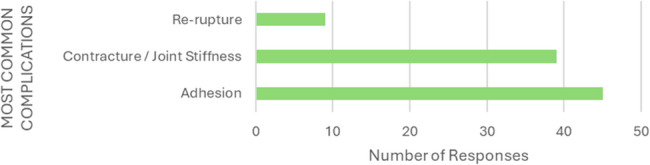
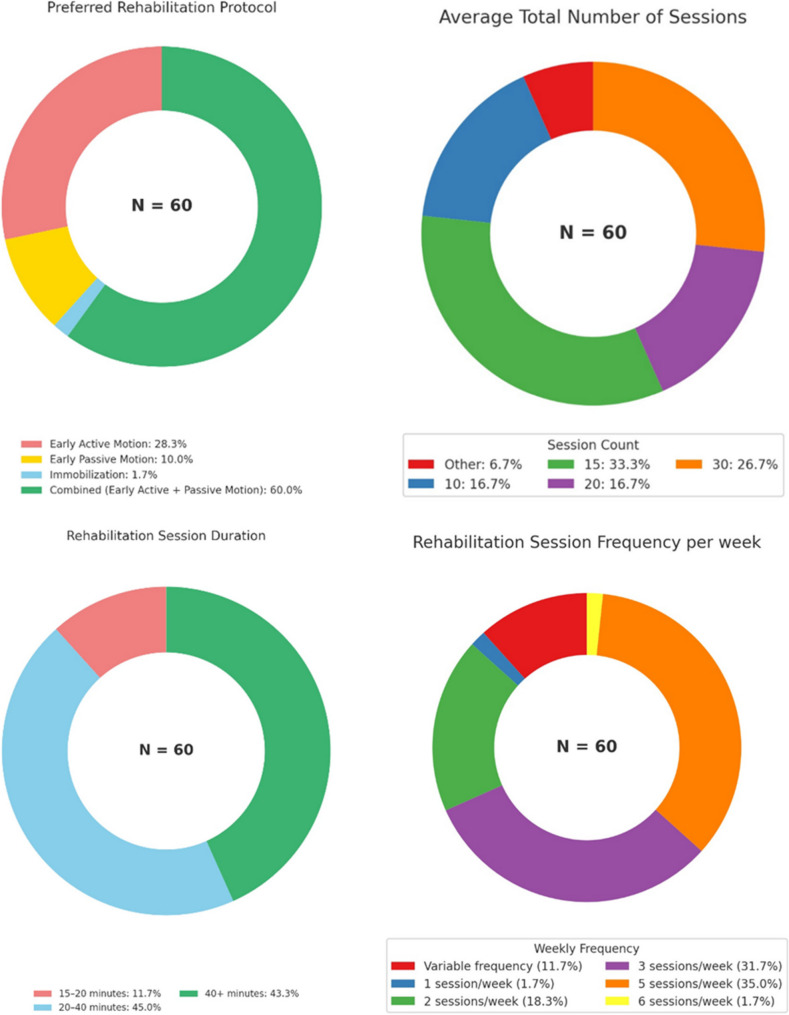
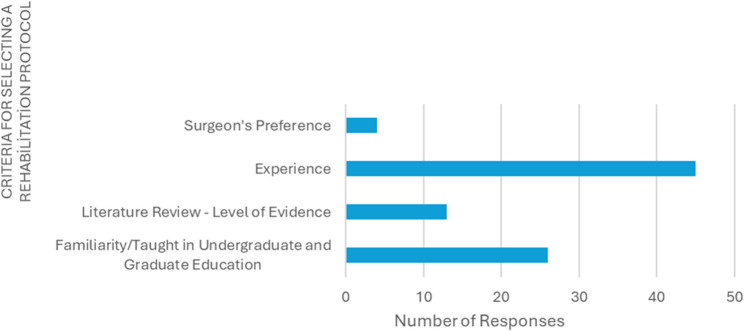
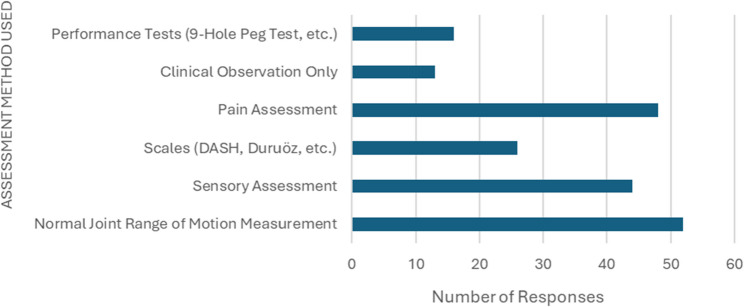
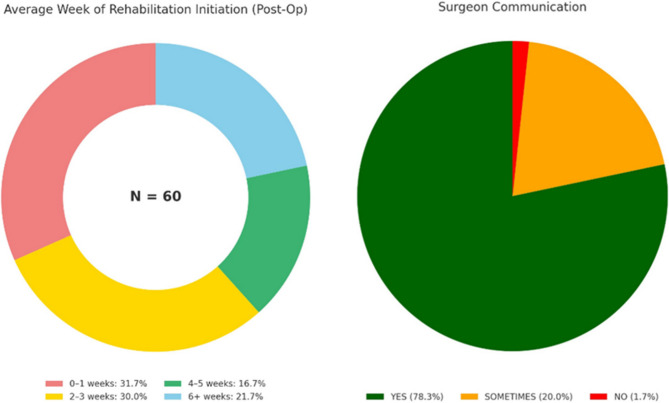
​This study surveyed 117 members of the Turkey Hand Therapists Association, achieving a 51.28% response rate with 60 therapists participating. Among respondents, 68.3% were physiotherapists, 20% academicians, and 11.7% occupational therapists. Half reported 0–5 years of experience, and 51.6% held postgraduate degrees. The majority (31.7%) initiated rehabilitation within postoperative weeks 0–1, and 78.3% had communication with the surgeon. The most preferred rehabilitation protocol was a combination of early active and early passive motions (60%). Regarding treatment specifics, 33.3% administered a total of 15 rehabilitation sessions, with session durations typically between 20 and 40 min (45%). Session frequency varied, with 35% conducting five sessions per week. Experience was the primary factor influencing protocol selection (73.3%). The most used assessment method was measuring normal joint range of motion (85%), while adhesion (73.3%) was the most frequently encountered complication, and re-rupture (15%) was the least common.

CONCLUSIONS

In Turkey, there has been a transition toward early mobilization approaches particularly employing early active motion techniques. However, parameters such as the frequency and duration of rehabilitation vary significantly among therapists. Therefore, future research in Turkey should aim to identify the most effective rehabilitation frequency and duration parameters by promoting enhanced collaboration among therapists.

SUPPLEMENTARY INFORMATION

The online version contains supplementary material available at 10.1186/s12891-025-08960-x.

摘要

背景

屈指肌腱损伤在土耳其很常见,人们对手部康复的兴趣也在稳步增加。然而,治疗师在康复决策方面尚未达成共识。因此,本研究的目的是调查土耳其手部治疗师对屈指肌腱损伤的当前治疗方法。

方法

通过WhatsApp向在医院、诊所、公共卫生机构和大学从事手部康复领域工作的治疗师(他们也是土耳其手部治疗师协会的成员)发放了一份包含15个项目的多项选择题在线调查问卷。该调查在两个不同时间点发放,于2025年2月至2025年4月期间开放。

结果

本研究对土耳其手部治疗师协会的117名成员进行了调查,60名治疗师参与,回复率为51.28%。在受访者中,68.3%是物理治疗师,20%是院士,11.7%是职业治疗师。一半的人报告有0至5年的经验,51.6%拥有研究生学位。大多数人(31.7%)在术后0至1周内开始康复治疗,78.3%与外科医生进行了沟通。最受欢迎的康复方案是早期主动运动和早期被动运动相结合(60%)。关于治疗细节,33.3%总共进行了15次康复治疗,每次治疗时间通常在20至40分钟之间(45%)。治疗频率各不相同,35%的人每周进行五次治疗。经验是影响方案选择的主要因素(73.3%)。最常用的评估方法是测量正常关节活动范围(85%),而粘连(73.3%)是最常遇到的并发症,再断裂(15%)是最不常见的。

结论

在土耳其,已经向早期活动方法特别是采用早期主动运动技术转变。然而,治疗师之间康复治疗的频率和持续时间等参数差异很大。因此,土耳其未来的研究应旨在通过促进治疗师之间加强合作来确定最有效的康复频率和持续时间参数。

补充信息

在线版本包含可在10.1186/s12891-025-08960-x获取的补充材料。
https://cdn.ncbi.nlm.nih.gov/pmc/blobs/cb55/12291372/bbb58fa6dc5e/12891_2025_8960_Fig5_HTML.jpg
https://cdn.ncbi.nlm.nih.gov/pmc/blobs/cb55/12291372/15578f59c65c/12891_2025_8960_Fig1_HTML.jpg
https://cdn.ncbi.nlm.nih.gov/pmc/blobs/cb55/12291372/b951324dad93/12891_2025_8960_Fig2_HTML.jpg
https://cdn.ncbi.nlm.nih.gov/pmc/blobs/cb55/12291372/ce238a12b186/12891_2025_8960_Fig3_HTML.jpg
https://cdn.ncbi.nlm.nih.gov/pmc/blobs/cb55/12291372/7ec82e936f34/12891_2025_8960_Fig4_HTML.jpg
https://cdn.ncbi.nlm.nih.gov/pmc/blobs/cb55/12291372/bbb58fa6dc5e/12891_2025_8960_Fig5_HTML.jpg
https://cdn.ncbi.nlm.nih.gov/pmc/blobs/cb55/12291372/15578f59c65c/12891_2025_8960_Fig1_HTML.jpg
https://cdn.ncbi.nlm.nih.gov/pmc/blobs/cb55/12291372/b951324dad93/12891_2025_8960_Fig2_HTML.jpg
https://cdn.ncbi.nlm.nih.gov/pmc/blobs/cb55/12291372/ce238a12b186/12891_2025_8960_Fig3_HTML.jpg
https://cdn.ncbi.nlm.nih.gov/pmc/blobs/cb55/12291372/7ec82e936f34/12891_2025_8960_Fig4_HTML.jpg
https://cdn.ncbi.nlm.nih.gov/pmc/blobs/cb55/12291372/bbb58fa6dc5e/12891_2025_8960_Fig5_HTML.jpg

相似文献

1
Flexor tendon repair rehabilitation in Turkiye, therapists' current management trends: a cross-sectional survey study.土耳其屈指肌腱修复康复治疗师的当前管理趋势:一项横断面调查研究
BMC Musculoskelet Disord. 2025 Jul 25;26(1):705. doi: 10.1186/s12891-025-08960-x.
2
Primary flexor tendons repair in zone 2: Current trends with GEMMSOR survey results.2区原发性屈肌腱修复:GEMMSOR调查结果的当前趋势
Hand Surg Rehabil. 2018 Oct;37(5):281-288. doi: 10.1016/j.hansur.2018.05.005. Epub 2018 Jun 20.
3
Clinical decision making and therapists' autonomy in the context of flexor tendon rehabilitation.屈肌腱康复背景下的临床决策与治疗师的自主性
J Hand Ther. 2008 Jul-Sep;21(3):254-9; quiz 260. doi: 10.1197/j.jht.2007.10.022.
4
Variation in patient information and rehabilitation regimens after flexor tendon repair in the United Kingdom.英国屈指肌腱修复术后患者信息及康复方案的差异。
Hand Ther. 2022 Jun;27(2):49-57. doi: 10.1177/17589983221089654. Epub 2022 Apr 6.
5
Short-Term Postoperative Complications in Flexor Tendon Repair: A Subcategory Analysis by Surgical Specialty.屈肌腱修复术后短期并发症:按手术专科分类分析
Plast Surg (Oakv). 2024 Mar 22:22925503241241083. doi: 10.1177/22925503241241083.
6
Maximizing hand function following zone II flexor tendon repair: A systematic review and meta-analysis of rehabilitation strategies.II区屈指肌腱修复术后手部功能最大化:康复策略的系统评价与荟萃分析
J Hand Microsurg. 2024 Aug 26;16(5):100152. doi: 10.1016/j.jham.2024.100152. eCollection 2024 Dec.
7
Flexor tendon injuries: Repair & Rehabilitation.屈肌腱损伤:修复与康复。
Injury. 2021 Aug;52(8):2053-2067. doi: 10.1016/j.injury.2021.07.036.
8
Which is more effective? Porcine tendon or 3D- printed flexor tendon? A study of model realism and educational utility in a flexor tendon repair workshop.哪种更有效?猪肌腱还是3D打印屈肌腱?屈肌腱修复工作坊中的模型逼真度与教育效用研究。
J Hand Microsurg. 2024 Jul 15;16(4):100128. doi: 10.1016/j.jham.2024.100128. eCollection 2024 Oct.
9
Zone II Flexor Tendon Repairs in the United States: Trends in Current Management.美国二区屈肌腱修复:当前治疗趋势
J Hand Surg Am. 2017 Feb;42(2):e99-e108. doi: 10.1016/j.jhsa.2016.11.022. Epub 2016 Dec 10.
10
Patient outcomes and costs after isolated flexor tendon repairs of the hand.手部单纯屈指肌腱修复术后的患者预后及费用
J Hand Ther. 2022 Oct-Dec;35(4):590-596. doi: 10.1016/j.jht.2021.04.015. Epub 2021 Apr 14.

本文引用的文献

1
Hand therapy utilization following digital flexor tendon repair: Trends, timing, predictive factors, and association with reoperation.指屈肌腱修复术后的手治疗应用:趋势、时机、预测因素及与再次手术的关联
J Hand Ther. 2025 Jan 3. doi: 10.1016/j.jht.2024.07.002.
2
Advances and Challenges in Zone 2 Flexor Tendon Repairs.二区屈肌腱修复的进展与挑战。
Ann Plast Surg. 2024 Dec 1;93(6S Suppl 3):S138-S143. doi: 10.1097/SAP.0000000000004062. Epub 2024 Sep 19.
3
Range of Motion Following Flexor Tendon Repair: Comparing Active Flexion and Extension With Passive Flexion Using Rubber Bands Followed by Active Extension.
J Hand Surg Am. 2024 Dec;49(12):1203-1210. doi: 10.1016/j.jhsa.2024.08.003. Epub 2024 Sep 30.
4
How is range of motion of the fingers measured in hand therapy practice? A survey study.在手部治疗实践中,手指的活动范围是如何测量的?一项调查研究。
Hand Ther. 2024 Sep;29(3):112-123. doi: 10.1177/17589983241237780. Epub 2024 Apr 22.
5
Current trends in the prevention of adhesions after zone 2 flexor tendon repair.目前在预防 2 区屈肌腱修复后粘连的趋势。
J Orthop Res. 2024 Oct;42(10):2149-2158. doi: 10.1002/jor.25874. Epub 2024 May 18.
6
Current clinical opinion on surgical approaches and rehabilitation of hand flexor tendon injury-a questionnaire study.关于手部屈肌腱损伤手术方法与康复的当前临床观点——一项问卷调查研究
Front Med Technol. 2024 Feb 15;6:1269861. doi: 10.3389/fmedt.2024.1269861. eCollection 2024.
7
Complications of flexor tendon repair.屈肌腱修复的并发症。
J Hand Surg Eur Vol. 2024 Feb;49(2):158-166. doi: 10.1177/17531934231182868.
8
Current rehabilitation recommendations following primary triangular fibrocartilage complex foveal repair surgery: A survey of Australian hand therapists.原发性三角纤维软骨复合体中央凹修复手术后的当前康复建议:一项对澳大利亚手部治疗师的调查。
J Hand Ther. 2023 Oct-Dec;36(4):932-939. doi: 10.1016/j.jht.2023.08.009. Epub 2023 Sep 28.
9
Risk factors associated with tendon adhesions after hand tendon repair.手部肌腱修复术后肌腱粘连的相关危险因素。
Front Surg. 2023 Apr 18;10:1121892. doi: 10.3389/fsurg.2023.1121892. eCollection 2023.
10
Therapy after Flexor Tendon Repair.屈肌腱修复术后的治疗。
Hand Clin. 2023 May;39(2):181-192. doi: 10.1016/j.hcl.2022.08.019.