Cheng Zimei, Wang Kexin, Wang Yixue, Liu Tingyan, Li Jingjing, Wang Yaodong, Chen Weiming, Awuti Reyihangu, Zhou Hetian, Tong Wenjia, Yu Zhenhao, Wang Yao, Su Guoyun, Yang Weiguo, Zhou Yufeng, Lu Guoping, Zhang Caiyan
Department of Emergency and Critical Care Medicine, Children's Hospital of Fudan University, Shanghai Institute of Infectious Disease and Biosecurity, and Institutes of Biomedical Sciences Fudan University, 200032, Shanghai, China.
National Health Commission Key Laboratory of Neonatal Diseases, Fudan University, Shanghai, China.
Cell Death Dis. 2025 Jul 25;16(1):562. doi: 10.1038/s41419-025-07882-9.
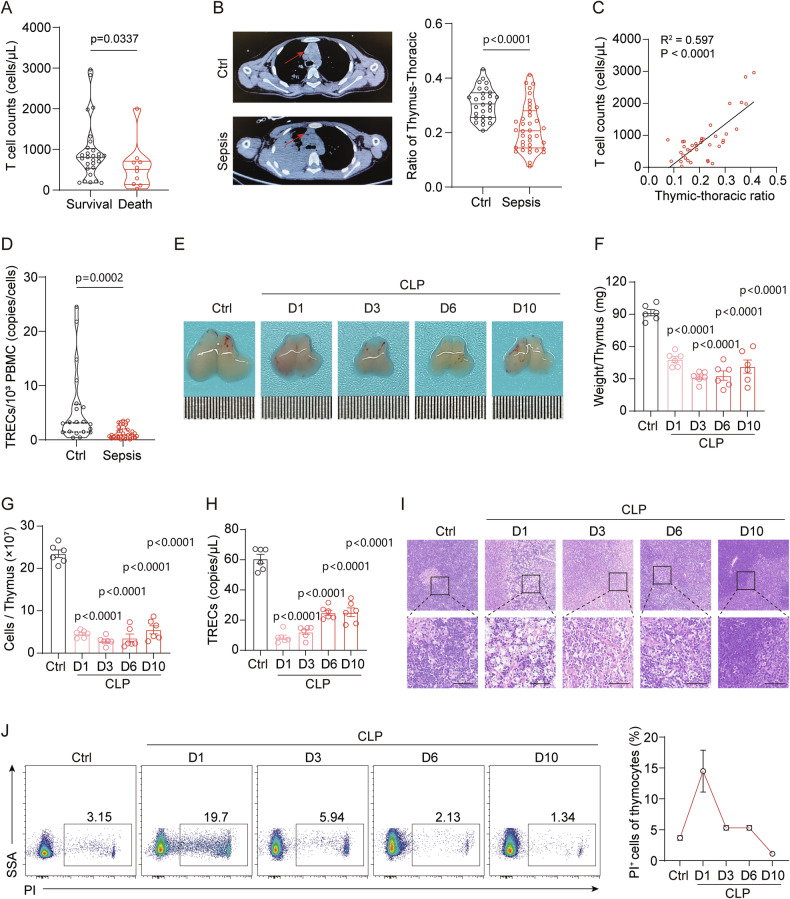
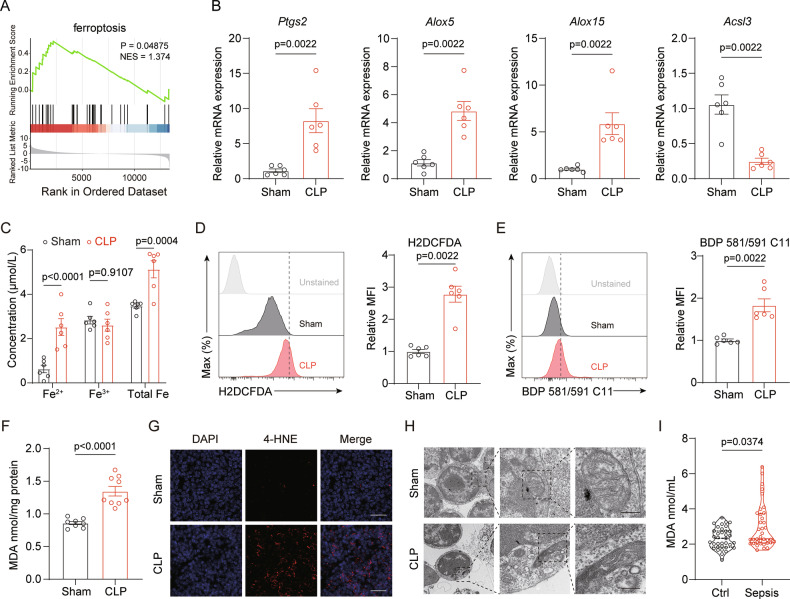
Acute thymic involution (ATI) is frequently observed during sepsis, however the underlying mechanisms remain poorly understood. This study demonstrates that ferroptosis plays a crucial role in sepsis-associated ATI. We found that pediatric sepsis patients showed significantly elevated kynurenine (Kyn)/tryptophan (Trp) ratios, indicating increased indoleamine 2,3-dioxygenase 1 (IDO1) activity, along with higher Kyn levels compared to controls. Moreover, Kyn levels were negatively correlated with thymus-to-thorax ratio. Further mechanistic analysis revealed that the enhanced expression of IDO1, induced by inflammatory signals, drives the accumulation of Kyn and subsequent activation of the aryl hydrocarbon receptor (AhR), triggering lipid oxidation-related gene transcription and ferroptosis in thymocytes during sepsis. Treatment with 1-methyltryptophan (IDO1 inhibitor) effectively restore thymic function and improve survival in septic mice. Our findings reveal a novel role for the IDO1/Kyn/AhR pathway in ferroptosis, suggesting that targeting this pathway may offer a promising therapeutic strategy for sepsis. Created with BioRender ( https://app.biorender.com/ ).
急性胸腺退化(ATI)在脓毒症期间经常被观察到,但其潜在机制仍知之甚少。本研究表明,铁死亡在脓毒症相关的ATI中起关键作用。我们发现,与对照组相比,儿科脓毒症患者的犬尿氨酸(Kyn)/色氨酸(Trp)比值显著升高,表明吲哚胺2,3-双加氧酶1(IDO1)活性增加,同时Kyn水平更高。此外,Kyn水平与胸腺-胸廓比值呈负相关。进一步的机制分析表明,炎症信号诱导的IDO1表达增强,驱动Kyn的积累以及随后芳烃受体(AhR)的激活,在脓毒症期间引发胸腺细胞中脂质氧化相关基因转录和铁死亡。用1-甲基色氨酸(IDO1抑制剂)治疗可有效恢复脓毒症小鼠的胸腺功能并提高生存率。我们的研究结果揭示了IDO1/Kyn/AhR途径在铁死亡中的新作用,表明靶向该途径可能为脓毒症提供一种有前景的治疗策略。由BioRender(https://app.biorender.com/)创建。