Makama Maureen, McDougall Annie Ra, Shalit Anna, Sanderson Ben, Guneratne Tahlia, Mills Kate, Cao Jenny, Goudar Shivaprasad S, Lumbiganon Pisake, Ammerdorffer Anne, Scott Jennifer A, Keir Lindsay, Gülmezoglu Ahmet Metin, Vogel Joshua Peter
Women's, Children's and Adolescents' Health Program, Burnet Institute, Melbourne, Victoria, Australia
School of Public Health and Preventive Medicine, Monash University, Melbourne, Victoria, Australia.
BMJ Glob Health. 2025 Jul 27;10(7):e018063. doi: 10.1136/bmjgh-2024-018063.
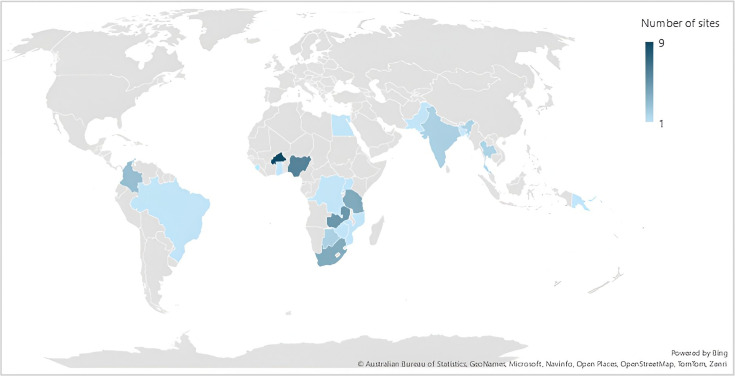
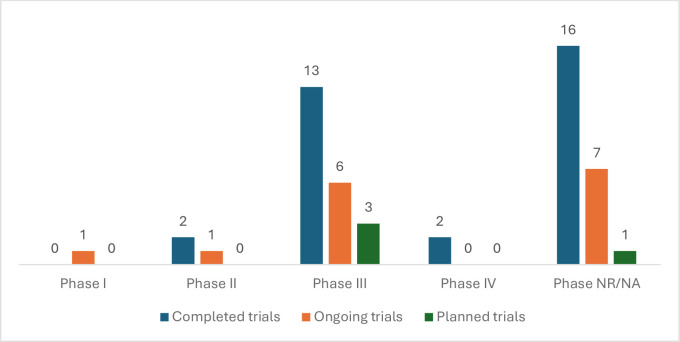
Existing international consortia for drug trials in maternal and perinatal health have focused largely on pragmatic trials using off-label medicines. This study aimed to identify and assess the capacity and experience of sites in low- and middle-income countries (LMICs) for conducting trials for regulatory approval of medicines for pregnancy-related conditions. We systematically reviewed site assessment checklists across any disease area to develop a maternal trial site assessment checklist. The checklist was pretested, revised and used to collect data from trial sites in LMICs. Sites were systematically identified from a scoping review of maternal trials conducted in LMICs, known networks and snowball searching. Data reported by sites were verified against publicly accessible sources (clinical trial registries and published articles). We contacted 106 sites in 30 countries, of which 49 (46.2%) sites in 21 countries completed the checklist. Sites were from five regions-Sub-Saharan Africa (37), South Asia (6), Latin America and the Caribbean (4), Middle East and North Africa (1) and East Asia and the Pacific (1). More than 70% of responding sites had the requisite physical infrastructure, clinical and research staff, ethics, participant recruitment and data management services to conduct randomised trials. Respondents collectively identified 52 completed, ongoing or planned maternal trials across their sites. Of these 52 trials, 16 (30.8%) were Good Clinical Practice-compliant, 22 (42.3%) were phase III and one was a regulatory trial. 14 trials were conducted by a collaborative group established mostly for a specific trial or a small group of related trials. Only two of these groups were pre-established trial networks. While there is some capacity to conduct high-quality maternal drug trials in LMICs, effective research collaborations are needed to further strengthen and expand this capacity. Establishing a sustainable LMIC-based trial network will accelerate the development and testing of novel drugs to improve maternal and newborn health outcomes in these regions.
现有的国际孕产妇和围产期健康药物试验联盟主要专注于使用非标签药物的实用试验。本研究旨在识别和评估低收入和中等收入国家(LMICs)各试验点开展与妊娠相关疾病药物监管审批试验的能力和经验。我们系统回顾了任何疾病领域的试验点评估清单,以制定孕产妇试验点评估清单。该清单经过预测试、修订,并用于收集LMICs试验点的数据。通过对LMICs开展的孕产妇试验的范围综述、已知网络和滚雪球搜索,系统地识别试验点。试验点报告的数据与可公开获取的来源(临床试验注册库和已发表文章)进行核对。我们联系了30个国家的106个试验点,其中21个国家的49个(46.2%)试验点完成了清单。试验点来自五个地区——撒哈拉以南非洲(37个)、南亚(6个)、拉丁美洲和加勒比地区(4个)、中东和北非(1个)以及东亚和太平洋地区(1个)。超过70%的应答试验点具备开展随机试验所需的物理基础设施、临床和研究人员、伦理、参与者招募和数据管理服务。应答者共识别出其试验点正在进行、已完成或计划开展的52项孕产妇试验。在这52项试验中,16项(30.8%)符合《药物临床试验质量管理规范》,22项(42.3%)为III期试验,1项为监管试验。14项试验由主要为特定试验或一小群相关试验设立的合作组开展。这些组中只有两个是预先建立的试验网络。虽然LMICs有一定能力开展高质量的孕产妇药物试验,但需要有效的研究合作来进一步加强和扩大这一能力。建立一个基于LMICs的可持续试验网络将加速新型药物的研发和测试,以改善这些地区的孕产妇和新生儿健康结局。