Mondragón Rosas Emilio, González Flores José E, Mondragón Zepeda Ricardo J, González Muñóz Andrea L, Zamudio Carías Ana D, Navarro López Pablo E, Arias Villaverde Airam A, Ramirez Díaz Colin A, Cruz Méndez Michelle, Rivas Ayala Lourdes
School of Medicine and Health Sciences, Tecnológico de Monterrey (ITESM), Mexico City, MEX.
Plastic and Reconstructive Surgery, Centro Médico Nacional La Raza, Mexico City, MEX.
Cureus. 2025 Jun 26;17(6):e86794. doi: 10.7759/cureus.86794. eCollection 2025 Jun.
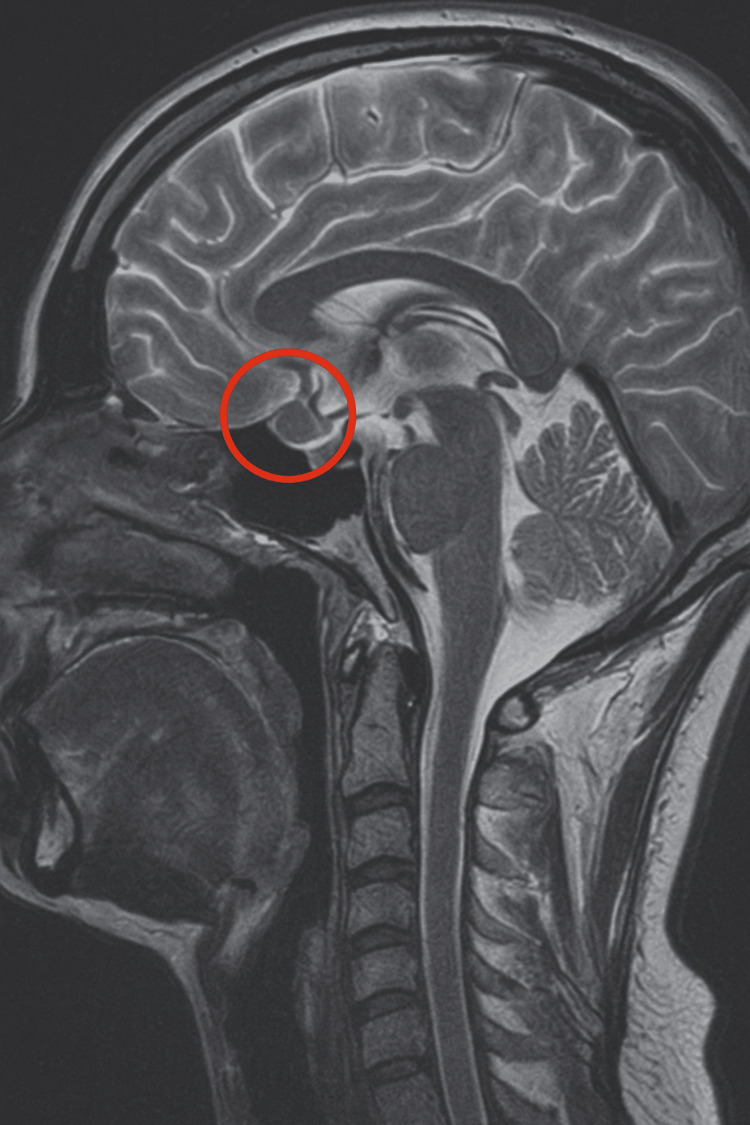
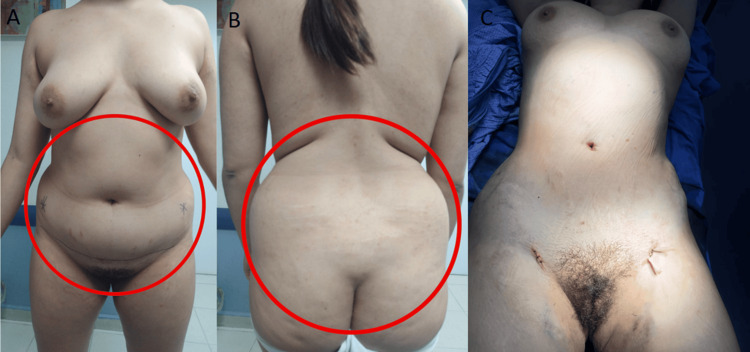
Cushing's syndrome (CS) is often presented due to an adrenocorticotropic hormone (ACTH)-secreting pituitary adenoma, characterized by high chronic cortisol levels. Surgical resection of the pituitary adenoma is the primary treatment, but long-term metabolic and physical sequelae can persist, affecting psychological well-being and social functioning. Glucocorticoids are directly involved in alterations of fat metabolism, favoring centripetal adiposity. Even after hormonal normalization, patients may experience residual lipodystrophy. Impairment of body image may cause psychological distress and social isolation. The objective is to illustrate the potential therapeutic value of reconstructive liposuction in restoring body image and psychological well-being in a patient with persistent lipodystrophy after Cushing's disease remission. We report a case of a 16-year-old female with recurrent Cushing's disease secondary to a pituitary microadenoma, confirmed by elevated urinary free cortisol and magnetic resonance imaging (MRI). It was initially treated with transsphenoidal resection in 2019; disease recurrence was confirmed and again treated in 2024. Despite intervention, the prolonged hypercortisolism developed into secondary lipodystrophy, leading to severe body image dissatisfaction and social withdrawal. Thyroid function remained euthyroid, ruling out metabolic contributors. Because of the psychological distress caused by persistent fat redistribution, the patient underwent elective liposuction in 2025. Postoperative follow-up revealed reduced psychological distress and improved well-being and self-esteem. Reconstructive liposuction can play a key role in the treatment and management of persistent post-CS lipodystrophy, contributing significantly to psychological recovery. Prospective studies evaluating surgical criteria and long-term psychosocial outcomes are needed to define eligibility criteria and assess outcomes, leading to the development of clinical guidelines for aesthetic interventions in post-CS recovery.
库欣综合征(CS)常因分泌促肾上腺皮质激素(ACTH)的垂体腺瘤所致,其特征为慢性皮质醇水平升高。垂体腺瘤的手术切除是主要治疗方法,但长期的代谢和身体后遗症可能持续存在,影响心理健康和社会功能。糖皮质激素直接参与脂肪代谢改变,导致向心性肥胖。即使激素水平恢复正常,患者仍可能存在残留的脂肪营养不良。身体形象受损可能导致心理困扰和社会孤立。目的是说明重建性吸脂术在库欣病缓解后仍存在持续性脂肪营养不良的患者中恢复身体形象和心理健康方面的潜在治疗价值。我们报告一例16岁女性,因垂体微腺瘤继发复发性库欣病,尿游离皮质醇升高及磁共振成像(MRI)证实。2019年最初接受经蝶窦切除术治疗;2024年疾病复发并再次接受治疗。尽管进行了干预,但长期的高皮质醇血症发展为继发性脂肪营养不良,导致严重的身体形象不满和社交退缩。甲状腺功能保持正常,排除了代谢因素。由于持续性脂肪重新分布引起的心理困扰,该患者于2025年接受了择期吸脂术。术后随访显示心理困扰减轻,幸福感和自尊心得以改善。重建性吸脂术在CS后持续性脂肪营养不良的治疗和管理中可发挥关键作用,对心理恢复有显著贡献。需要进行前瞻性研究以评估手术标准和长期心理社会结果,从而确定入选标准并评估结果,进而制定CS后恢复阶段美学干预的临床指南。