Yi Lina, Jiang Han, Li Yajun, Xu Zongtao, Zhang Haolin, Hu Defu
School of Ecology and Nature Conservation, Beijing Forestry University, Beijing 100083, China.
Feng County Xinfenghe Animal Hospital Co., Ltd., Baoji 721799, China.
Animals (Basel). 2025 Jul 21;15(14):2155. doi: 10.3390/ani15142155.
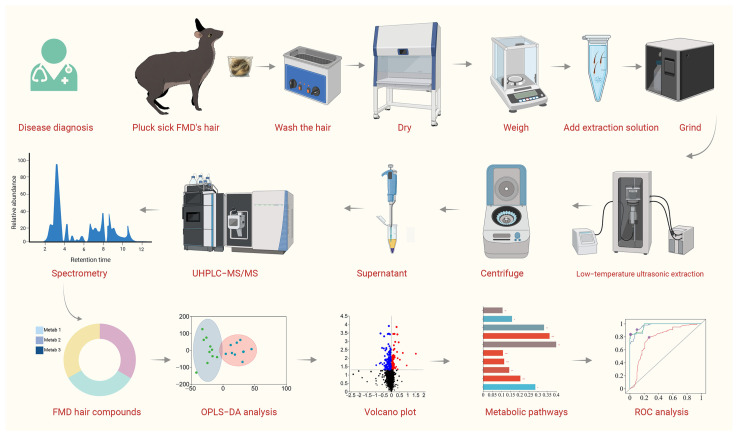
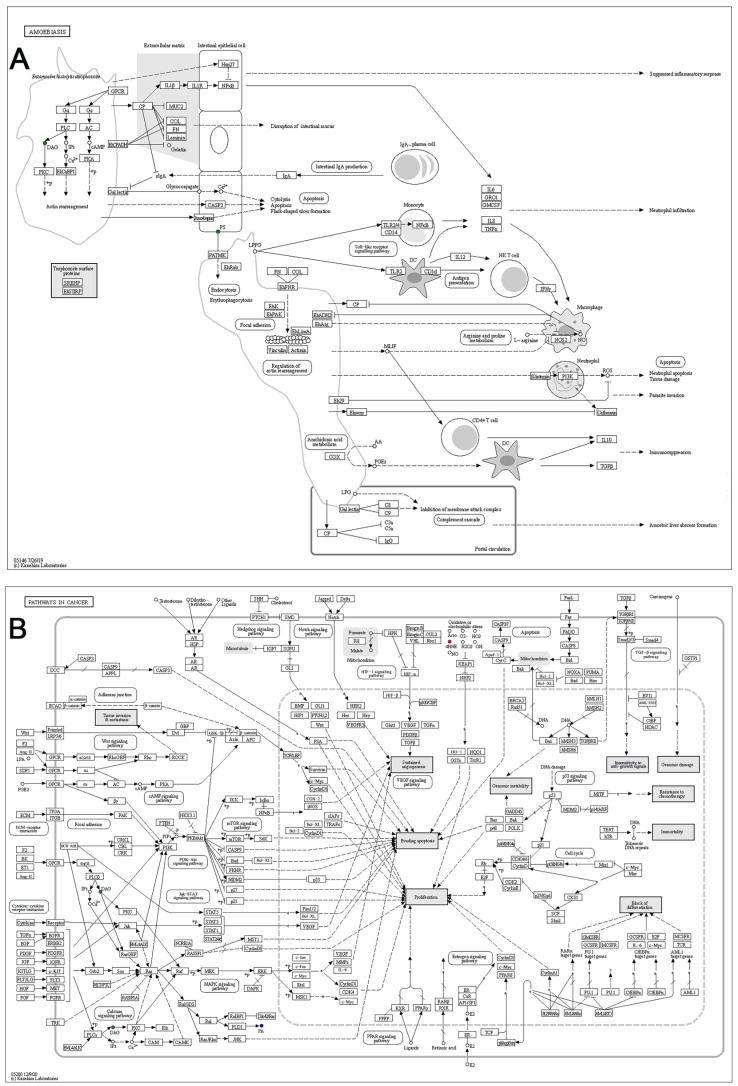
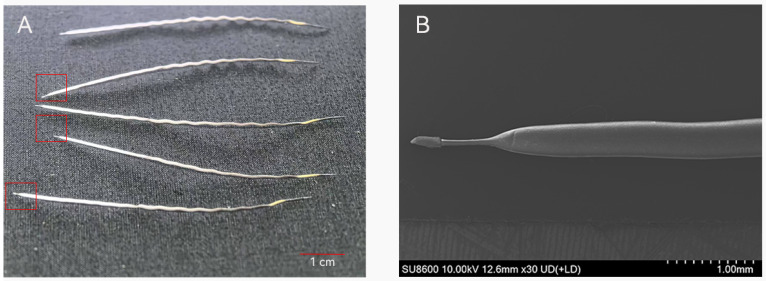
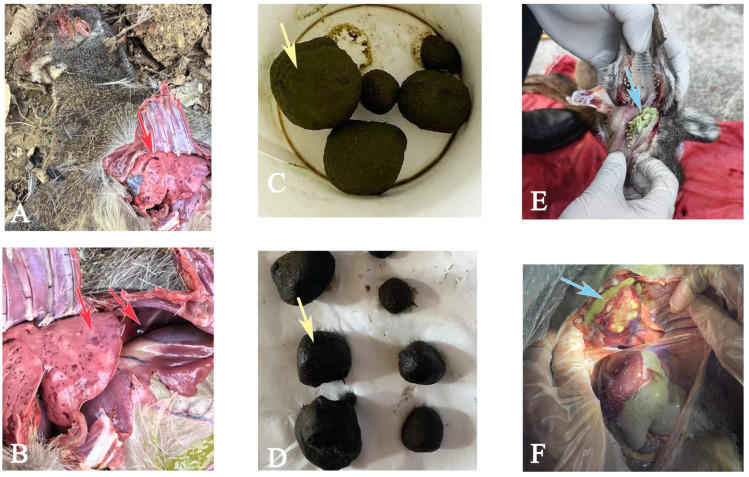
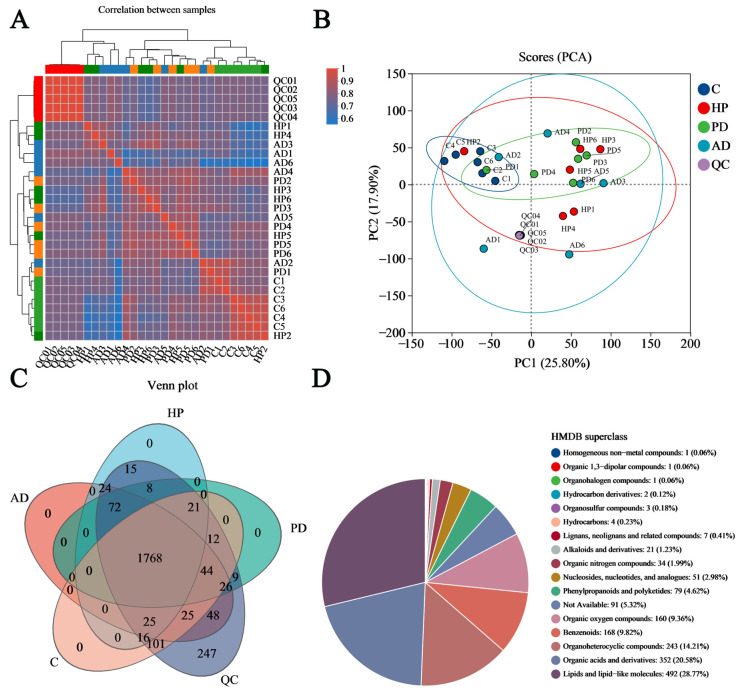
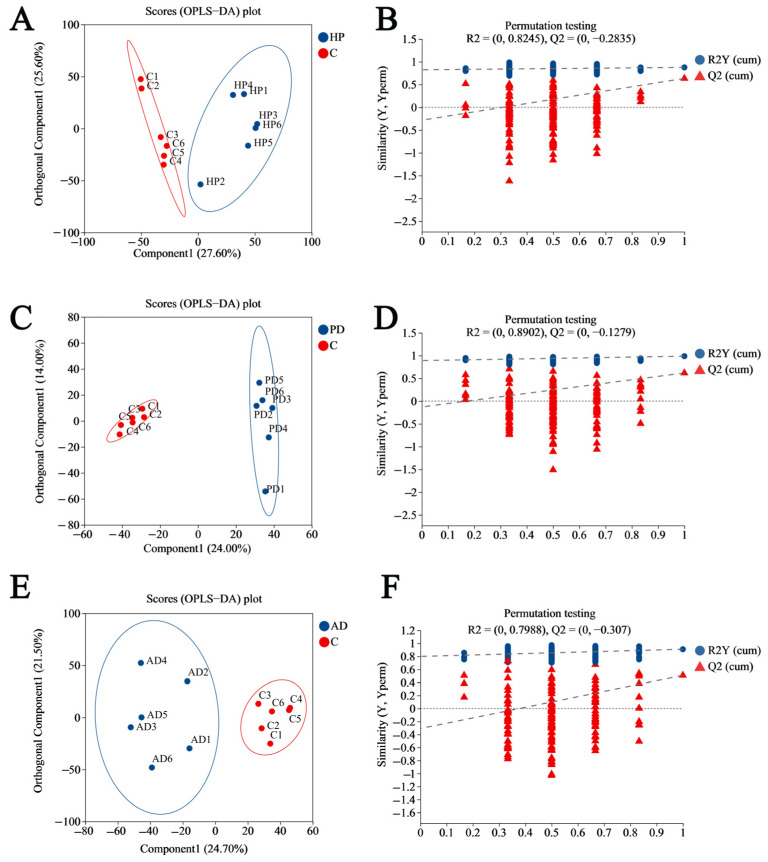
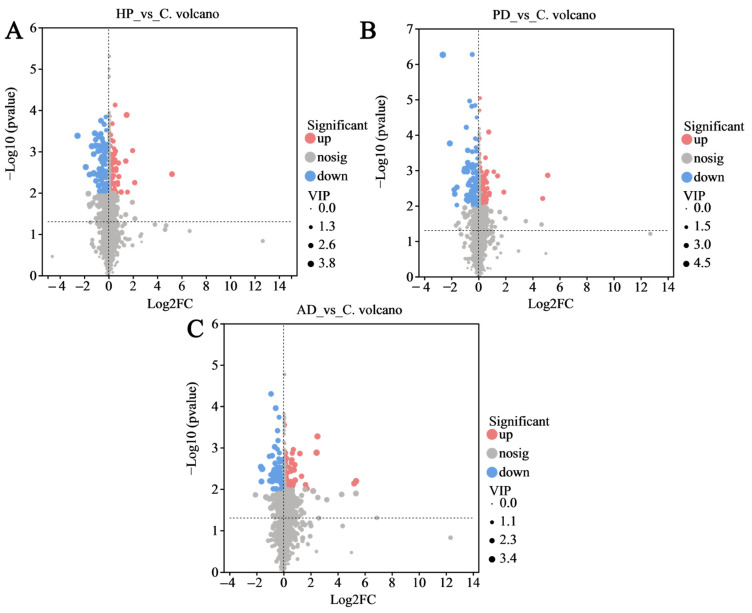
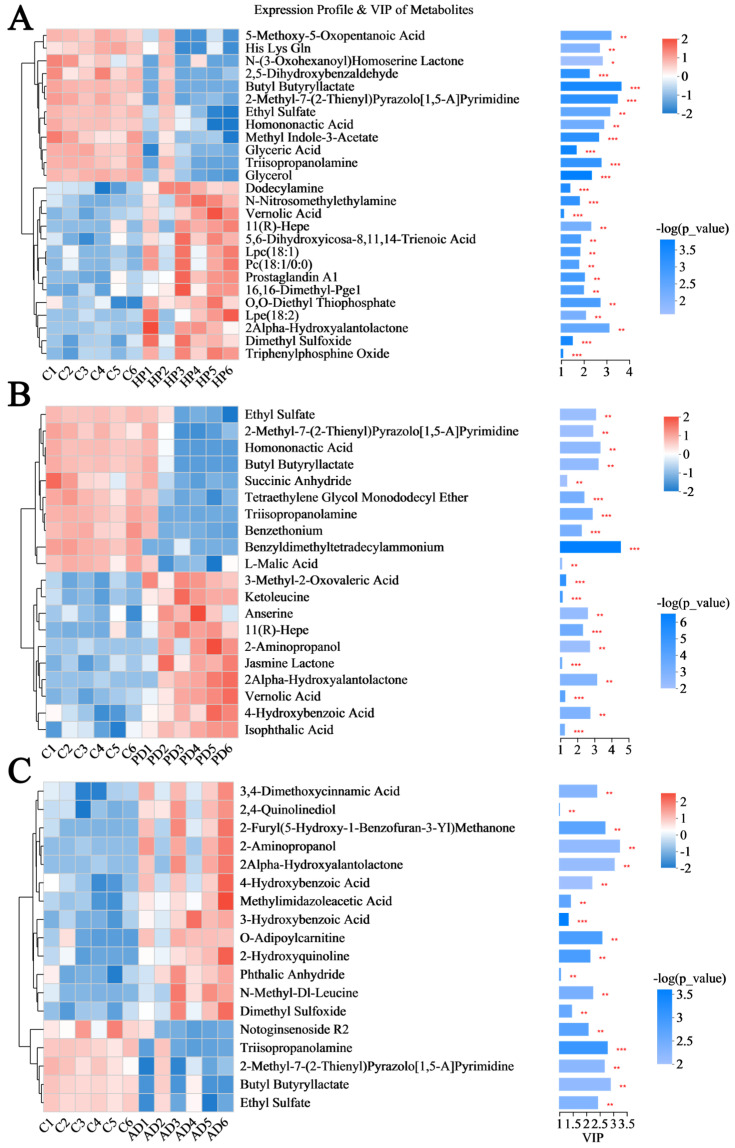
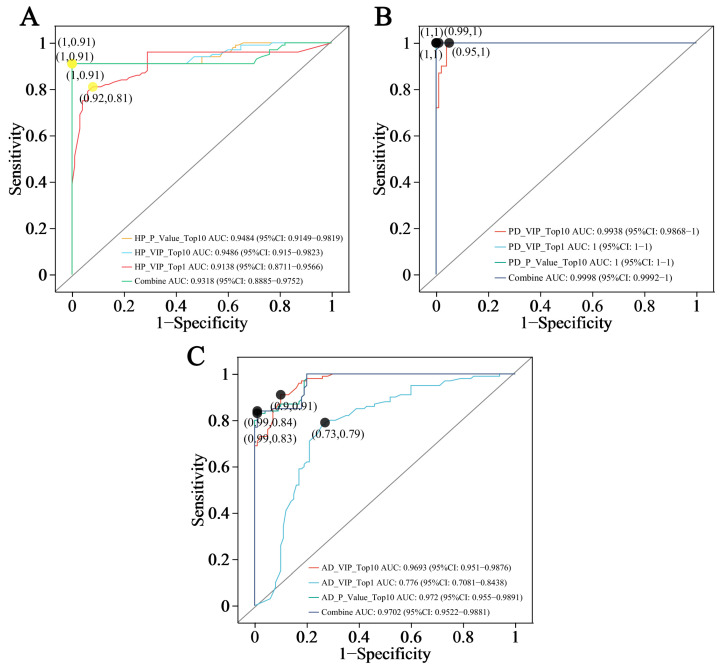
Hair, as a non-invasive biospecimen, retains metabolic deposits from sebaceous glands and capillaries, reflecting substances from the peripheral circulation, and provides valuable biochemical information linked to phenotypes, yet its application in animal disease research remains limited. This work applied ultra-high-performance liquid chromatography-tandem mass spectrometry (UHPLC-MS/MS) to compare the hair metabolomic characteristics of healthy forest musk deer (FMD, ) and those diagnosed with hemorrhagic pneumonia (HP), phytobezoar disease (PD), and abscess disease (AD). A total of 2119 metabolites were identified in the FMD hair samples, comprising 1084 metabolites in positive ion mode and 1035 metabolites in negative ion mode. Differential compounds analysis was conducted utilizing the orthogonal partial least squares-discriminant analysis (OPLS-DA) model. In comparison to the healthy control group, the HP group displayed 85 upregulated and 92 downregulated metabolites, the PD group presented 124 upregulated and 106 downregulated metabolites, and the AD group exhibited 63 upregulated and 62 downregulated metabolites. Functional annotation using the Kyoto Encyclopedia of Genes and Genomes (KEGG) indicated that the differential metabolites exhibited significant enrichment in pathways associated with cancer, parasitism, energy metabolism, and stress. Receiver operating characteristic (ROC) analysis revealed that both the individual and combined panels of differential metabolites exhibited area under the curve (AUC) values exceeding 0.7, demonstrating good sample discrimination capability. This research indicates that hair metabolomics can yield diverse biochemical insights and facilitate the development of non-invasive early diagnostic techniques for diseases in captive FMD.
毛发作为一种非侵入性生物样本,保留了来自皮脂腺和毛细血管的代谢沉积物,反映了外周循环中的物质,并提供了与表型相关的有价值的生化信息,但其在动物疾病研究中的应用仍然有限。本研究应用超高效液相色谱-串联质谱法(UHPLC-MS/MS)比较健康林麝和诊断患有出血性肺炎(HP)、植物性胃石症(PD)和脓肿病(AD)的林麝毛发代谢组学特征。在林麝毛发样本中共鉴定出2119种代谢物,其中正离子模式下有1084种代谢物,负离子模式下有1035种代谢物。利用正交偏最小二乘判别分析(OPLS-DA)模型进行差异化合物分析。与健康对照组相比,HP组有85种上调代谢物和92种下调代谢物,PD组有124种上调代谢物和106种下调代谢物,AD组有63种上调代谢物和62种下调代谢物。使用京都基因与基因组百科全书(KEGG)进行功能注释表明,差异代谢物在与癌症、寄生虫、能量代谢和应激相关的途径中显著富集。受试者工作特征(ROC)分析显示,差异代谢物的单个和组合面板的曲线下面积(AUC)值均超过0.7,表明具有良好的样本区分能力。本研究表明,毛发代谢组学可以产生多种生化见解,并有助于开发圈养林麝疾病的非侵入性早期诊断技术。