Wróbel Edyta, Wojdasiewicz Piotr, Mikulska Agnieszka, Szukiewicz Dariusz
Department of Biophysics, Physiology and Pathophysiology, Faculty of Health Sciences, Medical University of Warsaw, Chałubińskiego 5, 02-004 Warsaw, Poland.
Biomolecules. 2025 Jul 18;15(7):1043. doi: 10.3390/biom15071043.
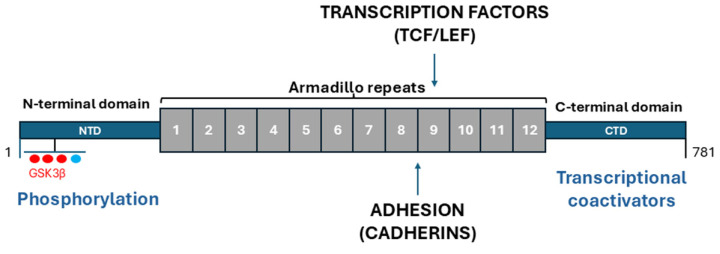
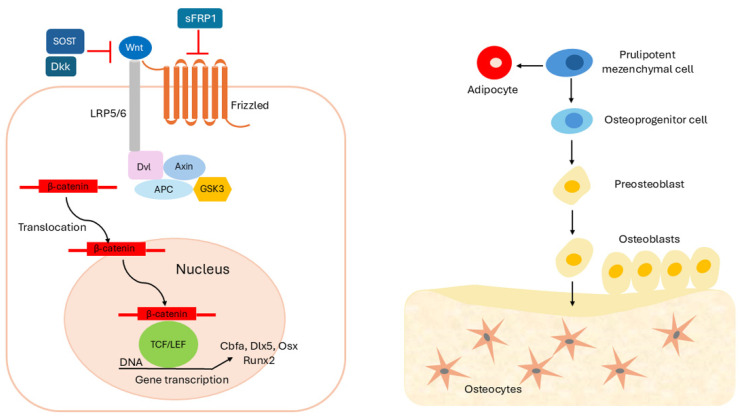
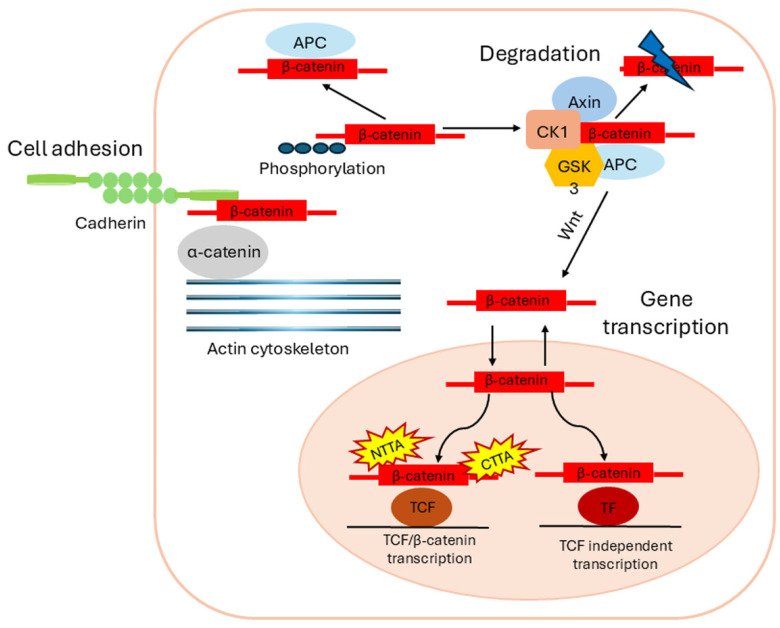
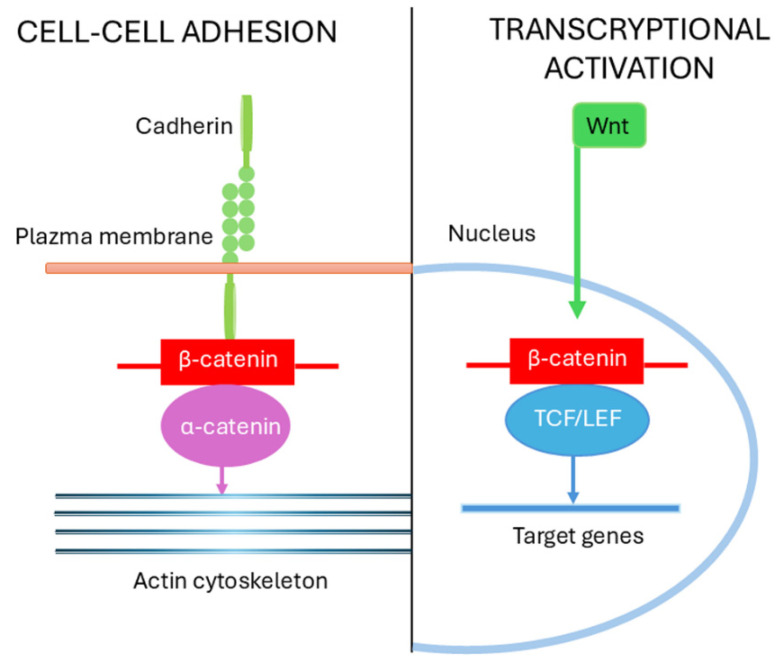
β-catenin is a key regulator of osteoblast differentiation, proliferation, and bone homeostasis. Through its interaction with transcription factors such as TCF/LEF, Runx2, and Osx, it coordinates gene expression essential for osteogenesis. The aim of this review is to demonstrate how β-catenin signaling is modulated by various physiological and pathological factors, including mechanical loading, oxidative stress, HIV-1 gp120, fluoride, implant topography, and microRNAs. These factors influence Wnt/β-catenin signaling through different mechanisms, often exerting opposing effects on osteoblast function. By integrating these modulators, we provide a comprehensive view of the dynamic regulation of β-catenin in bone biology. Understanding this complexity may provide insight into novel therapeutic strategies targeting β-catenin in bone regeneration, metabolic bone diseases, and pathologies such as HIV-associated bone loss or osteosarcoma.
β-连环蛋白是成骨细胞分化、增殖和骨稳态的关键调节因子。通过与TCF/LEF、Runx2和Osx等转录因子相互作用,它协调成骨过程中必不可少的基因表达。本综述的目的是展示β-连环蛋白信号通路如何受到各种生理和病理因素的调节,这些因素包括机械负荷、氧化应激、HIV-1 gp120、氟化物、植入物表面形貌和微小RNA。这些因素通过不同机制影响Wnt/β-连环蛋白信号通路,常常对成骨细胞功能产生相反的作用。通过整合这些调节因子,我们全面了解了β-连环蛋白在骨生物学中的动态调节。了解这种复杂性可能有助于深入了解针对骨再生、代谢性骨疾病以及诸如HIV相关骨质流失或骨肉瘤等病理状况中β-连环蛋白的新型治疗策略。