Szabó Renáta, Börzsei Denise, Nagy András, Kiss Viktória, Virág Zoltán, Kis Gyöngyi, Almási Nikoletta, Török Szilvia, Veszelka Médea, Bagyánszki Mária, Bódi Nikolett, Barta Bence Pál, Neuperger Patrícia, Szebeni Gabor J, Varga Csaba
Department of Physiology, Anatomy, and Neuroscience, Faculty of Science and Informatics, University of Szeged, H-6726 Szeged, Hungary.
Creative Laboratory Ltd., H-6726 Szeged, Hungary.
Int J Mol Sci. 2025 Jul 11;26(14):6661. doi: 10.3390/ijms26146661.
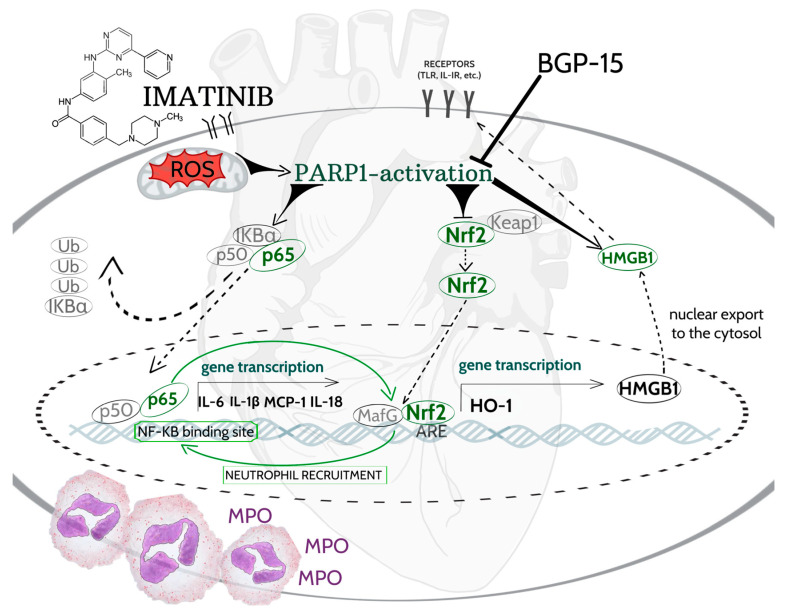
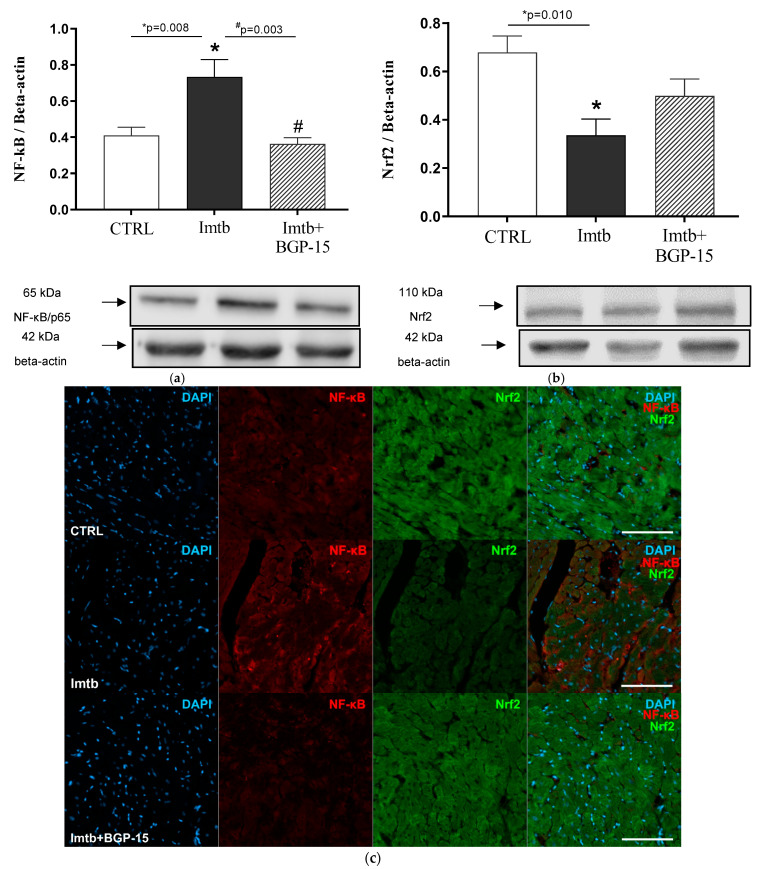
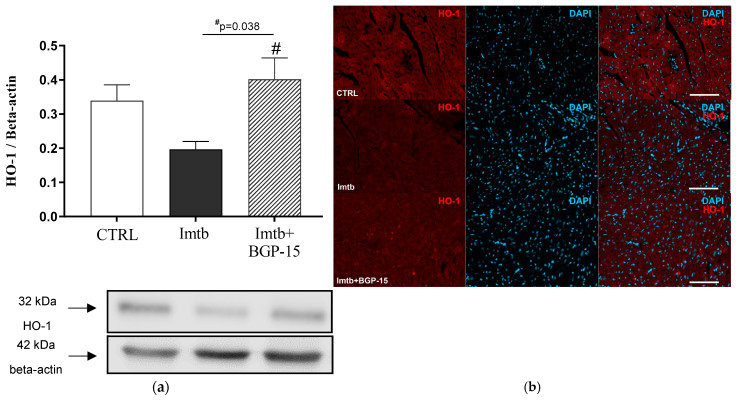
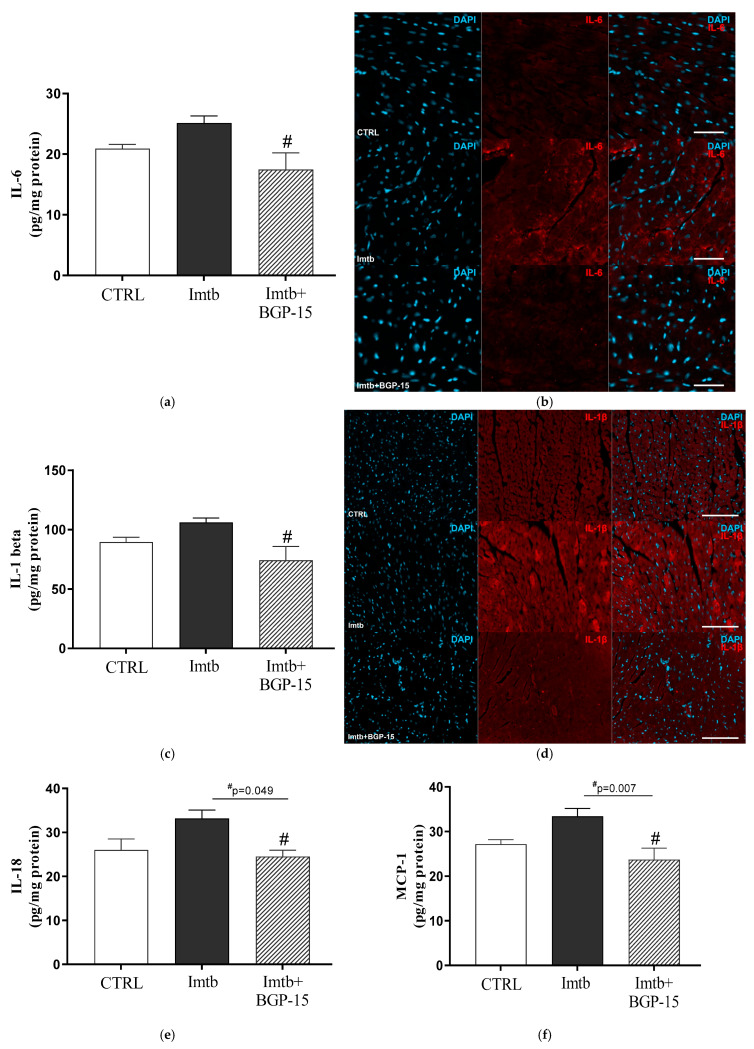
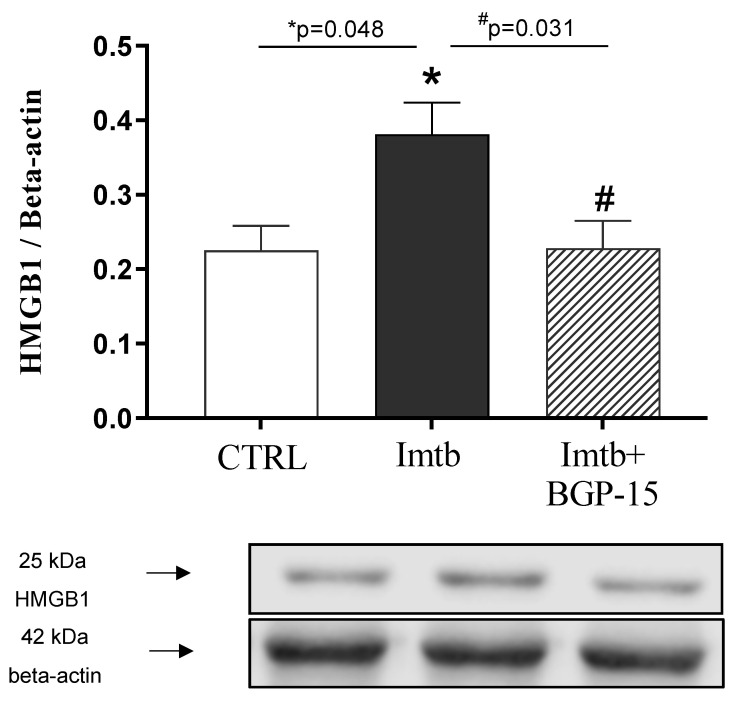
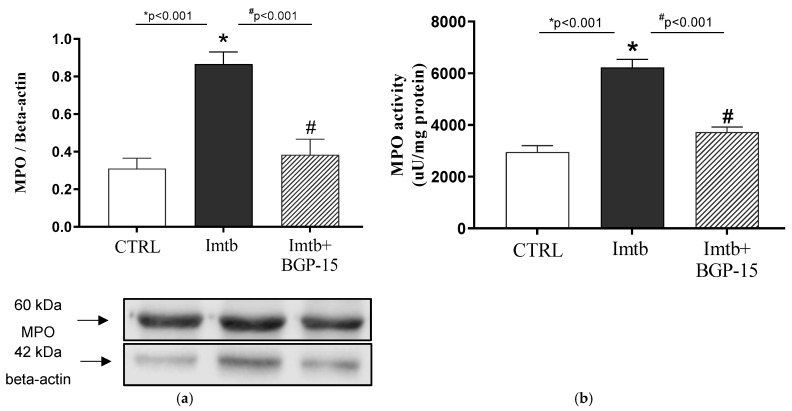
BGP-15, a poly(ADP-ribose) polymerase-1 (PARP-1) inhibitor exerts cardioprotective effects; however, the underlying mechanisms remain unclear. Therefore, our study aimed to investigate the effects of BGP-15 on the imatinib (Imtb)-induced cardiac inflammation at the biochemical level. Male rats were divided to control, Imtb-treated (60 mg/kg/day for 14 days), and Imtb + BGP-15-treated animals. In this group Imtb was co-administered with BGP-15 at the dose of 10 mg/kg/day. At the end of the experiment, nuclear factor-kappa B/p65 (NF-κB/p65), nuclear transcription factor erythroid-2 related factor (Nrf2), heme oxygenase-1 (HO-1), high mobility group box 1 (HMGB1), and myeloperoxidase (MPO) were measured by Western blot. Chemokine and interleukins (ILs) were determined by Legendplex. Additionally, cardiac specific changes were visualized by immunohistochemistry. We demonstrated that Imtb increased NF-κB/p65, IL-6, IL-1β, IL-18, MCP-1, HMGB1, as well as the expression and activity of MPO. Conversely, the expressions of antioxidant Nrf2 and HO-1 were decreased. Administration of BGP-15 effectively mitigated these inflammatory alterations by significantly reducing pro-inflammatory cytokines and MPO activity, while simultaneously restoring and enhancing the levels of Nrf2 and HO-1, thereby promoting antioxidant defenses. The immunohistochemical staining further supported these biochemical changes. Our study provides new and comprehensive biochemical insight for managing Imtb-induced inflammatory responses via BGP-15-induced PARP1 inhibition.
BGP-15是一种聚(ADP-核糖)聚合酶-1(PARP-1)抑制剂,具有心脏保护作用;然而,其潜在机制仍不清楚。因此,我们的研究旨在从生化水平研究BGP-15对伊马替尼(Imtb)诱导的心脏炎症的影响。将雄性大鼠分为对照组、接受Imtb治疗的组(60 mg/kg/天,持续14天)和接受Imtb + BGP-15治疗的组。在该组中,Imtb与BGP-15以10 mg/kg/天的剂量联合给药。实验结束时,通过蛋白质印迹法检测核因子-κB/p65(NF-κB/p65)、核转录因子红系2相关因子(Nrf2)、血红素加氧酶-1(HO-1)、高迁移率族蛋白B1(HMGB1)和髓过氧化物酶(MPO)。通过Legendplex检测趋化因子和白细胞介素(ILs)。此外,通过免疫组织化学观察心脏的特异性变化。我们证明,Imtb增加了NF-κB/p65、IL-6、IL-1β、IL-18、MCP-1、HMGB1以及MPO的表达和活性。相反,抗氧化剂Nrf2和HO-1的表达降低。给予BGP-15可通过显著降低促炎细胞因子和MPO活性有效减轻这些炎症改变,同时恢复并提高Nrf2和HO-1的水平,从而促进抗氧化防御。免疫组织化学染色进一步支持了这些生化变化。我们的研究为通过BGP-15诱导PARP1抑制来管理Imtb诱导的炎症反应提供了新的、全面的生化见解。