
不同突变型食管腺癌模型的代谢谱分析揭示了不同的生物能量依赖性。
Metabolic Profiling of Distinct -Mutant Esophageal Adenocarcinoma Models Reveals Different Bioenergetic Dependencies.
作者信息
Cataldi-Stagetti Erica, Rizzardi Nicola, Orsini Arianna, De Nicolo Bianca, Diquigiovanni Chiara, Pincigher Luca, Moruzzi Noah, Fato Romana, Bergamini Christian, Bonora Elena
机构信息
Department of Medical and Surgical Sciences (DIMEC), University of Bologna, 40126 Bologna, Italy.
Department of Pharmacy and Biotechnology, University of Bologna, 40126 Bologna, Italy.
出版信息
Int J Mol Sci. 2025 Jul 17;26(14):6869. doi: 10.3390/ijms26146869.
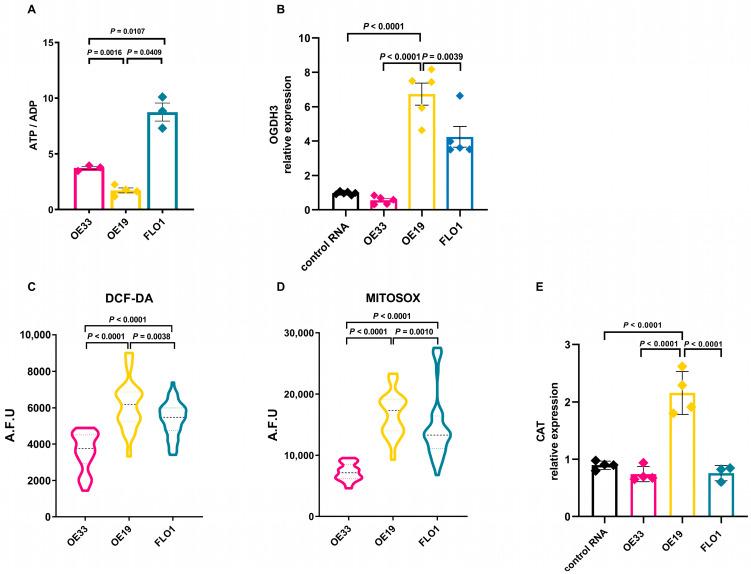
Esophageal adenocarcinoma (EAC) is a highly aggressive malignancy with rising incidence and poor prognosis. , previously identified as the most frequently mutated gene in EAC in our studies, plays a central role in tumor suppression and regulation. However, the metabolic consequences of mutations in EAC remain largely uncharacterized. We metabolically profiled three -mutant EAC cell models (OE33, OE19, and FLO1) representing progressive stages of tumor differentiation and harboring distinct alterations. Our analyses revealed different metabolic phenotypes associated with status. OE33 cells predominantly use glycolytic metabolism but display limited adaptability to environmental changes, possibly due to a higher differentiation state. FLO1 cells exhibit a strong glycolytic dependence, elevated lactate production, and robust proliferation under acidic conditions, consistent with an aggressive and metastatic phenotype. OE19 cells preferentially utilize oxidative phosphorylation, demonstrated by resilience to glucose and glutamine deprivation, and ROS accumulation. These findings highlight the metabolic plasticity of EAC and suggest that mutation type might influence bioenergetic dependencies. Targeting these metabolic vulnerabilities may offer novel therapeutic avenues for personalized treatment in EAC.
食管腺癌(EAC)是一种侵袭性很强的恶性肿瘤,发病率不断上升且预后较差。在我们的研究中,先前被确定为EAC中最常发生突变的基因,在肿瘤抑制和调控中发挥着核心作用。然而,EAC中该基因突变的代谢后果在很大程度上仍未得到充分研究。我们对三种携带不同该基因突变的EAC细胞模型(OE33、OE19和FLO1)进行了代谢分析,这些模型代表了肿瘤分化的不同阶段。我们的分析揭示了与该基因状态相关的不同代谢表型。OE33细胞主要利用糖酵解代谢,但对环境变化的适应性有限,这可能是由于其分化程度较高。FLO1细胞表现出强烈的糖酵解依赖性、乳酸产量升高以及在酸性条件下旺盛的增殖能力,这与侵袭性和转移表型一致。OE19细胞优先利用氧化磷酸化,这通过对葡萄糖和谷氨酰胺剥夺的耐受性以及活性氧积累得以证明。这些发现突出了EAC的代谢可塑性,并表明该基因突变类型可能影响生物能量依赖性。针对这些代谢弱点可能为EAC的个性化治疗提供新的治疗途径。



 Zotero 插件