Castillo Mariangeles, Miraglia María C, Mansilla Florencia C, Randazzo Cecilia P, Bentancor Leticia V, Freire Teresa, Capozzo Alejandra V
Instituto de Virología e Innovaciones Tecnológicas, Centro de Investigaciones en Ciencias Veterinarias y Agronómicas (CICVyA), INTA-Consejo Nacional de Investigaciones Técnicas (CONICET), Nicolás Repetto & De los Reseros S/N, Hurlingham 1686, Argentina.
Instituto de Estudios para el Desarrollo Productivo y la Innovación, Universidad Nacional de José Clemente Paz (UNPAZ), Leandro N. Alem 4731, José C Paz, Buenos Aires 1665, Argentina.
Vaccines (Basel). 2025 Jun 24;13(7):677. doi: 10.3390/vaccines13070677.
BACKGROUND/OBJECTIVES: Vaccine immunogenicity is often suboptimal in vulnerable populations such as the elderly, infants, and individuals in low- and middle-income countries. One contributing factor may be pre-existing immunomodulatory conditions, including helminth infections. This study investigates the impact of () derived molecules on the early humoral response to the COVID-19 mRNA vaccine Comirnaty in a mouse model.
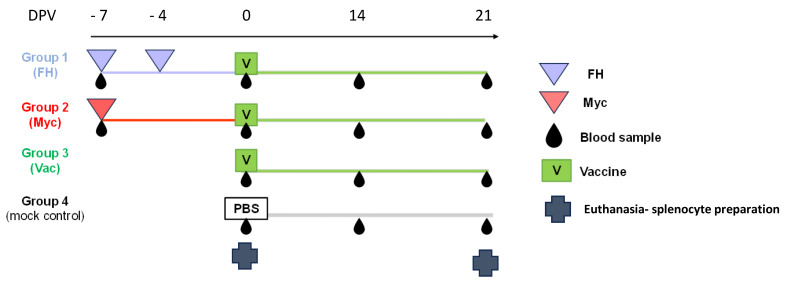
BALB/c mice were pretreated with a protein extract (FH) or complete Freund's adjuvant (CFA) prior to vaccination. Cytokine production and antibody responses were assessed at 0, 14, and 21 days post-vaccination (dpv) through serum analysis and ex vivo splenocyte stimulation with the SARS-CoV-2 receptor-binding domain (RBD) or LPS.
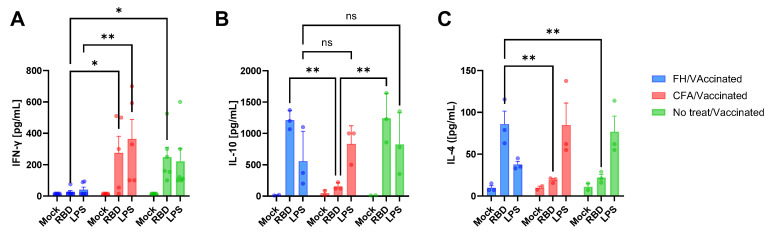
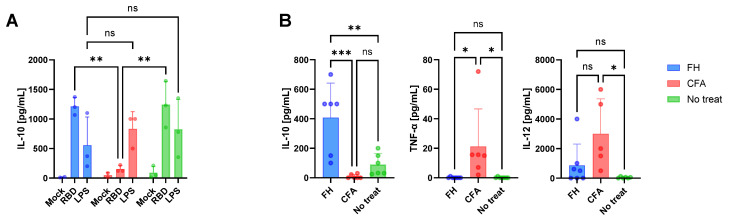
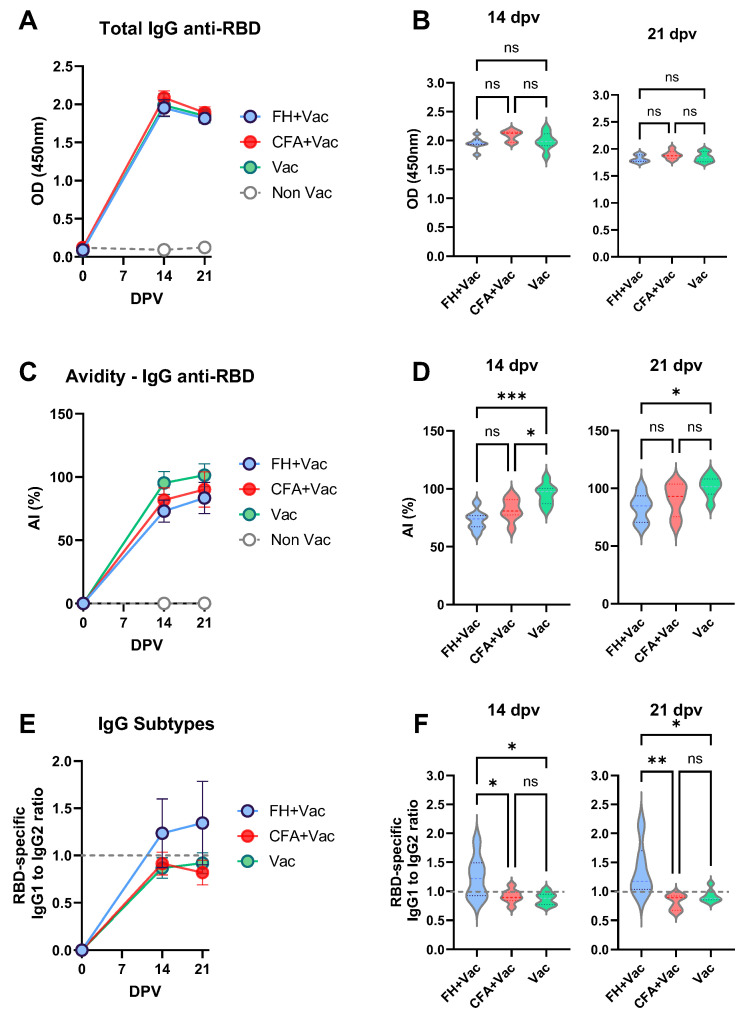
At 0 dpv, FH-treated mice showed increased serum IL-10, while CFA treatment induced IL-12. FH- but not CFA-treated splenocytes secreted IL-10 upon RBD or LPS stimulation. At 21 dpv, FH-treated mice lacked IFN-γ production but maintained IL-10 and showed elevated IL-4, consistent with a Th2-skewed profile. Although total anti-RBD IgG levels were similar between groups, FH-treated mice exhibited reduced IgG avidity and a higher IgG1/IgG2 ratio. CFA-treated mice showed delayed avidity maturation.
Prior exposure to antigens can modulate the early immune response to Comirnaty, affecting both cellular activation and antibody quality. This altered response may reflect a reduced early protective capacity of the vaccine, which might need to be considered when designing or evaluating vaccination strategies using mRNA vaccines in helminth-endemic regions.
背景/目的:在老年人、婴儿以及低收入和中等收入国家的人群等弱势群体中,疫苗免疫原性往往不理想。一个促成因素可能是先前存在的免疫调节状况,包括蠕虫感染。本研究在小鼠模型中研究了()衍生分子对COVID-19 mRNA疫苗Comirnaty早期体液反应的影响。
在接种疫苗前,用一种蛋白质提取物(FH)或完全弗氏佐剂(CFA)对BALB/c小鼠进行预处理。通过血清分析以及用严重急性呼吸综合征冠状病毒2受体结合域(RBD)或脂多糖对脾细胞进行体外刺激,在接种疫苗后0、14和21天评估细胞因子产生和抗体反应。
在接种疫苗后0天,经FH处理的小鼠血清白细胞介素-10增加,而CFA处理诱导白细胞介素-12产生。经RBD或脂多糖刺激后,经FH处理而非CFA处理的脾细胞分泌白细胞介素-10。在接种疫苗后21天,经FH处理的小鼠缺乏γ干扰素产生,但维持白细胞介素-10水平并显示白细胞介素-4升高,这与偏向Th2的特征一致。尽管各组之间总的抗RBD IgG水平相似,但经FH处理的小鼠表现出IgG亲和力降低和更高的IgG1/IgG2比率。经CFA处理的小鼠显示亲和力成熟延迟。
先前接触()抗原可调节对Comirnaty的早期免疫反应,影响细胞活化和抗体质量。这种改变的反应可能反映疫苗早期保护能力降低,在蠕虫流行地区设计或评估使用mRNA疫苗的接种策略时可能需要考虑这一点。