Oda Yuichi, Amano Kosaku, Seki Yasufumi, Watanabe Daisuke, Ichihara Atsuhiro, Kawamata Takakazu
Department of Neurosurgery, Tokyo Women's Medical University, Shinjuku-ku, Tokyo 162-8666, Japan.
Department of Medicine, Division of Hormonal Medicine and Bioregulatory Science, Tokyo Women's Medical University, Shinjuku-ku, Tokyo 162-8666, Japan.
JCEM Case Rep. 2025 Jul 31;3(9):luaf173. doi: 10.1210/jcemcr/luaf173. eCollection 2025 Sep.
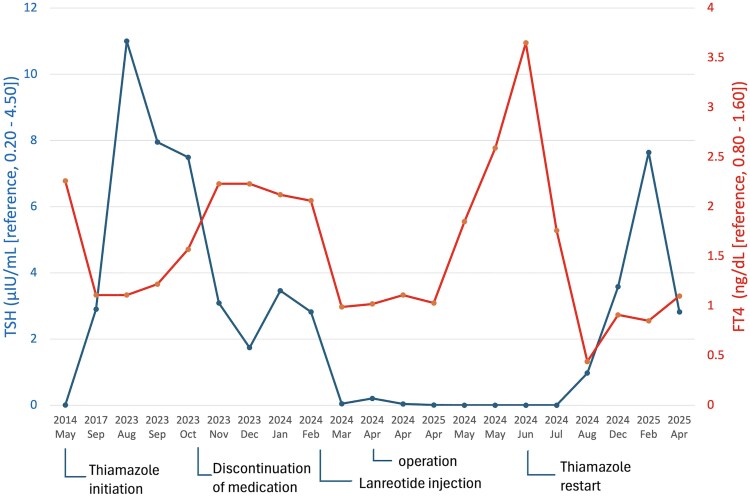
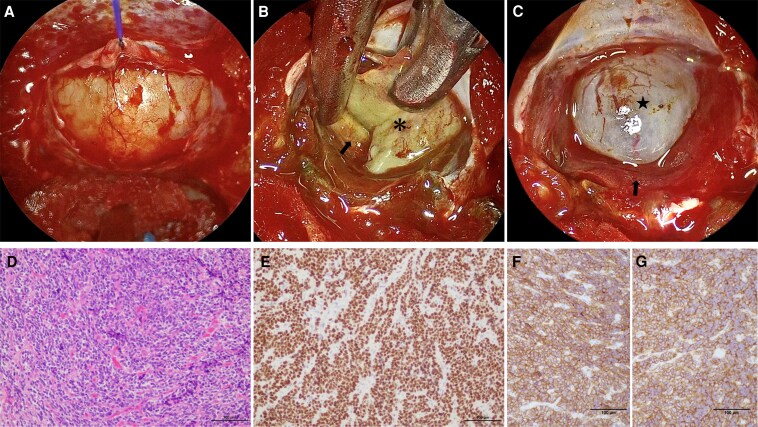
The coexistence of Graves disease (GD) and a thyroid-stimulating hormone (TSH)-secreting pituitary adenoma (TSHoma) is a rare and diagnostically challenging condition. In general, GD typically manifests with low TSH because of excess thyroid hormone production; contrastingly, a TSHoma causes secondary hyperthyroidism with normal or elevated TSH levels. This unusual overlap poses diagnostic and therapeutic challenges; therefore, a careful approach is required to distinguish and manage both conditions. We present the case of a 51-year-old woman with symptoms of hyperthyroidism, elevated thyroid hormones, low TSH, and positive anti-TSH receptor antibodies, which were suggestive of GD 10 years prior. After stopping thiamazole and levothyroxine because of the favorable control of thyroid function 6 months prior, the patient presented a syndrome of inappropriate secretion of TSH and magnetic resonance imaging revealed a pituitary macroadenoma; accordingly, she was diagnosed with concurrent GD and a TSHoma. Treatment involved transsphenoidal resection of the TSHoma and antithyroid medication to control GD. This case illustrates the rarity of coexisting GD and TSHoma and the diagnostic and therapeutic complexities of managing dual hyperthyroidism etiologies. Biochemical testing, antibody assessment, and imaging examination are essential for accurate and early diagnosis of the condition.
格雷夫斯病(GD)与分泌促甲状腺激素(TSH)的垂体腺瘤(TSH瘤)并存是一种罕见且诊断具有挑战性的情况。一般来说,GD通常因甲状腺激素分泌过多而表现为促甲状腺激素水平降低;相反,TSH瘤导致继发性甲状腺功能亢进,促甲状腺激素水平正常或升高。这种不寻常的重叠带来了诊断和治疗方面的挑战;因此,需要谨慎处理以区分和管理这两种情况。我们报告一例51岁女性病例,该患者有甲状腺功能亢进症状、甲状腺激素升高、促甲状腺激素降低以及抗促甲状腺激素受体抗体阳性,这些表现提示10年前患有GD。在6个月前因甲状腺功能得到良好控制而停用甲巯咪唑和左甲状腺素后,患者出现促甲状腺激素分泌异常综合征,磁共振成像显示垂体大腺瘤;因此,她被诊断为同时患有GD和TSH瘤。治疗包括经蝶窦切除TSH瘤以及使用抗甲状腺药物来控制GD。该病例说明了GD和TSH瘤并存的罕见性以及处理双重甲状腺功能亢进病因时在诊断和治疗上的复杂性。生化检测、抗体评估和影像学检查对于准确、早期诊断该疾病至关重要。