Aldahlawi Rana
Department of Radiological Sciences, College of Applied Medical Sciences, King Saud University, Riyadh, Saudi Arabia.
PeerJ. 2025 Jul 29;13:e19746. doi: 10.7717/peerj.19746. eCollection 2025.
Ovarian cancer is a significant global health concern, ranking as the seventh most common cancer and the eighth leading cause of cancer-related deaths among women. Annually, it claims the lives of approximately 207,000 women worldwide. Early detection is crucial, as most cases are diagnosed at advanced stages, resulting in a 5-year survival rate of less than 20%. Common diagnostic tools include Cancer Antigen 125 (CA125) and ultrasound, but these methods are limited by sensitivity, specificity, and operator dependence. The Risk of Malignancy Index (RMI) and the Assessment of Different NEoplasias in the Adnexa (ADNEX) model, which integrates ultrasound and CA125, offer improved diagnostic accuracy. This study aims to assess the knowledge and application of these models among gynecologists in Saudi Arabia.
A cross-sectional study was conducted involving 148 gynecologists from various hospitals in Saudi Arabia. Participants completed a structured questionnaire that was distributed online, designed to evaluate their knowledge and application of the RMI and ADNEX models. Data were analyzed using descriptive statistics, and factors influencing the utilization of these models were identified through multivariate logistic regression analysis.
The study found that 72% of the gynecologists were familiar with the RMI, and 58% were aware of the ADNEX model. However, only 46% reported regularly using the RMI, and 32% used the ADNEX model in their practice. Key barriers to the application of these models included a lack of training (56%), and limited access to necessary diagnostic tools (48%). Gynecologists with more than 10 years of experience were significantly more likely to use the RMI (odds ratio (OR): 2.5, 95% confidence interval (CI) [1.3-4.8]) and the ADNEX model (OR: 2.1, 95% CI [1.1-4.0]).
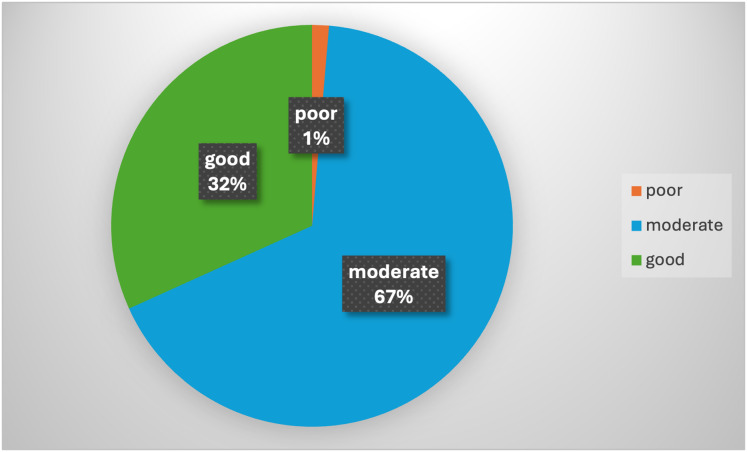
In Saudi Arabia, gynecologists show moderate knowledge of sonographic scoring models for ovarian cancer management, with higher familiarity for RMI than ADNEX. However, application in clinical practice is limited. Experience level influences usage, while lack of training and diagnostic access remain key barriers. Targeted educational efforts and improved resource availability are needed to support broader clinical adoption.
卵巢癌是一个重大的全球健康问题,是女性中第七大常见癌症,也是癌症相关死亡的第八大主要原因。全球每年约有20.7万名女性死于卵巢癌。早期检测至关重要,因为大多数病例在晚期才被诊断出来,导致5年生存率低于20%。常见的诊断工具包括癌抗原125(CA125)和超声检查,但这些方法受到敏感性、特异性和操作者依赖性的限制。恶性风险指数(RMI)以及整合了超声和CA125的附件不同肿瘤评估(ADNEX)模型提高了诊断准确性。本研究旨在评估沙特阿拉伯妇科医生对这些模型的了解和应用情况。
开展了一项横断面研究,涉及沙特阿拉伯各医院的148名妇科医生。参与者完成了一份在线发放的结构化问卷,旨在评估他们对RMI和ADNEX模型的了解和应用情况。使用描述性统计分析数据,并通过多变量逻辑回归分析确定影响这些模型使用的因素。
研究发现,72%的妇科医生熟悉RMI,58%的医生知晓ADNEX模型。然而,只有46%的医生报告经常使用RMI,32%的医生在实践中使用ADNEX模型。应用这些模型的主要障碍包括缺乏培训(56%)以及难以获得必要的诊断工具(48%)。有超过10年经验的妇科医生使用RMI(优势比(OR):2.5,95%置信区间(CI)[1.3 - 4.8])和ADNEX模型(OR:2.1,95% CI [1.1 - 4.0])的可能性显著更高。
在沙特阿拉伯,妇科医生对用于卵巢癌管理的超声评分模型有一定了解,对RMI的熟悉程度高于ADNEX。然而,在临床实践中的应用有限。经验水平影响使用情况,而缺乏培训和诊断资源仍然是关键障碍。需要有针对性的教育努力和改善资源可用性,以支持更广泛的临床应用。