Dahleh Mustafa Munir Mustafa, Boeira Silvana Peterini, Segat Hecson Jesser, Guerra Gustavo Petri, Prigol Marina
Laboratory of Pharmacological and Toxicological Evaluations Applied to Bioactive Molecules - LaftamBio - Federal University of Pampa, Itaqui, CEP 97650-000, RS, Brazil.
ACS Omega. 2025 Jul 18;10(29):31649-31667. doi: 10.1021/acsomega.5c02504. eCollection 2025 Jul 29.
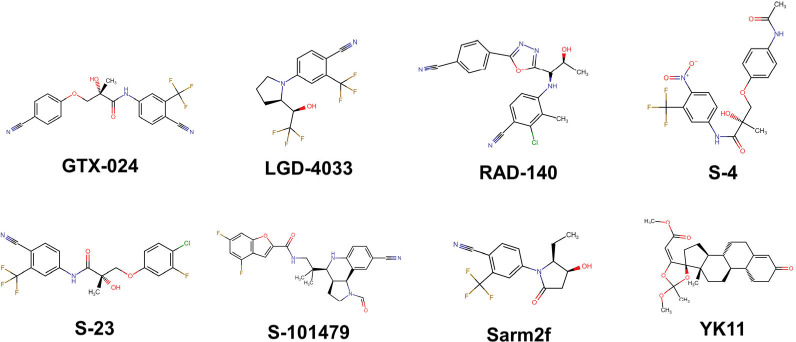
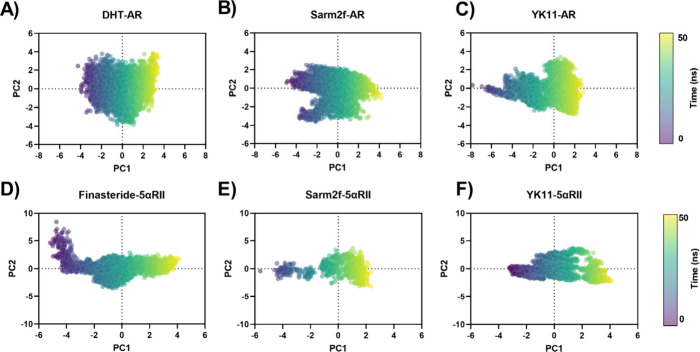
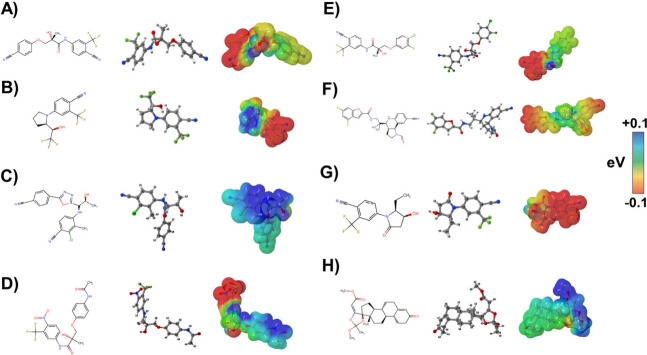
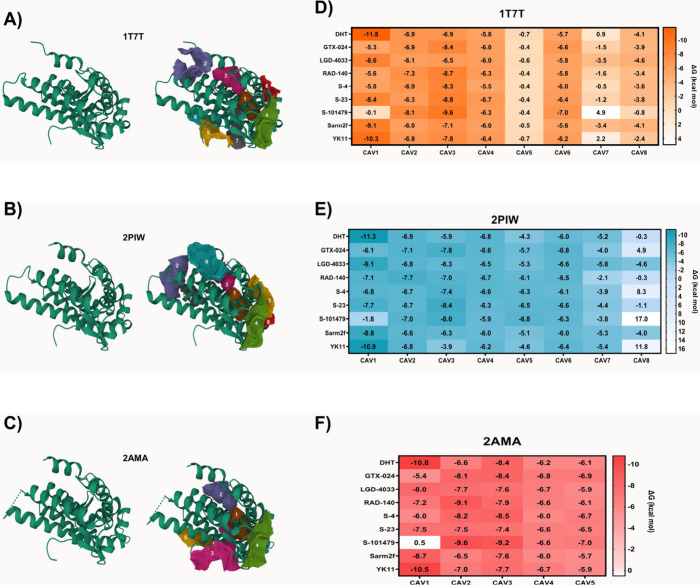
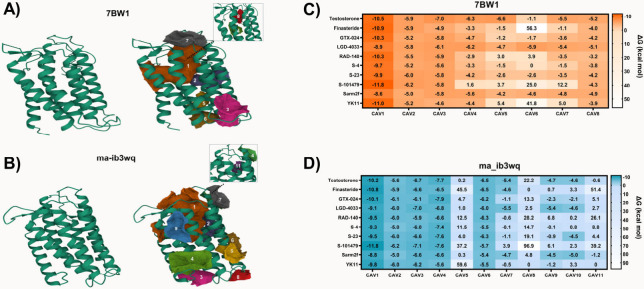
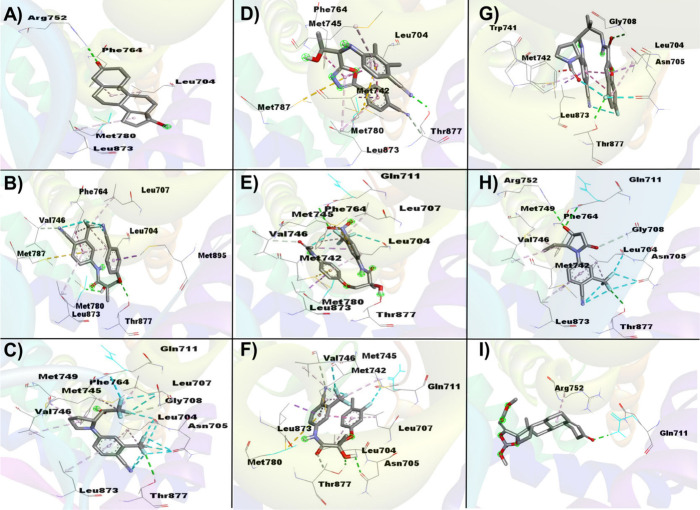
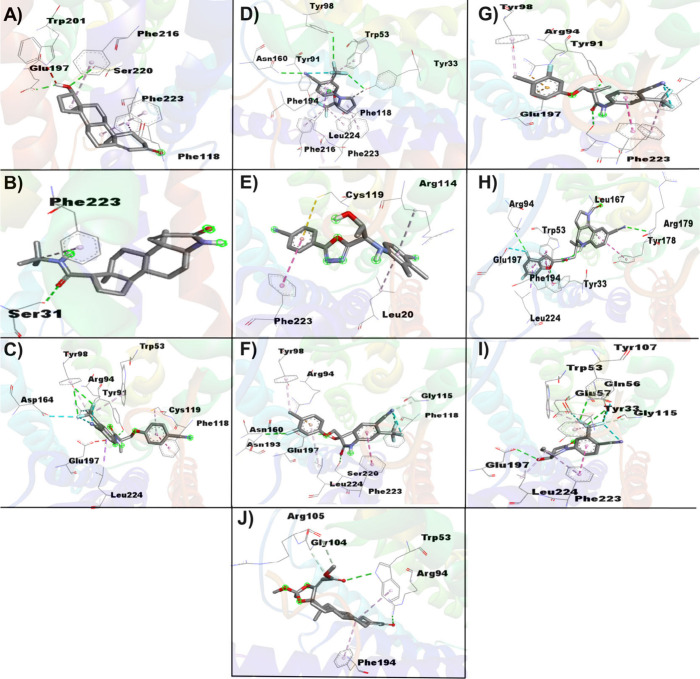
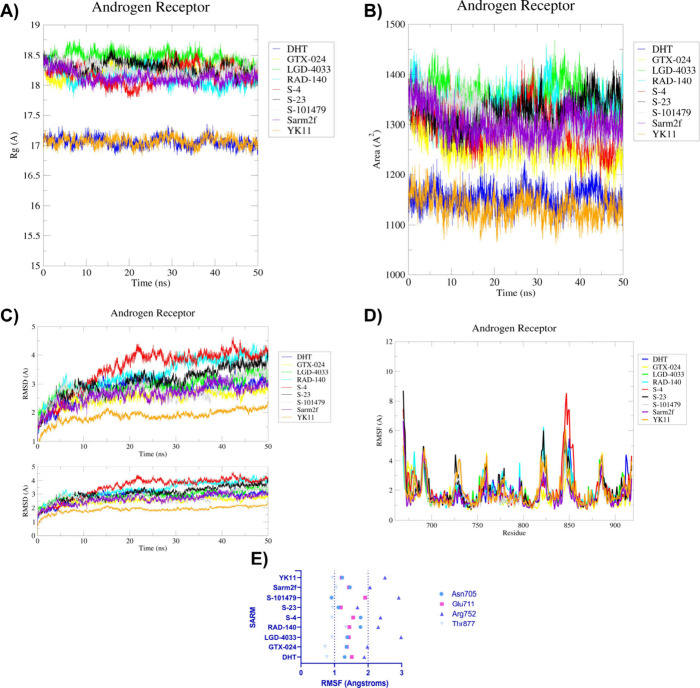
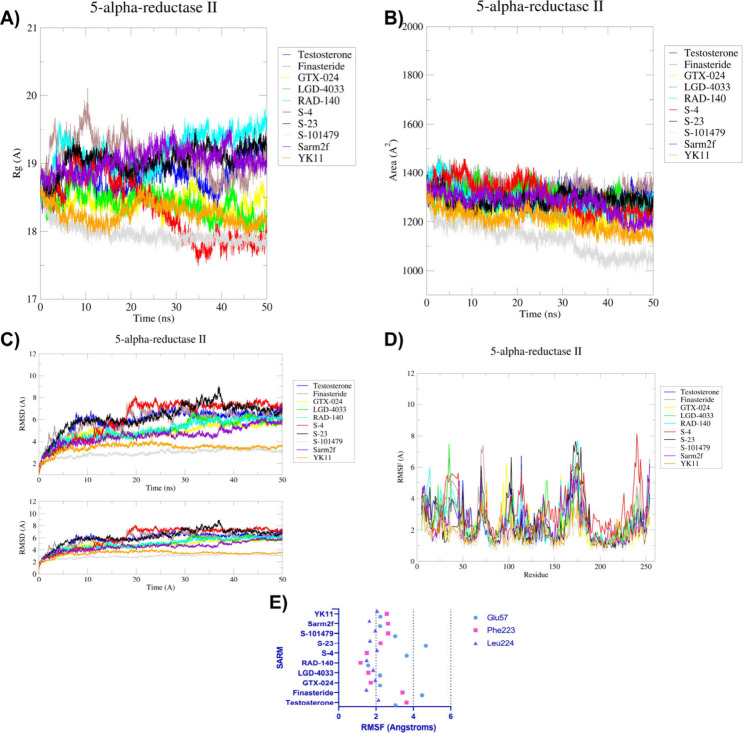
This study examines the molecular interactions of selective androgen receptor modulators (SARMs) with the androgen receptor (AR) and 5-alpha reductase II (5αRII), highlighting their potential as dual-action pharmacological candidates, using molecular modeling techniques to evaluate their primary interactions, providing valuable insights into conformational stability and ligand-induced changes and enabling rational analysis of SARMs with optimized pharmacological profiles. Employing molecular docking, density functional theory (DFT), and molecular dynamics simulations, we analyzed the binding affinities and conformational stability. Between all eight SARMs tested, 4'-[(2,3)-2-ethyl-3-hydroxy-5-oxopyrrolidin-1-yl]-2'-(trifluoromethyl)-benzonitrile (Sarm2f) demonstrated exceptional stability and binding affinity with critical interactions at key AR residues such as Asn705, Glu711, Arg752, and Thr877. The inclusion of fluorinated groups enhances hydrogen bonding through dipole induction, improving the binding dynamics. Additionally, Sarm2f interacts with small hydrophobic pockets around the 5-oxopyrrolidine ring, further stabilizing its conformation. Also, (17α,20)-17,20-[(1-methoxyethylidene)-bis-(oxy)]-3-oxo-19-norpregna-4,20-diene-21-carboxylic acid methyl ester (YK11) exhibited compelling interactions with both AR and 5αRII, characterized by a tetracyclic steroidal nucleus that enhances its androgenic activity. Structural modifications, including a double bond at the C20 position in YK11, improve stability and prolong interactions with the AR. While Sarm2f shows lower root-mean-square deviation (RMSD) values, indicating rigidity, the slight flexibility of YK11 may allow for a broader range of interactions. These findings emphasize the importance of advanced computational methods in optimizing SARMs by demonstrating how specific chemical modifications affect binding affinity and selectivity for AR and 5αRII, thereby aiding the development of safer and more effective pharmacological agents for androgen-related conditions.
本研究利用分子建模技术评估选择性雄激素受体调节剂(SARMs)与雄激素受体(AR)和5α-还原酶II(5αRII)的分子相互作用,突出其作为双效药理候选物的潜力,评估其主要相互作用,深入了解构象稳定性和配体诱导的变化,并对具有优化药理特性的SARMs进行合理分析。采用分子对接、密度泛函理论(DFT)和分子动力学模拟,我们分析了结合亲和力和构象稳定性。在所有测试的八种SARMs中,4'-[(2,3)-2-乙基-3-羟基-5-氧代吡咯烷-1-基]-2'-(三氟甲基)-苄腈(Sarm2f)表现出卓越的稳定性和结合亲和力,与AR关键残基如Asn705、Glu711、Arg752和Thr877存在关键相互作用。含氟基团通过偶极诱导增强氢键作用,改善结合动力学。此外,Sarm2f与5-氧代吡咯烷环周围的小疏水口袋相互作用,进一步稳定其构象。同样,(17α,20)-17,20-[(1-甲氧基亚乙基)-双-(氧基)]-3-氧代-19-去甲孕甾-4,20-二烯-21-羧酸甲酯(YK11)与AR和5αRII均表现出引人注目的相互作用,其特征在于四环甾体核增强了其雄激素活性。包括YK11中C20位双键在内的结构修饰提高了稳定性并延长了与AR的相互作用。虽然Sarm2f显示出较低的均方根偏差(RMSD)值,表明其刚性,但YK11的轻微灵活性可能允许更广泛的相互作用。这些发现通过证明特定化学修饰如何影响对AR和5αRII的结合亲和力和选择性,强调了先进计算方法在优化SARMs中的重要性,从而有助于开发用于雄激素相关病症的更安全、更有效的药物。