Barati Shirin, Yadegari Abdullah, Shahmohammadi Maedeh, Azami Fatemeh, Tahmasebi Fatemeh, Rouhani Mohammad Reza, Kazemi Sahar, Asl Elmira Roshani
Department of Anatomy, Saveh University of Medical Sciences, Saveh, Iran.
Student Research Committee, Saveh University of Medical Sciences, Saveh, Iran.
Diabetol Metab Syndr. 2025 Aug 5;17(1):314. doi: 10.1186/s13098-025-01884-5.
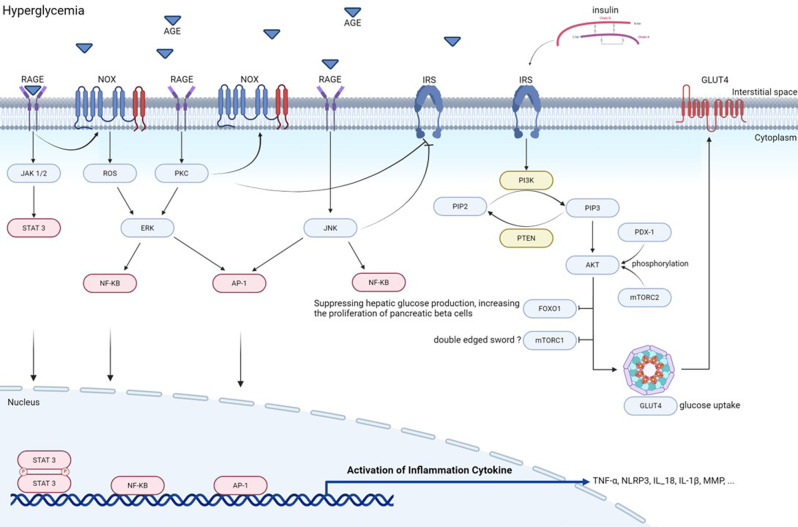
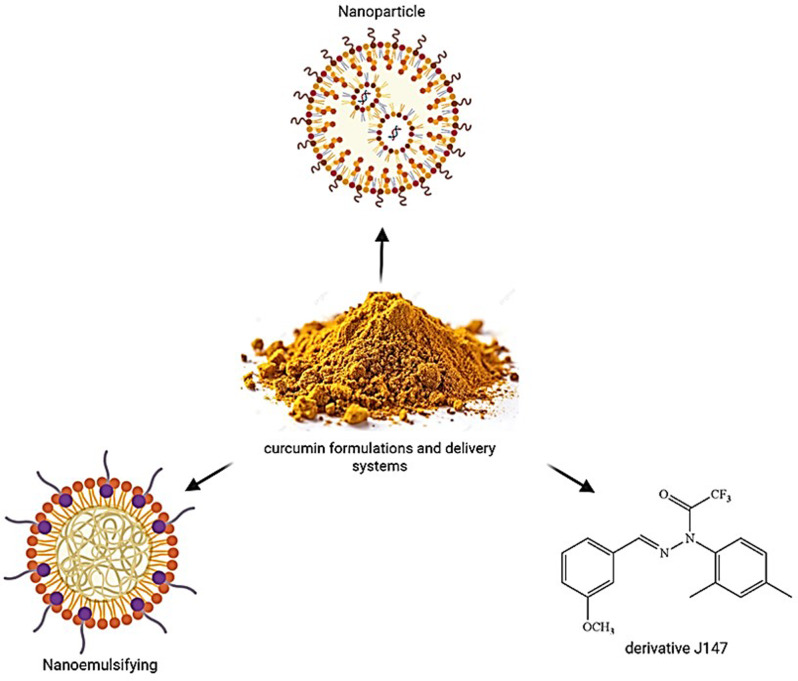
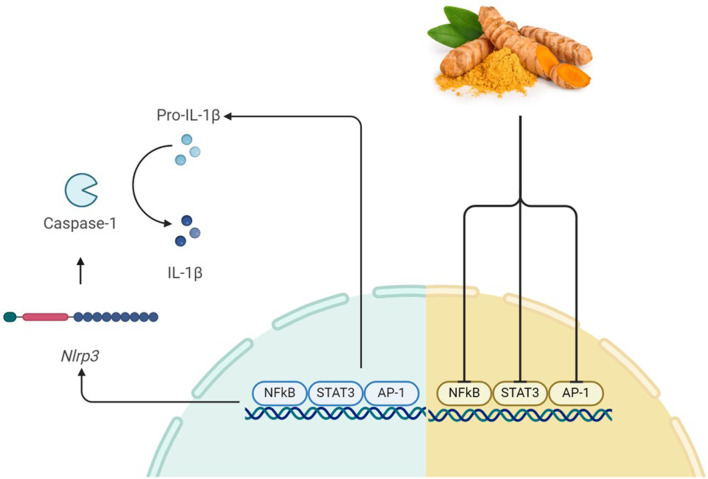
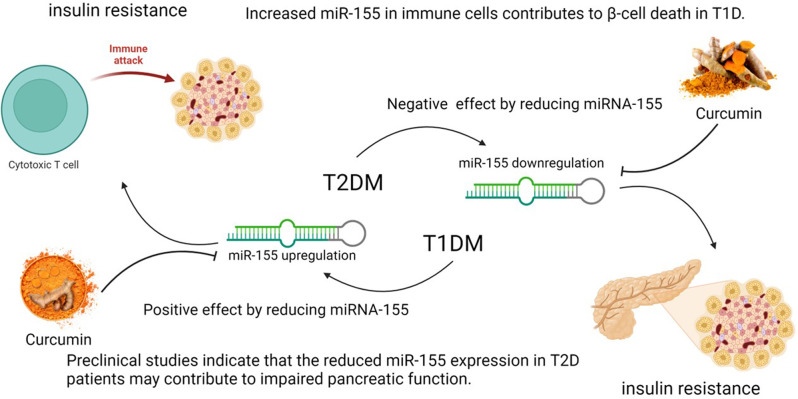
Diabetes mellitus is an endocrine disorder characterized by prolonged hyperglycemia. It results from either insulin deficiency (type 1 diabetes mellitus, T1DM) or insulin resistance (type 2 diabetes mellitus, T2DM). This condition has emerged as a significant health concern in recent years. Hyperglycemia induces the overproduction of reactive oxygen species (ROS), which can modulate multiple pathways, including AGEs-RAGE, PKC stimulation, NF-κB and PI3K/AKT. These pathways contribute to diabetes-related complications such as inflammation, oxidative stress, insulin resistance, and reduced glucose uptake. The interplay of these metabolic disturbances can lead to demyelination and peripheral nerve damage, resulting in diabetic neuropathy. This is a challenging complication of diabetes for which there are limited effective treatments. Despite its low bioavailability, curcumin, a natural component extracted from turmeric, despite its low bioavailability, affects and modulates several intracellular pathways underlying neuropathic damage. Curcumin is considered a potential treatment for diabetic neuropathy (DN) because it measurably reduces markers of oxidative stress and inflammatory cytokines, while significantly alleviating neuropathic pain and improving nerve function. MicroRNAs (miRNAs or miR), which are small non-coding RNAs consisting of 19-25 nucleotides, are stable in circulation and can regulate multiple target genes. This makes them promising biomarkers for both diagnostic and therapeutic applications. Curcumin has been shown to regulate the dysregulation of relevant miRNAs associated with neuropathy by suppressing the inflammatory miR-21 while enhancing the expression of the anti-inflammatory miR-146a. Current formulations of curcumin face bioavailability challenges; however, advancements in delivery systems and structural modifications, such as nanoformulations, have significantly improved its bioavailability. These improvements overcome previous pharmacokinetic limitations and enhance the therapeutic effects of curcumin. With continued research, curcumin could ultimately become a cornerstone in managing diabetic complications and improving the quality of life for affected patients.
糖尿病是一种以长期高血糖为特征的内分泌紊乱疾病。它是由胰岛素缺乏(1型糖尿病,T1DM)或胰岛素抵抗(2型糖尿病,T2DM)引起的。近年来,这种疾病已成为一个重大的健康问题。高血糖会诱导活性氧(ROS)的过量产生,ROS可调节多种途径,包括晚期糖基化终末产物受体(AGEs-RAGE)、蛋白激酶C(PKC)刺激、核因子κB(NF-κB)和磷脂酰肌醇-3-激酶/蛋白激酶B(PI3K/AKT)。这些途径会导致糖尿病相关并发症,如炎症、氧化应激、胰岛素抵抗和葡萄糖摄取减少。这些代谢紊乱之间的相互作用会导致脱髓鞘和周围神经损伤,从而引发糖尿病性神经病变。这是糖尿病一种具有挑战性的并发症,有效治疗方法有限。姜黄素是从姜黄中提取的一种天然成分,尽管其生物利用度较低,但它会影响和调节神经病变损伤背后的几种细胞内途径。姜黄素被认为是糖尿病性神经病变(DN)的一种潜在治疗方法,因为它能显著降低氧化应激标志物和炎性细胞因子,同时显著减轻神经病变疼痛并改善神经功能。微小RNA(miRNA或miR)是由19 - 25个核苷酸组成的小型非编码RNA,在循环中稳定,可调节多个靶基因。这使其成为诊断和治疗应用中有前景的生物标志物。已表明姜黄素通过抑制炎性miR - 21同时增强抗炎miR - 146a的表达来调节与神经病变相关的miRNA失调。目前姜黄素制剂面临生物利用度挑战;然而,递送系统和结构修饰(如纳米制剂)的进展显著提高了其生物利用度。这些改进克服了以前的药代动力学限制,增强了姜黄素的治疗效果。随着持续研究,姜黄素最终可能成为管理糖尿病并发症和改善受影响患者生活质量的基石。