Li Jiawei, Zhao Maomao, Bai Lu, Zhao Jing, Gao Hanxiang, Bai Ming
Department of Cardiology, First Hospital of Lanzhou University, 730000 Lanzhou, Gansu, China.
Gansu Key Laboratory of Cardiovascular Diseases, The First Hospital of Lanzhou University, 730000 Lanzhou, Gansu, China.
Rev Cardiovasc Med. 2025 Jul 22;26(7):36598. doi: 10.31083/RCM36598. eCollection 2025 Jul.
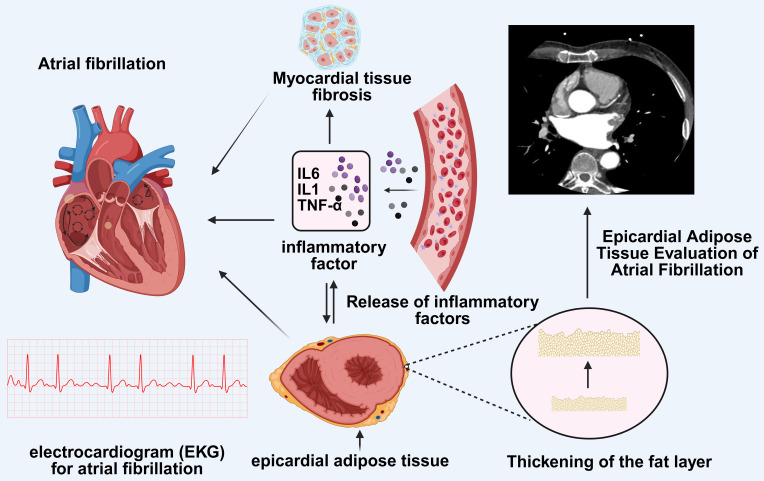
The relationship between inflammation and atrial fibrillation (AF) has recently attracted significant research interest. Epicardial adipose tissue (EAT) contributes to the pathogenesis of AF through its inflammatory, metabolic, and electrophysiological effects and may also influence AF outcomes. Inflammatory cells within EAT release key proinflammatory cytokines, including interleukin (IL)-1β and tumor necrosis factor-α (TNF-α), which promote cardiomyocyte apoptosis and fibrosis. These changes compromise cardiac electrophysiological stability and elevate the risk of arrhythmias. Moreover, increased EAT thickness and volume have been identified as critical biomarkers for AF risk, providing new insights into AF diagnosis and treatment. However, despite compelling evidence of a strong association between EAT and AF, further studies are needed to fully elucidate the mechanisms underlying the role of EAT and assess its potential as a therapeutic target. This review aimed to explore the specific mechanisms of inflammation-related EAT in AF and evaluate the clinical potential of EAT as a biomarker and therapeutic target.
炎症与心房颤动(AF)之间的关系最近引起了大量研究关注。心外膜脂肪组织(EAT)通过其炎症、代谢和电生理效应促进房颤的发病机制,并且可能也会影响房颤的转归。EAT内的炎症细胞释放关键促炎细胞因子,包括白细胞介素(IL)-1β和肿瘤坏死因子-α(TNF-α),这些因子会促进心肌细胞凋亡和纤维化。这些变化损害心脏电生理稳定性并增加心律失常风险。此外,EAT厚度和体积增加已被确定为房颤风险的关键生物标志物,为房颤的诊断和治疗提供了新的见解。然而,尽管有确凿证据表明EAT与房颤之间存在密切关联,但仍需要进一步研究以充分阐明EAT发挥作用的潜在机制,并评估其作为治疗靶点的潜力。本综述旨在探讨房颤中与炎症相关的EAT的具体机制,并评估EAT作为生物标志物和治疗靶点的临床潜力。