Hou Rui, Zhang Zejun, Li Huan, He Wenyin, Wang Xu, Zhao Xuan, Li Sijin, Guan Zhangchun, Liu Dan, Zheng Junnian, Shi Ming
College of Pharmacy, Xuzhou Medical University, Xuzhou 221004, Jiangsu, China.
Cancer Institute, Xuzhou Medical University, Xuzhou 221004, Jiangsu, China.
Mol Ther Methods Clin Dev. 2025 Jul 17;33(3):101537. doi: 10.1016/j.omtm.2025.101537. eCollection 2025 Sep 11.
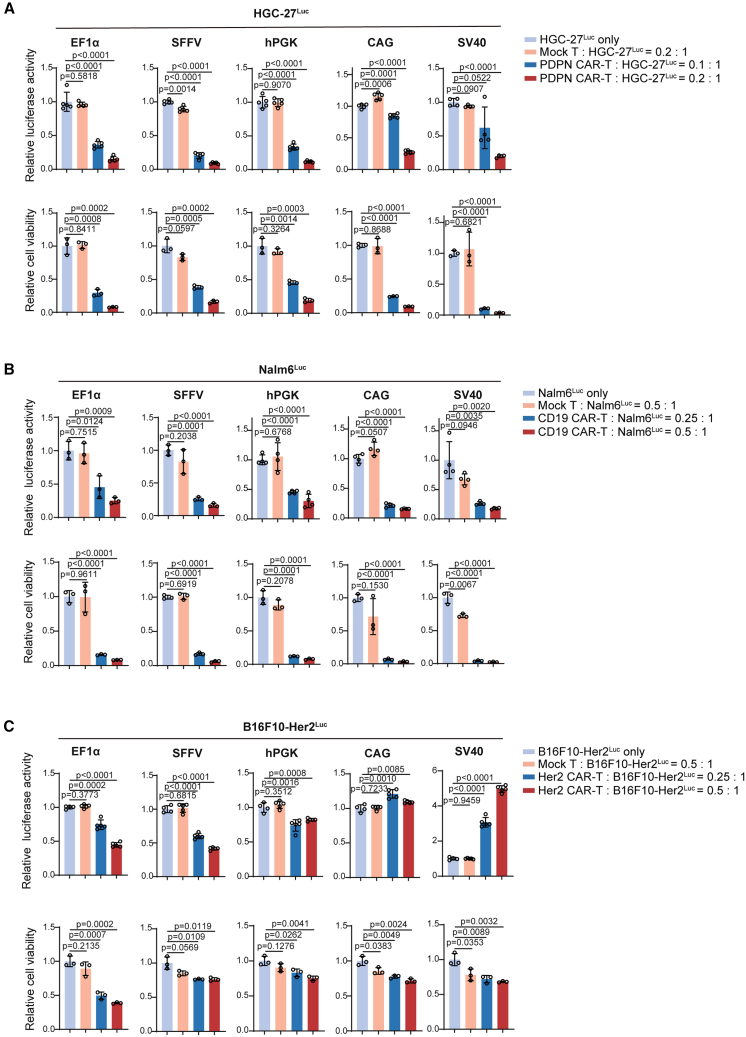
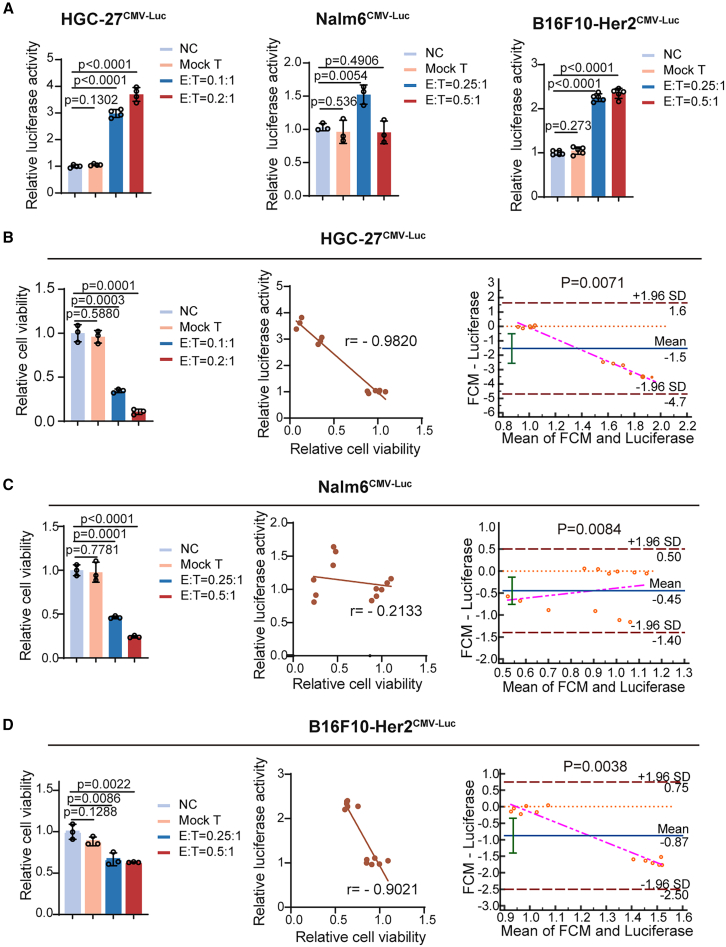
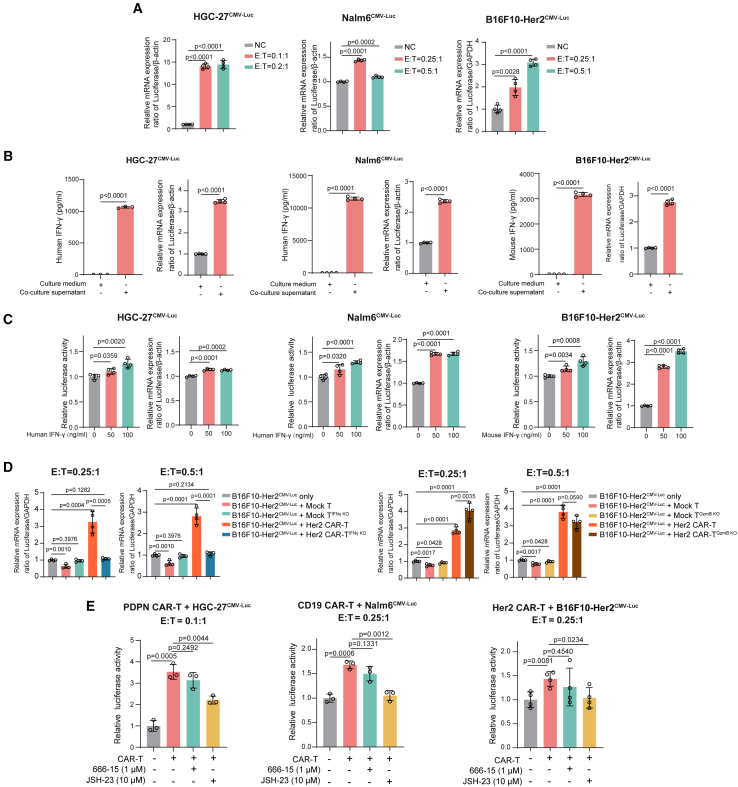
Precise assessment of the cytotoxic activity of engineered immune cell therapeutics, such as chimeric antigen receptor-engineered T (CAR-T) cells, is essential for their development and quality control. However, luciferase (Luc)-based viability assays, which evaluate target cell viability by overexpressing Luc tags and measuring chemiluminescent signals, may yield biased results depending on the promoter driving Luc expression. This study demonstrates that CAR-T cells can enhance cytomegalovirus (CMV) promoter-driven transcription in target cells via the interferon-gamma (IFN-γ)/nuclear factor κB (NF-κB) signaling pathway, leading to elevated Luc expression and a discrepancy between chemiluminescent signals and actual target cell death. These findings underscore the limitations of CMV promoters in functional protein overexpression systems in the context of engineered T cell killing of target cells due to their susceptibility to transcriptional interference. Statistical analyses indicate that Luc expression driven by the elongation factor-1 alpha (EF1α) promoter exhibits the highest concordance with flow cytometry-based quantification across three CAR-T cytotoxicity assay platforms, making it a more reliable choice for evaluating CAR-T cell cytotoxicity. This study highlights the necessity of selecting appropriate promoters to ensure accurate Luc-based cytotoxicity assessments and provides critical insights for standardizing detection methodologies in CAR-T cell evaluation.
精确评估工程化免疫细胞疗法(如嵌合抗原受体工程化T细胞(CAR-T))的细胞毒性活性对于其开发和质量控制至关重要。然而,基于荧光素酶(Luc)的活力测定法通过过表达Luc标签并测量化学发光信号来评估靶细胞活力,但根据驱动Luc表达的启动子不同,可能会产生有偏差的结果。本研究表明,CAR-T细胞可通过干扰素-γ(IFN-γ)/核因子κB(NF-κB)信号通路增强靶细胞中巨细胞病毒(CMV)启动子驱动的转录,导致Luc表达升高,以及化学发光信号与实际靶细胞死亡之间出现差异。这些发现强调了在工程化T细胞杀伤靶细胞的背景下,CMV启动子在功能性蛋白过表达系统中的局限性,因为它们易受转录干扰。统计分析表明,在三种CAR-T细胞毒性测定平台上,由延伸因子-1α(EF1α)启动子驱动的Luc表达与基于流式细胞术的定量结果具有最高的一致性,使其成为评估CAR-T细胞毒性更可靠的选择。本研究强调了选择合适启动子以确保基于Luc的细胞毒性评估准确的必要性,并为标准化CAR-T细胞评估中的检测方法提供了关键见解。