Saeed Muhammad Adnan, Asif Haseeb, Ehtisham-Ul-Haque Syed, Khan Aman Ullah, Rehman Aziz Ur, Rehman Aiman, Rafique Muhammad Kamran, Ahmed Ishtiaq, Qamar Muhammad Fiaz, Tomaso Herbert, El-Adawy Hosny
Department of Pathobiology (Microbiology Section), University of Veterinary and Animal Sciences, Lahore, Pakistan.
Department of Pathobiology (Pathology Section), University of Veterinary and Animal Sciences, Lahore, Pakistan.
Front Vet Sci. 2025 Jul 24;12:1612542. doi: 10.3389/fvets.2025.1612542. eCollection 2025.
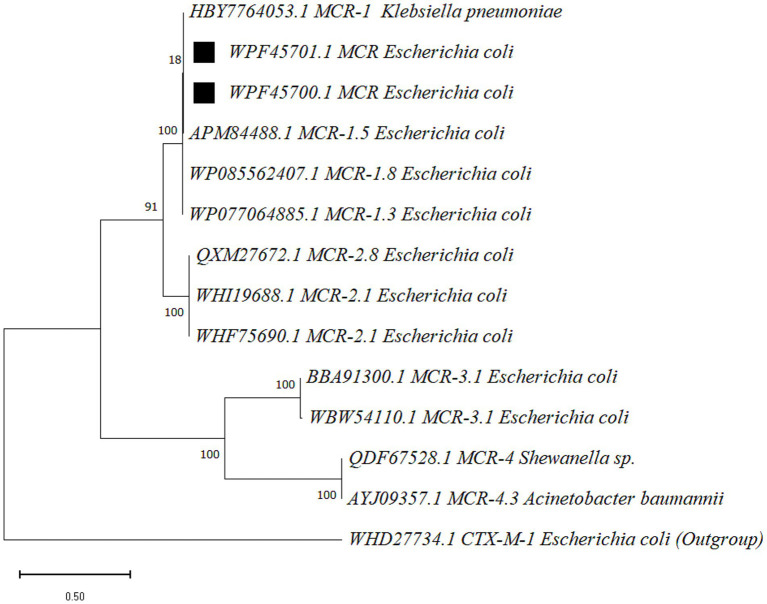
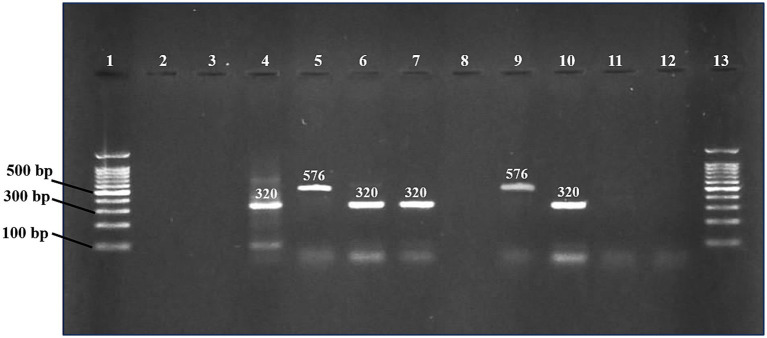
Colibacillosis associated with colistin-resistant avian pathogenic () poses a threat to both food security and public health. The potential horizontal transmission of mobilized colistin-resistant () genes facilitates the co-emergence of . This study aimed to determine the prevalence, molecular detection, analyze the antibiogram and identify associated risk factors for colistin-resistant and isolated from broiler chicken in three districts of Punjab province, Pakistan. In total, 230 visceral organ samples were collected from 13 different chicken farms located in Sargodha, Jhang and Toba Tek Singh in Pakistan. Following isolation, the broth microdilution test was used to confirm phenotypic colistin resistance. Polymerase chain reaction was used to detect 1 and 2 genes associated with colistin resistance. Antimicrobial susceptibility test against 11 antibiotics was performed using the Kirby-Bauer disk diffusion method. Risk factors associated with colistin-resistant bacteria, including host attributes, farm management practices, environmental and agent characteristics, were analyzed. The prevalence of colistin-resistant and was 24.78% (95% CI, 19.6-30.7%) and 3.04% (95% CI, 1.5-6.1%), respectively. The prevalence of colistin-resistant varied between cities at 42, 23.61 and 5.55% for Jhang, Sargodha and Toba Tek Singh, respectively. The detection frequency of 1 gene, 42.1% (24/57), was significantly ( < 0.01) higher than that of the 2 gene, 14.03% (8/57). Phylogenetic analysis of lipid A phosphoethanolamine transferase sequences revealed greater similarity with 1.5 variant. Isolates were found resistant to amoxicillin-clavulanic acid (84.21%), cefotaxime (70.17%), and trimethoprim-sulfamethoxazole (73.68%). The multivariate logistic regression predicted preceding viral infection of the respiratory tract as a significant association (OR = 4.808, < 0.01), whereas daily removal/culling of dead/diseased chicken (OR = 0.308, = 0.01) was a protective factor against the emergence of colistin-resistant strains. These findings indicate that the emergence of colistin-resistant strains deteriorate colibacillosis control efforts in poultry and serves as a possible reservoir for zoonotic infections.
与耐黏菌素的禽致病性大肠杆菌相关的大肠杆菌病对食品安全和公众健康都构成威胁。可移动的耐黏菌素基因的潜在水平传播促进了耐黏菌素大肠杆菌的共同出现。本研究旨在确定从巴基斯坦旁遮普省三个地区的肉鸡中分离出的耐黏菌素大肠杆菌和肺炎克雷伯菌的流行率、进行分子检测、分析抗菌谱并确定相关危险因素。总共从巴基斯坦萨戈达、詹格和托巴·特克·辛格的13个不同养鸡场收集了230份内脏器官样本。分离后,采用肉汤微量稀释试验确认表型耐黏菌素情况。采用聚合酶链反应检测与耐黏菌素相关的mcr - 1和mcr - 2基因。使用 Kirby - Bauer 纸片扩散法对11种抗生素进行药敏试验。分析了与耐黏菌素细菌相关的危险因素,包括宿主属性、农场管理措施、环境和病原体特征。耐黏菌素大肠杆菌和肺炎克雷伯菌的流行率分别为24.78%(95%可信区间,19.6 - 30.7%)和3.04%(95%可信区间,1.5 - 6.1%)。耐黏菌素大肠杆菌的流行率在不同城市有所不同,詹格、萨戈达和托巴·特克·辛格分别为42%、23.61%和5.55%。mcr - 1基因的检测频率为42.1%(24/57),显著高于mcr - 2基因的14.03%(8/57)(P < 0.01)。脂质A磷酸乙醇胺转移酶序列的系统发育分析显示与mcr - 1.5变体有更高的相似性。分离株对阿莫西林 - 克拉维酸(84.21%)、头孢噻肟(70.17%)和甲氧苄啶 - 磺胺甲恶唑(73.68%)耐药。多因素逻辑回归预测呼吸道先前的病毒感染是一个显著关联因素(比值比 = 4.808,P < 0.01),而每天清除/扑杀病死鸡(比值比 = 0.308,P = 0.01)是预防耐黏菌素菌株出现的保护因素。这些发现表明耐黏菌素菌株的出现破坏了家禽大肠杆菌病的防控工作,并可能成为人畜共患病感染的一个潜在源头。