Rahman Muneeb Ur, Hussain Hafiz Rashid, Malik Sumaira, Razzaqe Sana, Athar Usama, Salman Muhammad, Ismail Wajeeha
College of Pharmacy, University of Sargodha, Sargodha 40100, Pakistan.
Rashid Latif College of Pharmacy, Rashid Latif Medical College, Lahore 54000, Pakistan.
Iran J Med Sci. 2025 Jul 1;50(7):431-444. doi: 10.30476/ijms.2024.103016.3617. eCollection 2025 Jul.
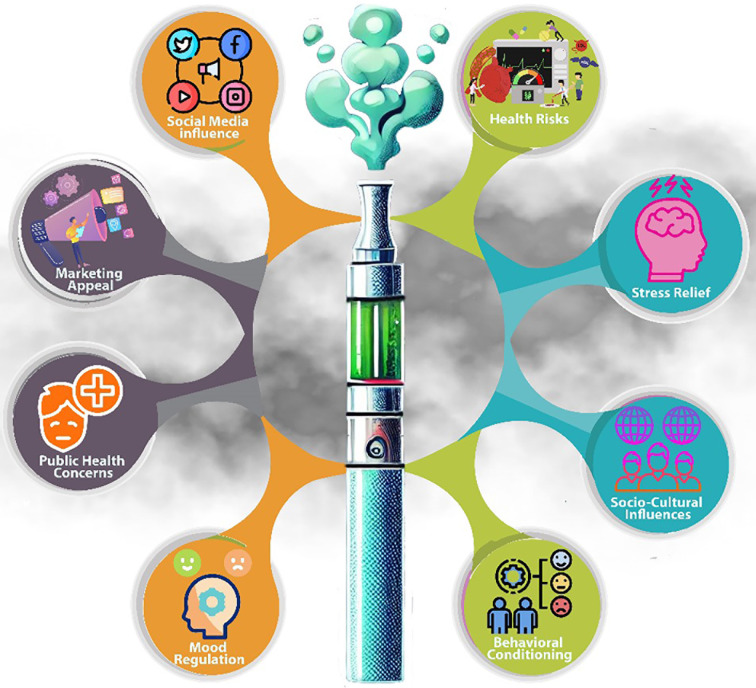
The utilization of e-cigarettes among youth in Pakistan is increasing due to their attractive appearance, user-friendly design, reduced smoking discomfort, and availability in a variety of flavors. Although e-cigarettes are often perceived as less toxic than traditional cigarettes, they still pose significant health risks such as respiratory issues, cardiovascular problems, potential neurodevelopmental effects in adolescents, and increased likelihood of transitioning to conventional tobacco products due to the presence of harmful chemicals and ingredients such as nicotine and other toxic substances. Adolescents in Pakistan have strong opinions about e-cigarette use, primarily influenced by sociocultural values; Westernization and globalization have made vaping appear to be a chic and sophisticated lifestyle choice. Moreover, views on addiction, dependency, and substance use are shaped by social backgrounds, religious beliefs, and cultural norms. Aggressive marketing techniques are employed by e-cigarette manufacturers, mainly targeting tech-savvy youth through digital platforms and social media influencers, which have also contributed to the rapid rise in e-cigarette use among young people in Pakistan. The current study underscores the necessity for culturally compatible interventions and policies, including educational programs, stringent regulations to limit access for young people, and comprehensive public health campaigns that counteract the influence of marketing by e-cigarette manufacturers. Additionally, healthcare providers should be trained to offer culturally sensitive cessation programs that support adolescents in quitting e-cigarettes and provide resources to mitigate the health hazards associated with e-cigarette use, including nicotine addiction and other adverse health effects, and to promote tobacco cessation in Pakistan.
由于电子烟外观诱人、设计方便用户、吸烟不适感降低且有多种口味可供选择,巴基斯坦青少年对电子烟的使用正在增加。尽管电子烟通常被认为比传统香烟毒性小,但它们仍然带来重大健康风险,如呼吸系统问题、心血管问题、对青少年潜在的神经发育影响,以及由于存在尼古丁和其他有毒物质等有害化学物质和成分,导致转向传统烟草产品的可能性增加。巴基斯坦的青少年对使用电子烟有强烈的看法,主要受社会文化价值观影响;西方化和全球化使吸电子烟看起来是一种时尚和精致的生活方式选择。此外,关于成瘾、依赖和物质使用的观点受到社会背景、宗教信仰和文化规范的影响。电子烟制造商采用激进的营销技巧,主要通过数字平台和社交媒体有影响力的人针对精通技术的青少年,这也导致了巴基斯坦年轻人中电子烟使用的迅速增加。当前的研究强调了文化兼容的干预措施和政策的必要性,包括教育项目、限制年轻人获取的严格法规,以及抵制电子烟制造商营销影响的全面公共卫生运动。此外,医疗保健提供者应接受培训,提供具有文化敏感性的戒烟项目,支持青少年戒掉电子烟,并提供资源以减轻与使用电子烟相关的健康危害,包括尼古丁成瘾和其他不良健康影响,并在巴基斯坦促进戒烟。