Guan Xiuyan, Wang Yanping
Department of Geratology, Cardiovascular Ward, The First Hospital of China Medical University, Shenyang, China.
Department of Interventional Radiology, The First Hospital of China Medical University, Shenyang, China.
Medicine (Baltimore). 2025 Aug 8;104(32):e43801. doi: 10.1097/MD.0000000000043801.
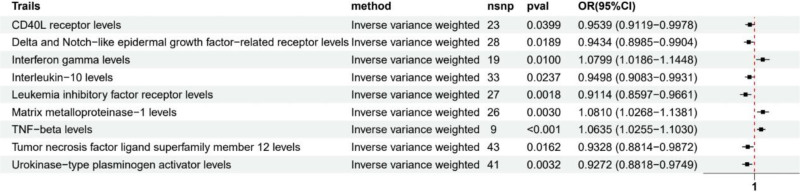
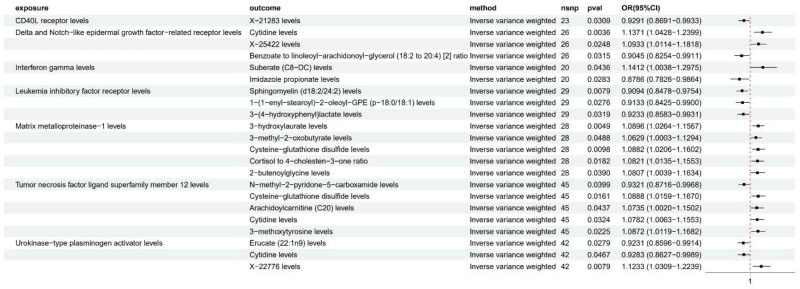
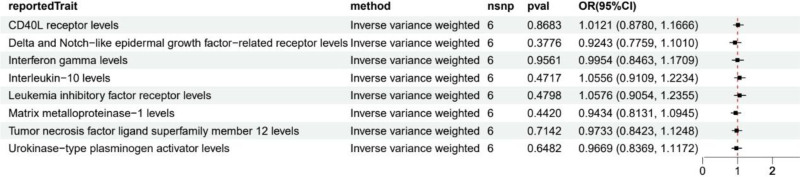
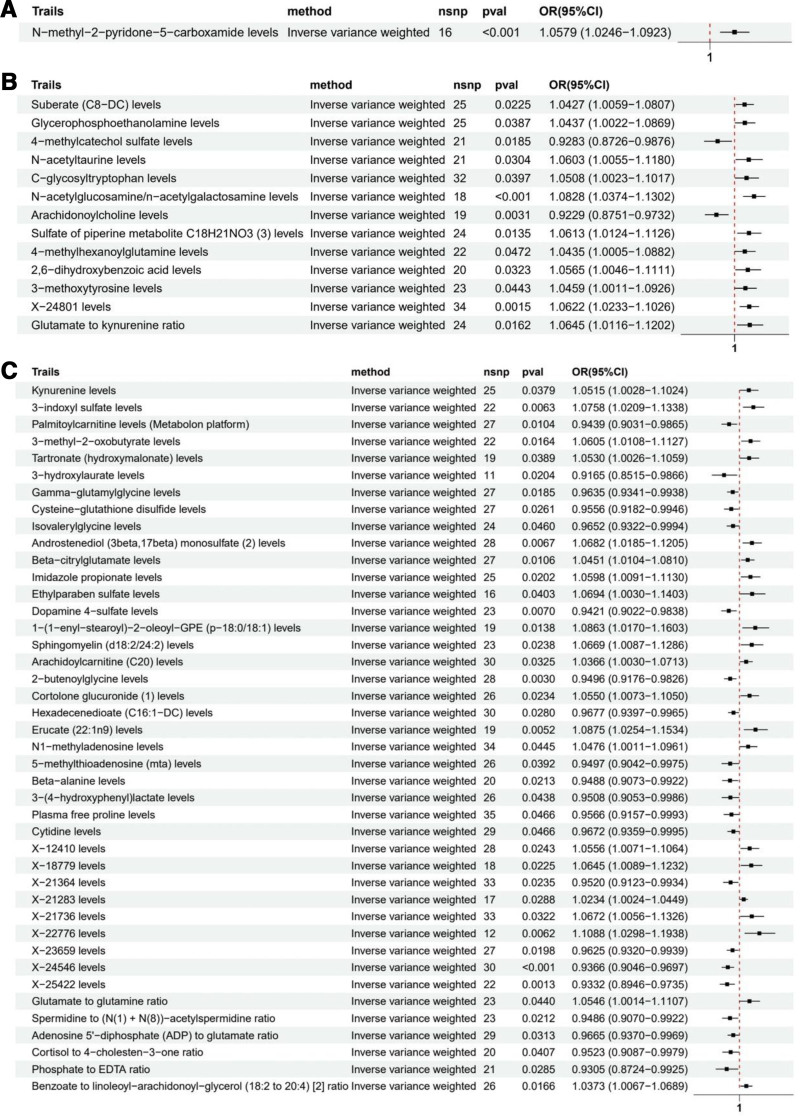
Heart failure (HF) represents a major global health burden, with complex pathophysiology involving inflammatory and metabolic pathways. However, the causal relationships among inflammatory factors, metabolites, and HF risk remain unclear. This study aims to identify inflammatory factors causally associated with HF risk, characterize metabolic alterations causally linked to HF development, and explore potential mediating roles of metabolites in inflammation-related HF pathogenesis. We conducted a comprehensive Mendelian randomization study using genetic data from FinnGen biobank (29,218 HF cases and 381,838 controls), combined with genome-wide association studies data for 91 inflammatory factors and 1400 metabolites. We performed bidirectional and mediational Mendelian randomization analyses to investigate causal relationships and potential mediating effects of metabolites in inflammation-related HF pathogenesis. We identified 9 inflammatory factors (out of 91) causally associated with HF risk, including 3 risk-promoting factors (interferon gamma: OR = 1.080, matrix metalloproteinase-1: OR = 1.081, tumor necrosis factor-beta: OR = 1.064) and 6 protective factors (CD40L receptor: OR = 0.954, DNER: OR = 0.943, IL-10: OR = 0.950, LIFR: OR = 0.911, TNFSF12: OR = 0.933, uPA: OR = 0.927). More than 13 metabolites (out of 1400) showed robust associations with HF risk, with N-methyl-2-pyridone-5-carboxamide demonstrating the strongest evidence (OR = 1.058). Further analysis revealed 23 significant inflammatory factor-metabolite pairs (out of 1000s of possible combinations), suggesting potential mechanistic pathways through which inflammatory factors influence HF development. This study establishes a comprehensive causal framework linking inflammation to HF through specific metabolic alterations, identifying novel biomarkers and potential therapeutic targets. The findings suggest that combined interventions targeting both inflammatory and metabolic pathways might offer improved strategies for HF prevention and treatment.
心力衰竭(HF)是一项重大的全球健康负担,其复杂的病理生理学涉及炎症和代谢途径。然而,炎症因子、代谢物与HF风险之间的因果关系仍不明确。本研究旨在确定与HF风险存在因果关系的炎症因子,描述与HF发展存在因果联系的代谢改变,并探索代谢物在炎症相关HF发病机制中的潜在中介作用。我们利用来自芬兰基因库生物样本库的遗传数据(29218例HF病例和381838例对照),结合91种炎症因子和1400种代谢物的全基因组关联研究数据,开展了一项全面的孟德尔随机化研究。我们进行了双向和中介孟德尔随机化分析,以研究代谢物在炎症相关HF发病机制中的因果关系和潜在中介作用。我们确定了91种炎症因子中的9种与HF风险存在因果关系,包括3种风险促进因子(干扰素γ:比值比[OR]=1.080,基质金属蛋白酶-1:OR=1.081,肿瘤坏死因子-β:OR=1.064)和6种保护因子(CD40L受体:OR=0.954,DNER:OR=0.943,白细胞介素-10:OR=0.950,白血病抑制因子受体:OR=0.911,肿瘤坏死因子配体超家族成员12:OR=0.933,尿激酶型纤溶酶原激活剂:OR=0.927)。1400种代谢物中有超过13种与HF风险表现出显著关联,其中N-甲基-2-吡啶酮-5-甲酰胺的证据最为确凿(OR=1.058)。进一步分析揭示了1000多种可能组合中的23对显著的炎症因子-代谢物对,提示了炎症因子影响HF发展的潜在机制途径。本研究通过特定的代谢改变建立了一个将炎症与HF联系起来的全面因果框架,确定了新的生物标志物和潜在治疗靶点。研究结果表明,针对炎症和代谢途径的联合干预可能为HF的预防和治疗提供更好的策略。