
部分冷冻和过冷贮藏对牛肉品质的影响:动力学建模方法
Effects of Partial Freezing and Superchilling Storage on the Quality of Beef: A Kinetic Modelling Approach.
作者信息
Mwakosya Anjelina William, Alvarez Graciela, Ndoye Fatou Toutie
机构信息
INRAE, UR FRISE, Université Paris-Saclay, F-92761 Antony, France.
出版信息
Foods. 2025 Jul 30;14(15):2687. doi: 10.3390/foods14152687.
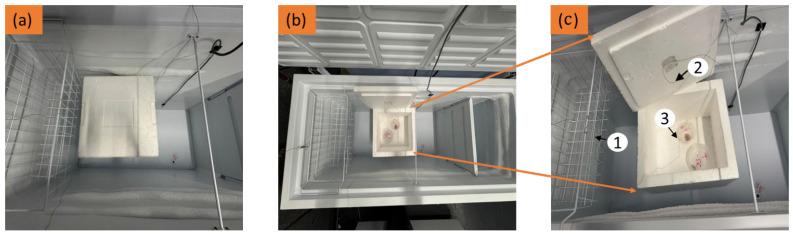
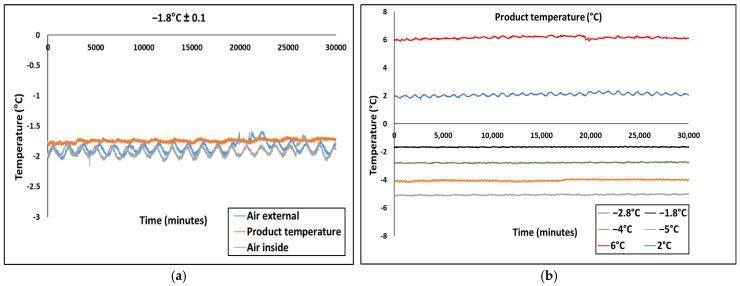
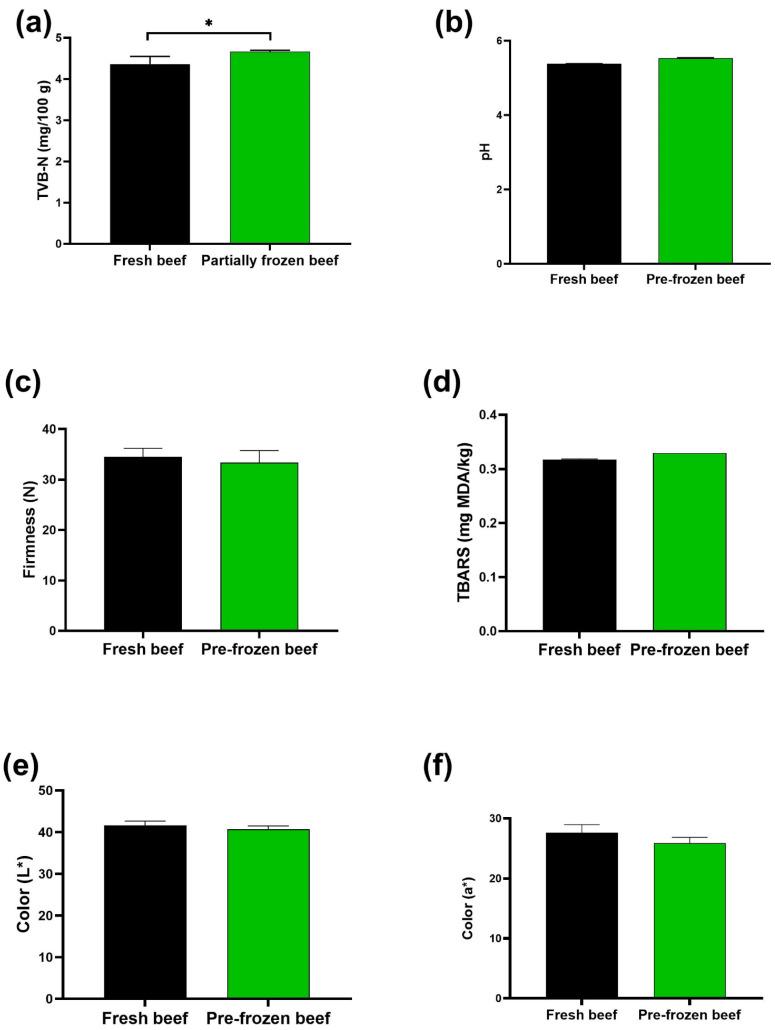
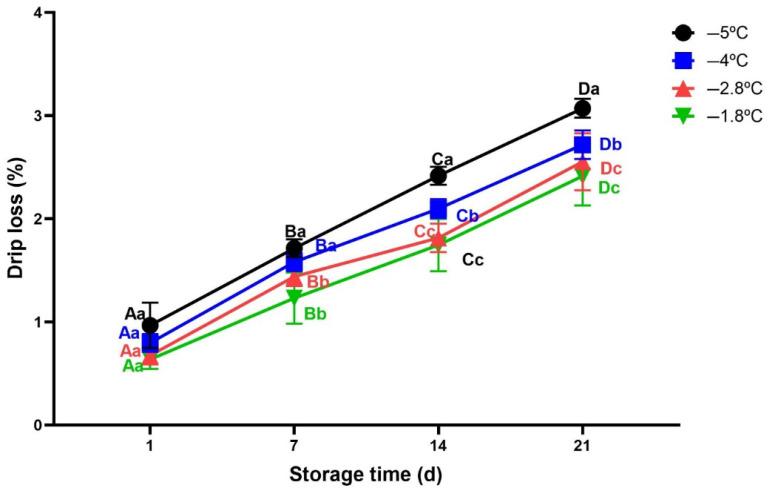
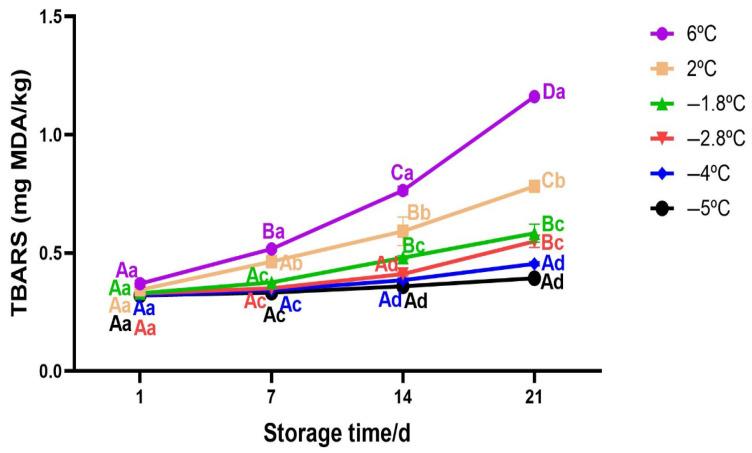
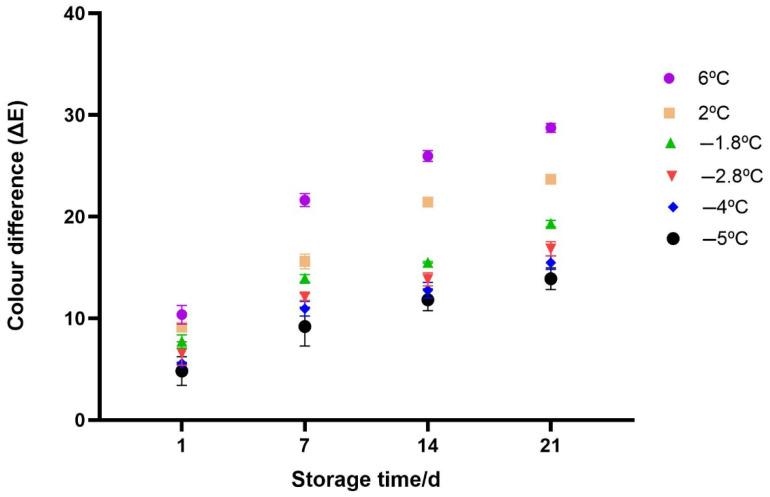
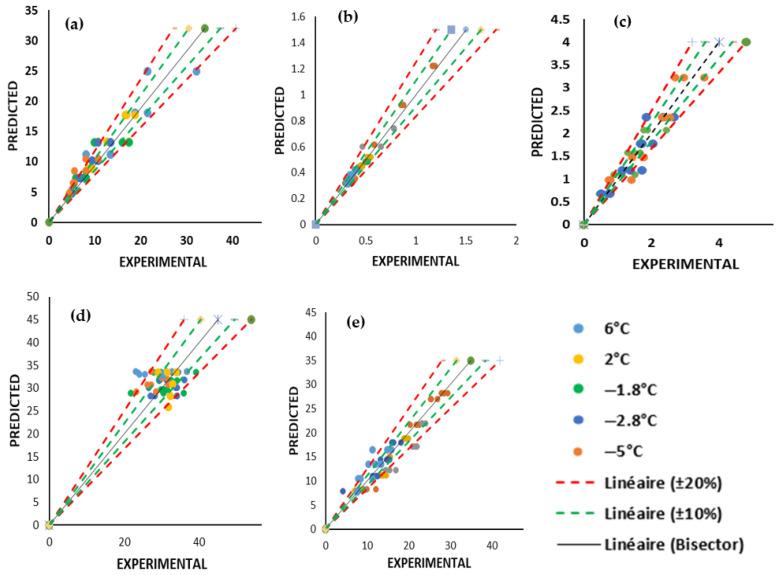
The current study explores the changes in beef quality following partial freezing and during superchilled storage, alongside chilled storage comparisons. Kinetic models were developed to predict changes in colour difference (∆E), thiobarbituric acid-reactive substances (TBARS), total volatile basic nitrogen (TVB-N), drip loss and firmness. Beef samples were partially frozen in an air blast freezer at -30 °C for 9 min prior to storage at -5 °C, -4 °C, -2.8 °C, -1.8 °C. Chilled beef samples were directly stored at 2 °C and 6 °C without partial freezing. All samples were stored for 21 days. The lightness (L*), redness (a*), yellowness (b*) and colour difference (∆E) were significantly lower in superchilled storage samples compared to chilled storage samples. The pH of beef samples increased gradually over time ( < 0.05). TBARS, TVB-N and drip loss increased while firmness decreased with the increase in storage time in both storage conditions ( < 0.05). Overall, beef quality was affected by both storage duration and temperature. Firmness followed the first order kinetic model; drip loss, TVB-N, TBARS and colour difference (∆E) fitted the zero-order kinetic model. Temperature dependence was adequately modelled using Arrhenius-type equation with the activation energy values of 110.111, 52.870, 68.553, 119.480, 47.301 kJ/mol for drip loss, firmness, TBARS, TVB-N and colour difference (∆E), respectively. The models demonstrated strong predictive performance, with RMSE and MAPE values within ±10%. The developed kinetic models successfully predicted quality changes within the -5 °C to 6 °C temperature range.
本研究探讨了部分冷冻及过冷储存后牛肉品质的变化,并与冷藏储存进行了比较。建立了动力学模型来预测色差(∆E)、硫代巴比妥酸反应性物质(TBARS)、总挥发性盐基氮(TVB-N)、滴水损失和硬度的变化。牛肉样品在-30℃的鼓风冷冻机中部分冷冻9分钟,然后在-5℃、-4℃、-2.8℃、-1.8℃下储存。冷藏牛肉样品直接在2℃和6℃下储存,不进行部分冷冻。所有样品储存21天。与冷藏样品相比,过冷储存样品的亮度(L*)、红色度(a*)、黄色度(b*)和色差(∆E)显著降低。牛肉样品的pH值随时间逐渐升高(<0.05)。在两种储存条件下,TBARS、TVB-N和滴水损失均随储存时间的增加而增加,硬度则降低(<0.05)。总体而言,牛肉品质受储存时间和温度的影响。硬度遵循一级动力学模型;滴水损失、TVB-N、TBARS和色差(∆E)符合零级动力学模型。使用Arrhenius型方程对温度依赖性进行了充分建模,滴水损失、硬度、TBARS、TVB-N和色差(∆E)的活化能值分别为110.111、52.870、68.553、119.480、47.301 kJ/mol。这些模型具有很强的预测性能,RMSE和MAPE值在±10%以内。所建立的动力学模型成功地预测了-5℃至6℃温度范围内的品质变化。



 Zotero 插件