Karki Mohan, Pandey Rakesh, Vaish Manish, Rajpal Girish, Bundela Yaspal Singh, Chakrabartty Hrishikesh, Narula Dipanshu
Department of Neurosurgery, Max Super Speciality Hospital, Vaishali, Uttar Pradesh, India.
Asian J Neurosurg. 2025 Apr 3;20(3):491-497. doi: 10.1055/s-0045-1806866. eCollection 2025 Sep.
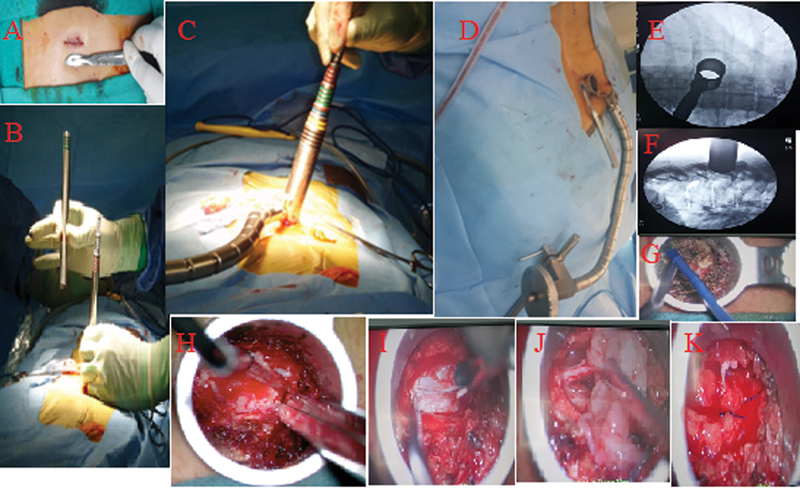
Minimal invasive spine surgery with tubular retractor system avoids contralateral laminectomy, minimizes manipulation of midline supportive structures, and reduces surgical morbidity. The objective of this study was to evaluate the safety and efficacy of microscopic minimal invasive tubular retractor system for intradural spinal tumor resection.
A retrospective study was performed in 70 patients who were admitted between January 2017 and January 2024 with intradural spinal tumors and underwent excision with microscopic minimal invasive tubular retractor system. Patient's data including age, sex, clinical symptoms, and magnetic resonance imaging were collected. The extent of resection, surgical complications, estimated blood loss, estimated surgical time, and neurological outcomes were recorded. The neurological assessment was done by the modified McCormick grading scale pre- and postoperatively.
Out of 70 patients, there were 38 (54.28%) males and 32 (45.71%) females, with a mean age of 45.16 (range: 8-79) years. The histology of these cases was meningioma (34.28%), schwannoma (51.42%), astrocytoma (2.85%), ependymoma (2.85%), and neurofibroma (8.57%). The average volume of tumors was 1.98 cm , and gross total resection was achieved in 64 (91.53%) cases and subtotal resection was achieved in 6 (8.57%) cases. One patient had neurological deterioration, which was improved on follow-up after 6 months, and cerebrospinal fluid (CSF) leakage was noted in one case, which recovered after keeping lumbar drain for 5 days. No permanent neurological deficits were observed compared with their preoperative status, with improvement noted in visual analog scale and modified McCormick grade in all cases in the long-term follow-up evaluation (6-24 months).
Microscopic minimal invasive resection of intradural spinal tumor by the tubular retractor system is safe and effective with excellent neurological improvement as well as better resection rate, short hospital stay, and less surgical complication.
采用管状牵开器系统的微创脊柱手术避免了对侧椎板切除术,最大限度减少了中线支持结构的操作,并降低了手术发病率。本研究的目的是评估显微镜下微创管状牵开器系统用于硬膜内脊髓肿瘤切除的安全性和有效性。
对2017年1月至2024年1月期间收治的70例硬膜内脊髓肿瘤患者进行回顾性研究,这些患者均采用显微镜下微创管状牵开器系统进行切除。收集患者的年龄、性别、临床症状及磁共振成像等数据。记录切除范围、手术并发症、估计失血量、估计手术时间及神经功能结果。术前和术后采用改良的麦考密克分级量表进行神经功能评估。
70例患者中,男性38例(54.28%),女性32例(45.71%),平均年龄45.16岁(范围:8 - 79岁)。这些病例的组织学类型为脑膜瘤(34.28%)、神经鞘瘤(51.42%)、星形细胞瘤(2.85%)、室管膜瘤(2.85%)和神经纤维瘤(8.57%)。肿瘤平均体积为1.98 cm ,64例(91.53%)实现了全切除,6例(8.57%)实现了次全切除。1例患者出现神经功能恶化,6个月后随访有所改善,1例出现脑脊液漏,留置腰大池引流5天后恢复。与术前状态相比,未观察到永久性神经功能缺损,在长期随访评估(6 - 24个月)中,所有病例的视觉模拟评分和改良麦考密克分级均有改善。
采用管状牵开器系统显微镜下微创切除硬膜内脊髓肿瘤安全有效,神经功能改善良好,切除率更高,住院时间短,手术并发症少。