Jia Geng, Feng Yi, Liu Zhenwei, Yang Changchun, Peng Ya, Shao Naiyuan
Department of Neurosurgery, First People's Hospital of Changzhou, Changzhou, China.
Front Neurol. 2025 Aug 8;16:1615514. doi: 10.3389/fneur.2025.1615514. eCollection 2025.
Early mobilization is recommended in neurocritical care, yet passive mobilization strategies for patients with impaired consciousness remain underexplored. This retrospective matched cohort study, incorporating prospectively collected intervention data, evaluates the clinical efficacy and physiological impact of passive head-up tilt positioning in patients with severe neurological injury.
We conducted a prospective-retrospective matched cohort study involving 58 patients with traumatic brain injury or hypertensive intracerebral hemorrhage. Twenty-nine patients received standardized passive verticalization using a motorized standing bed; 29 matched controls received standard care. Intracranial dynamics (ICP, CPP, and PRx), respiratory mechanics, intra-abdominal pressure (IAP), and neurological assessments (GCS, CRS-R, ICDSC) were measured at defined intervals. Primary outcomes included NSICU/hospital length of stay, duration of ventilation, complication rates, and long-term functional outcomes.
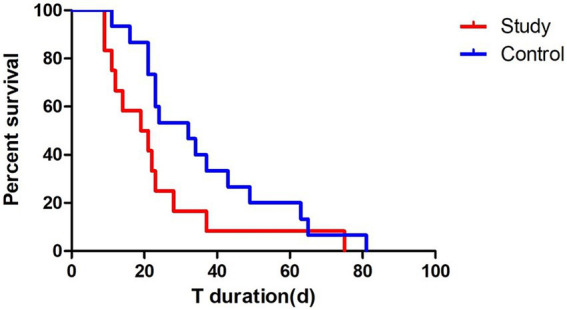
Passive verticalization was well-tolerated and associated with a significant reduction in ICP (10.62 ± 2.13 vs. 8.38 ± 2.27 mmHg, < 0.05) without affecting CPP or PRx. Neurological function improved significantly (GCS: 7.90 → 10.07; CRS-R: 8.17 → 12.03; all < 0.05), and delirium severity declined (ICDSC: 5.97 → 1.62). Intervention patients had shorter NSICU and hospital stays, reduced mechanical ventilation duration, earlier enteral nutrition, lower DVT incidence, and superior 6-month ADL and DRS scores.
Passive head-up tilt positioning is a safe, feasible early mobilization strategy in neurocritical care. It improves neurological recovery, reduces complications, and supports long-term functional outcomes. These findings support the incorporation of passive verticalization into early rehabilitation protocols for patients unable to engage in active mobilization.
神经重症监护中推荐早期活动,但针对意识受损患者的被动活动策略仍未得到充分探索。这项回顾性匹配队列研究纳入了前瞻性收集的干预数据,评估了被动头高位倾斜体位对严重神经损伤患者的临床疗效和生理影响。
我们进行了一项前瞻性-回顾性匹配队列研究,涉及58例创伤性脑损伤或高血压性脑出血患者。29例患者使用电动站立床接受标准化被动直立训练;29例匹配对照接受标准护理。在规定时间间隔测量颅内动力学指标(颅内压、脑灌注压和压力反应指数)、呼吸力学、腹内压以及神经学评估指标(格拉斯哥昏迷量表、昏迷恢复量表-修订版、重症监护谵妄筛查量表)。主要结局包括神经外科重症监护病房/医院住院时间、通气时间、并发症发生率以及长期功能结局。
被动直立训练耐受性良好,颅内压显著降低(10.62±2.13 vs. 8.38±2.27 mmHg,P<0.05),且不影响脑灌注压或压力反应指数。神经功能显著改善(格拉斯哥昏迷量表:7.90→10.07;昏迷恢复量表-修订版:8.17→12.03;均P<0.05),谵妄严重程度降低(重症监护谵妄筛查量表:5.97→1.62)。干预组患者的神经外科重症监护病房和医院住院时间更短,机械通气时间缩短,肠内营养开始更早,深静脉血栓发生率更低,6个月时日常生活活动能力和残疾评定量表评分更高。
被动头高位倾斜体位是神经重症监护中一种安全、可行的早期活动策略。它可改善神经功能恢复,减少并发症,并支持长期功能结局。这些发现支持将被动直立训练纳入无法进行主动活动患者的早期康复方案。