Fu Shujun, Zhu Xueran, Huang Fanghua, Chen Xiaoyan
Center for Drug Evaluation, Chinese National Medical Product Administration, Beijing 100076, China.
State Key Laboratory of Drug Research, Shanghai Institute of Materia Medica, Chinese Academy of Sciences, Shanghai 201203, China.
Pharmaceutics. 2025 Aug 20;17(8):1074. doi: 10.3390/pharmaceutics17081074.
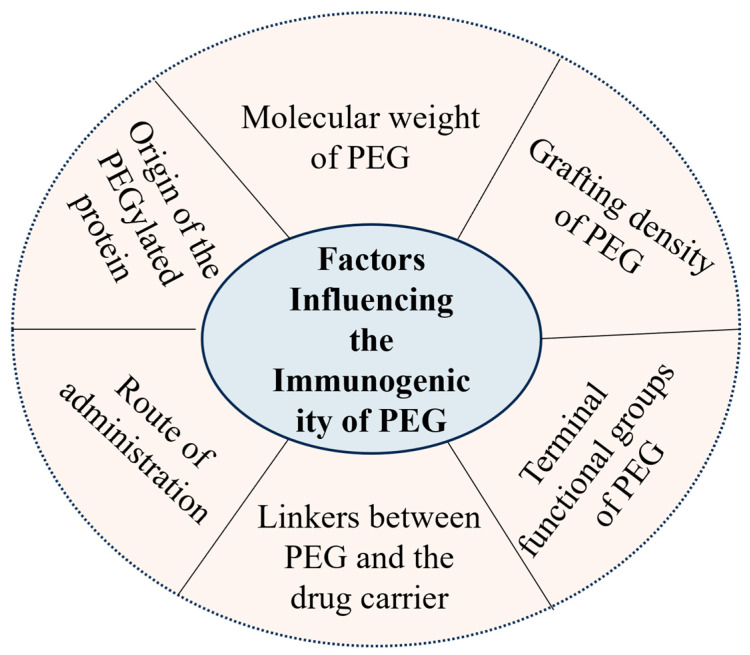
Polyethylene glycol (PEG) has been widely utilized in optimizing therapeutics due to its excellent biocompatibility and chemical stability. However, multiple dosing of PEGylated drugs may result in toxicity due to PEG accumulation in tissues, leading to the formation of anti-PEG antibodies (APAs), which can accelerate drug clearance, reduce efficacy, and alongside enhanced side effects, such as allergic reactions. Notably, pre-existing APAs have also been detected in individuals with no prior exposure to PEGylated drugs, raising additional clinical concerns. This review summarizes the mechanisms of APA generation, the factors influencing PEG immunogenicity, and the biological consequences of APAs on drug pharmacokinetics, efficacy, and safety. We also discuss current challenges in APA detection and highlight strategies to minimize immunogenic responses, including PEG modification, immunomodulation, and alternative polymers. This review aims to provide a comprehensive reference for the rational design, evaluation, and clinical management of PEGylated drugs.
聚乙二醇(PEG)因其出色的生物相容性和化学稳定性而被广泛用于优化治疗药物。然而,多次给药聚乙二醇化药物可能会因PEG在组织中蓄积而导致毒性,进而引发抗PEG抗体(APAs)的形成,这会加速药物清除、降低疗效,并伴随副作用增强,如过敏反应。值得注意的是,在未曾接触过聚乙二醇化药物的个体中也检测到了预先存在的APAs,这引发了更多临床关注。本综述总结了APAs产生的机制、影响PEG免疫原性的因素以及APAs对药物药代动力学、疗效和安全性的生物学后果。我们还讨论了APAs检测中的当前挑战,并强调了将免疫原性反应降至最低的策略,包括PEG修饰、免疫调节和替代聚合物。本综述旨在为聚乙二醇化药物的合理设计、评估和临床管理提供全面的参考。