Quan Yuhang, Zhang Mingxiong, Zheng Mengqiu, Zhao Min, Lv Zhiyong, Liu Guangshun
Department of Anesthesiology, Yunnan Cancer Hospital, Kunming 650118, Yunnan, China.
Department of Surgery of Stomach and Small Intestine, Yunnan Cancer Hospital, Kunming 650118, Yunnan, China.
Medicine (Baltimore). 2025 Aug 29;104(35):e43342. doi: 10.1097/MD.0000000000043342.
Both propofol and sevoflurane, commonly used anesthetics, may cause brain oxygen metabolism abnormalities potentially linked to postoperative cognitive dysfunction (POCD), though their precise relationship with POCD requires further study.
To systematically evaluate sevoflurane inhalation versus propofol intravenous anesthesia effects on postoperative cognitive function in cancer patients.
We searched PubMed, EMbase, Cochrane Library, CBM, CNKI, Wanfang, VIP, and Chinese Biomedical Literature databases (from January 10, 2023) using keywords including Anaesthesia, Anesthetic Agents, Neoplasm, Cancer, Cognition, and Cognitive Function. Only human randomized controlled trials (RCTs) and prospective cohort studies were included; no language restrictions applied.
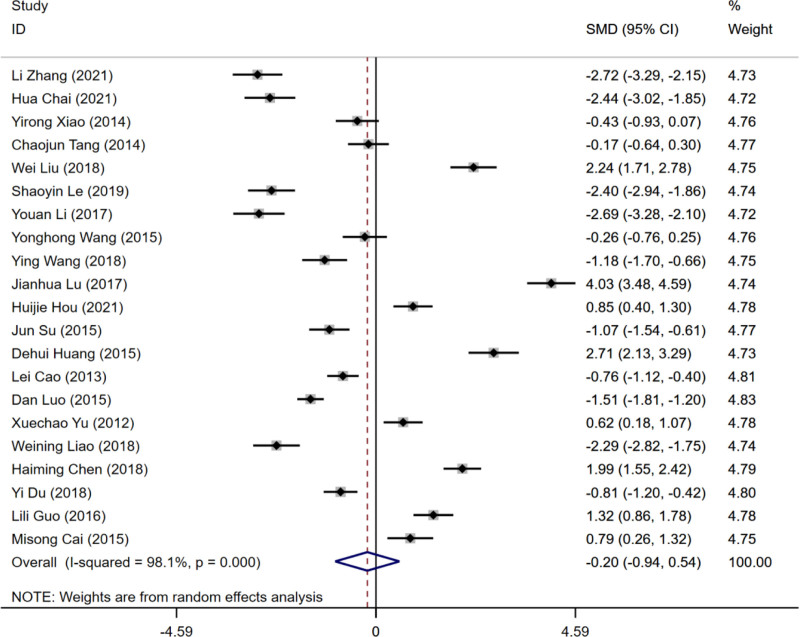
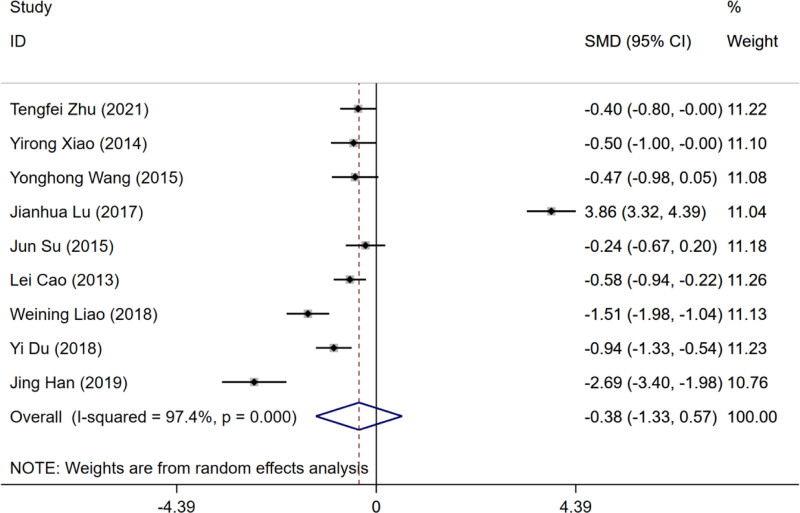
41 studies met criteria (40 RCTs, 1 cohort), involving 4342 patients (2171 sevoflurane, 2171 propofol). Meta-analysis: Overall POCD incidence showed no significant difference between groups. Subgroup analysis revealed significantly increased POCD with sevoflurane at unspecified postoperative times. No significant differences were found at 6 hours, 7 days, or 3 months. Significantly decreased POCD with sevoflurane was observed at 1 and 3 days postoperatively. Preoperative Mini-Mental State Examination (MMSE) scores showed no significant difference. Overall postoperative MMSE scores also showed no significant difference. However, MMSE scores were significantly lower in the sevoflurane group at 1, 3, 6, and 12 hours postoperatively. No significant differences were found at 1, 2, 3, 5, 7 days, or 1 month.
Sevoflurane and propofol anesthesia may exert differing short-term, but not long-term, negative impacts on cognitive function in cancer patients. Overall, no significant difference exists in their effects on postoperative cognitive function.
丙泊酚和七氟醚这两种常用麻醉剂都可能导致脑氧代谢异常,这可能与术后认知功能障碍(POCD)有关,不过它们与POCD的确切关系仍需进一步研究。
系统评价七氟醚吸入麻醉与丙泊酚静脉麻醉对癌症患者术后认知功能的影响。
我们使用包括麻醉、麻醉剂、肿瘤、癌症、认知和认知功能等关键词,检索了PubMed、EMbase、Cochrane图书馆、中国生物医学文献数据库(CBM)、中国知网(CNKI)、万方、维普以及中国生物医学文献数据库(截至2023年1月10日)。仅纳入人类随机对照试验(RCT)和前瞻性队列研究;无语言限制。
41项研究符合标准(40项RCT,1项队列研究),涉及4342例患者(七氟醚组2171例,丙泊酚组2171例)。荟萃分析:总体POCD发生率在两组间无显著差异。亚组分析显示,在未明确的术后时间点,七氟醚组POCD显著增加。在术后6小时、7天或3个月时未发现显著差异。术后1天和3天时观察到七氟醚组POCD显著降低。术前简易精神状态检查表(MMSE)评分无显著差异。总体术后MMSE评分也无显著差异。然而,术后1、3、6和12小时七氟醚组MMSE评分显著更低。在术后1、2、3、5、7天或1个月时未发现显著差异。
七氟醚和丙泊酚麻醉可能对癌症患者的认知功能产生不同的短期但非长期负面影响。总体而言,它们对术后认知功能的影响无显著差异。