Gutiérrez-Ibáñez Cristián, Bowen Julia A, Gaede Andrea H, Altshuler Douglas L, Wylie Douglas R
Department of Biological Sciences, University of Alberta, Edmonton, Alberta, Canada.
Department of Comparative Biomedical Sciences, Royal Veterinary College, London, UK.
J Comp Neurol. 2025 Sep;533(9):e70087. doi: 10.1002/cne.70087.
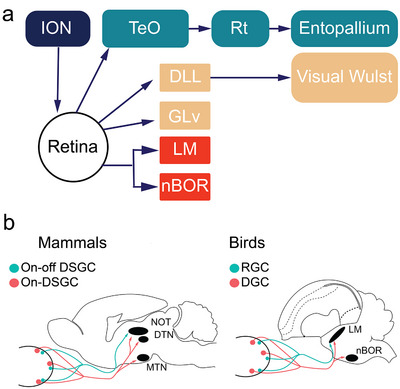
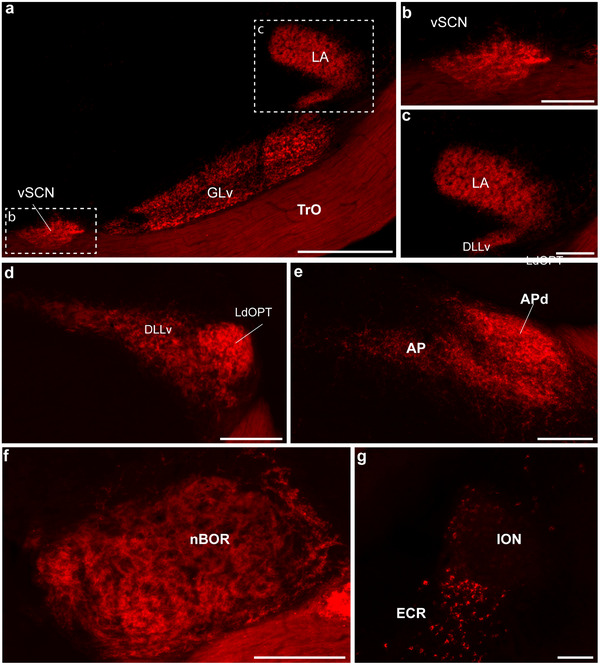
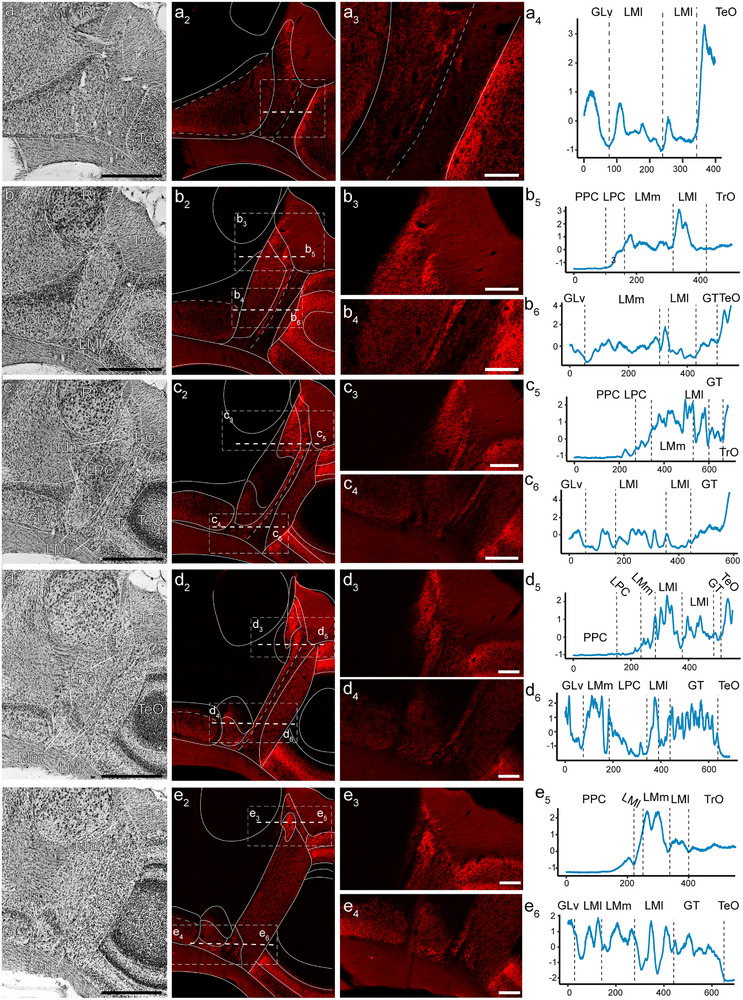
Hummingbirds (family Trochilidae) are easily recognized due to their unique ability to hover. Critical to hovering flight is head and body stabilization. In birds, stabilization during flight is mediated, among other things, by the detection of optic flow, the motion that occurs across the entire retina during self-motion. Given this increased requirement for stabilization, it is not surprising that previous studies have shown that hummingbirds have neural specializations in the visual pathways involved in the detection of optic flow. Particularly, previous studies have found some structural and functional differences in the hummingbird brain, in the pretectal nucleus lentiformis mesencephali (LM): compared to other avian species, LM shows a massive hypertrophy, and LM neurons have unique response properties to optic flow stimuli. Here, we used intraocular injections of a neural tracer, cholera toxin subunit B (CTB) conjugated with a fluorescent molecule, to study the retinal projections in Anna's hummingbirds (Calypte anna) and compare them to those of a similarly sized non-hovering species, the zebra finch (Taeniopygia castanotis). Retinal targets in both birds were similar and correspond closely to those reported in other birds from a variety of avian clades. Importantly, we found differences in the projections to LM between hummingbirds and zebra finches. Consistent with previous reports of specialization of LM, it was more intensely labelled compared to other retinal-recipient nuclei in hummingbirds. Moreover, this increase in intensity was most apparent in the lateral subnucleus. This study reinforces previous evidence that the LM of hummingbirds is adapted to sustain the unique flight abilities of this clade.
蜂鸟(蜂鸟科)因其独特的悬停能力而易于辨认。悬停飞行的关键在于头部和身体的稳定。在鸟类中,飞行过程中的稳定,除其他因素外,还通过光流检测来介导,光流是自我运动期间整个视网膜上发生的运动。鉴于对稳定的这种更高要求,先前的研究表明蜂鸟在参与光流检测的视觉通路中具有神经特化,这并不奇怪。特别是,先前的研究发现蜂鸟大脑中中脑豆状核前核(LM)存在一些结构和功能差异:与其他鸟类物种相比,LM显示出大量肥大,并且LM神经元对光流刺激具有独特的反应特性。在这里,我们使用眼内注射与荧光分子偶联的神经示踪剂霍乱毒素亚基B(CTB)来研究安娜氏蜂鸟(Calypte anna)的视网膜投射,并将它们与大小相似的非悬停物种斑胸草雀(Taeniopygia castanotis)的视网膜投射进行比较。两种鸟类中的视网膜靶点相似,并且与来自各种鸟类分支的其他鸟类中报道的靶点密切对应。重要的是,我们发现蜂鸟和斑胸草雀之间向LM的投射存在差异。与先前关于LM特化的报道一致,与蜂鸟中其他视网膜接受核相比,它的标记更强。此外,这种强度增加在外侧亚核中最为明显。这项研究强化了先前的证据,即蜂鸟的LM适应于维持该分支独特的飞行能力。