Dzwierzynska Jolanta, Lechwar Patrycja
Faculty of Civil and Environmental Engineering and Architecture, Rzeszow University of Technology, Al. Powstancow Warszawy 12, 35-959 Rzeszow, Poland.
Materials (Basel). 2025 Sep 2;18(17):4127. doi: 10.3390/ma18174127.
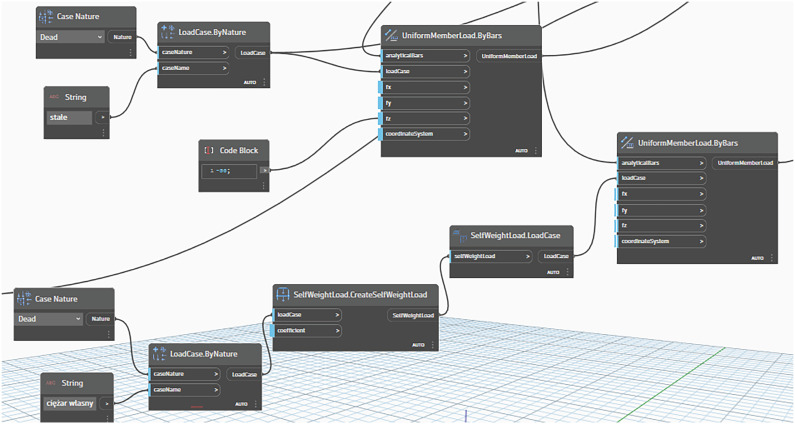
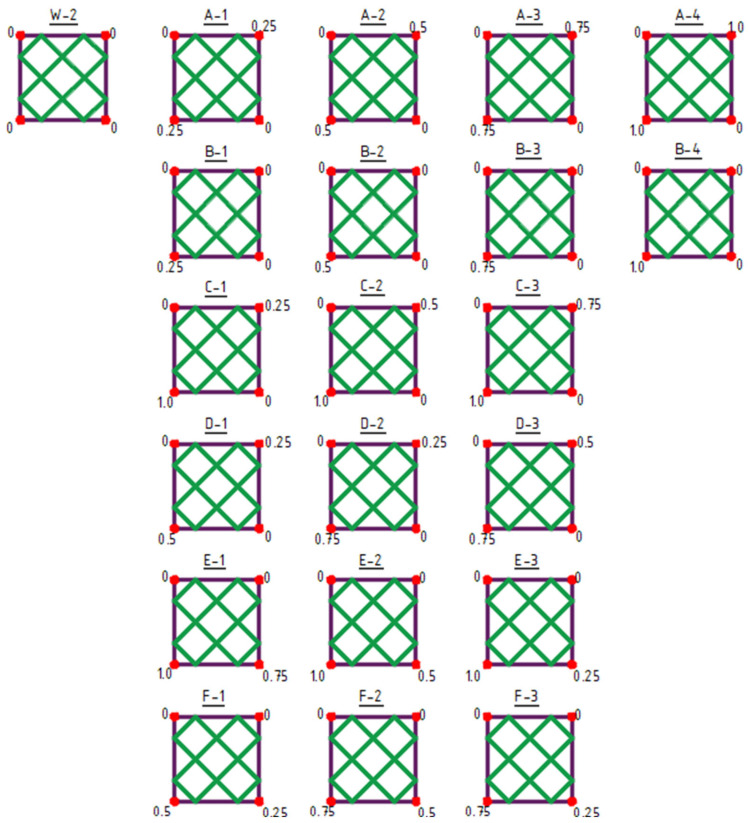
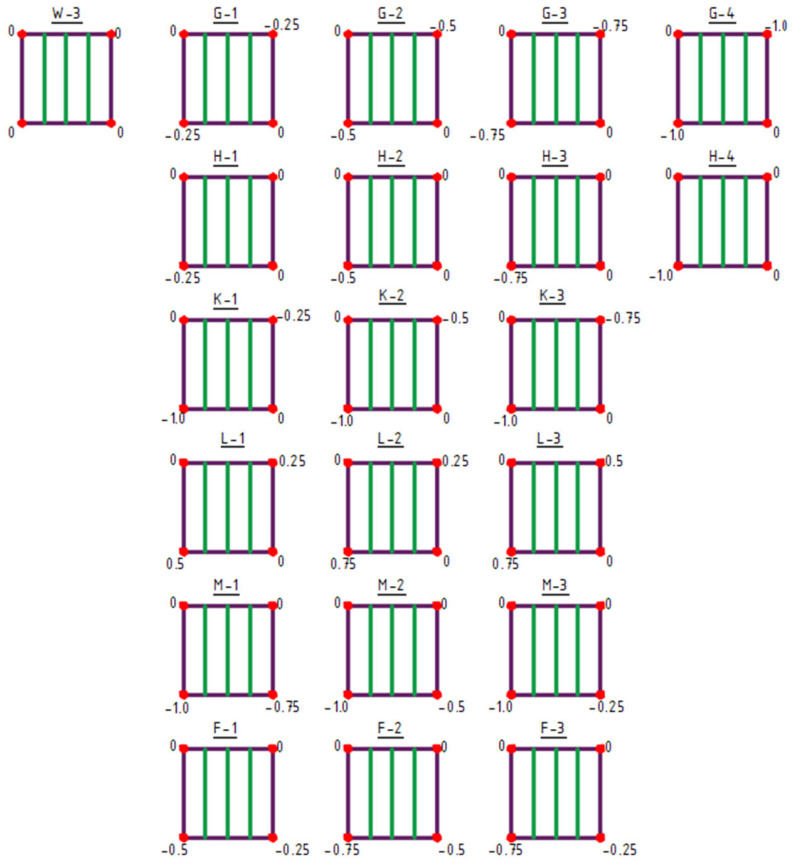
Curved roofs constructed using hyperbolic paraboloid (HP) modules are gaining popularity in structural engineering due to their unique aesthetic and structural advantages. Consequently, these studies have investigated steel bar modules based on HP geometry, focusing on how variations in geometric configuration and bar topology affect internal force distribution and overall structural performance. Each module was designed on a 4 × 4 m square plan, incorporating external bars that formed the spatial frame and internal grid bars that filled the frame's interior. Parametric modeling was conducted using Dynamo, while structural analysis and design were performed in Autodesk Robot Structural Analysis Professional (ARSAP). Key variables included the vertical displacement of frame corners (0-1.0 m at 0.25 m intervals), the orientation and spacing of internal bar divisions, and the overall mesh topology. A total of 126 structural models were analyzed, representing four distinct bar topology variants, including both planar and non-planar mesh configurations. The results demonstrate that structural efficiency is significantly influenced by the geometry and topology of the internal bar system, with notable differences observed across the various structural types. Computational analysis revealed that asymmetric configurations of non-planar quadrilateral subdivisions yielded the highest efficiency, while symmetric arrangements proved optimal for planar panel applications. These findings, along with observed design trends, offer valuable guidance for the development and optimization of steel bar structures based on HP geometry, applicable to both single-module and multi-module configurations.
采用双曲抛物面(HP)模块构建的曲面屋顶,因其独特的美学和结构优势,在结构工程领域越来越受欢迎。因此,这些研究对基于HP几何形状的钢筋模块进行了调查,重点关注几何构型和钢筋拓扑结构的变化如何影响内力分布和整体结构性能。每个模块的设计平面为4×4米的正方形,包括形成空间框架的外部钢筋和填充框架内部的内部网格钢筋。使用Dynamo进行参数化建模,而结构分析和设计则在Autodesk Robot Structural Analysis Professional(ARSAP)中进行。关键变量包括框架角点的垂直位移(0至1.0米,间隔0.25米)、内部钢筋划分的方向和间距,以及整体网格拓扑结构。共分析了126个结构模型,代表四种不同的钢筋拓扑变体,包括平面和非平面网格构型。结果表明,结构效率受内部钢筋系统的几何形状和拓扑结构显著影响,不同结构类型之间存在明显差异。计算分析表明,非平面四边形细分的不对称构型效率最高,而对称布置对平面面板应用最为理想。这些发现以及观察到的设计趋势,为基于HP几何形状的钢筋结构的开发和优化提供了有价值的指导,适用于单模块和多模块构型。