Estrem Cassi, Dua Malvika, Fees Colby P, Hoeprich Greg J, Au Matthew, Goode Bruce L, Deng Lingyi L, Flavell Steven W
Howard Hughes Medical Institute, Picower Institute for Learning & Memory, Department of Brain & Cognitive Sciences, Massachusetts Institute of Technology, Cambridge, MA, USA.
Department of Biology, Brandeis University, Waltham, MA, USA.
bioRxiv. 2025 Sep 3:2025.09.03.674032. doi: 10.1101/2025.09.03.674032.
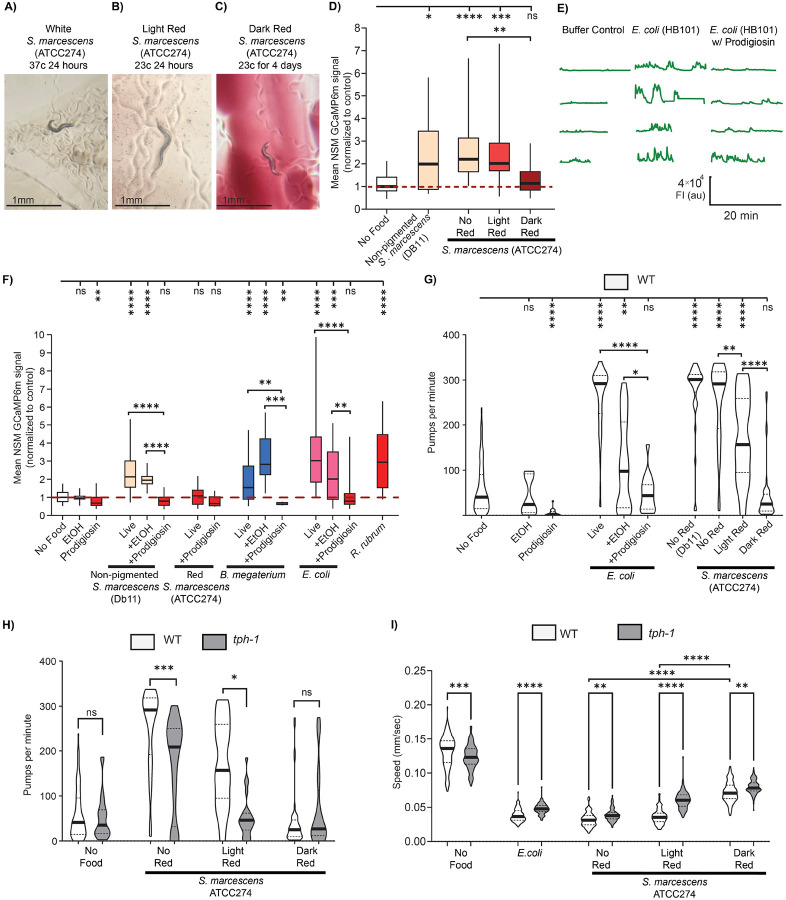
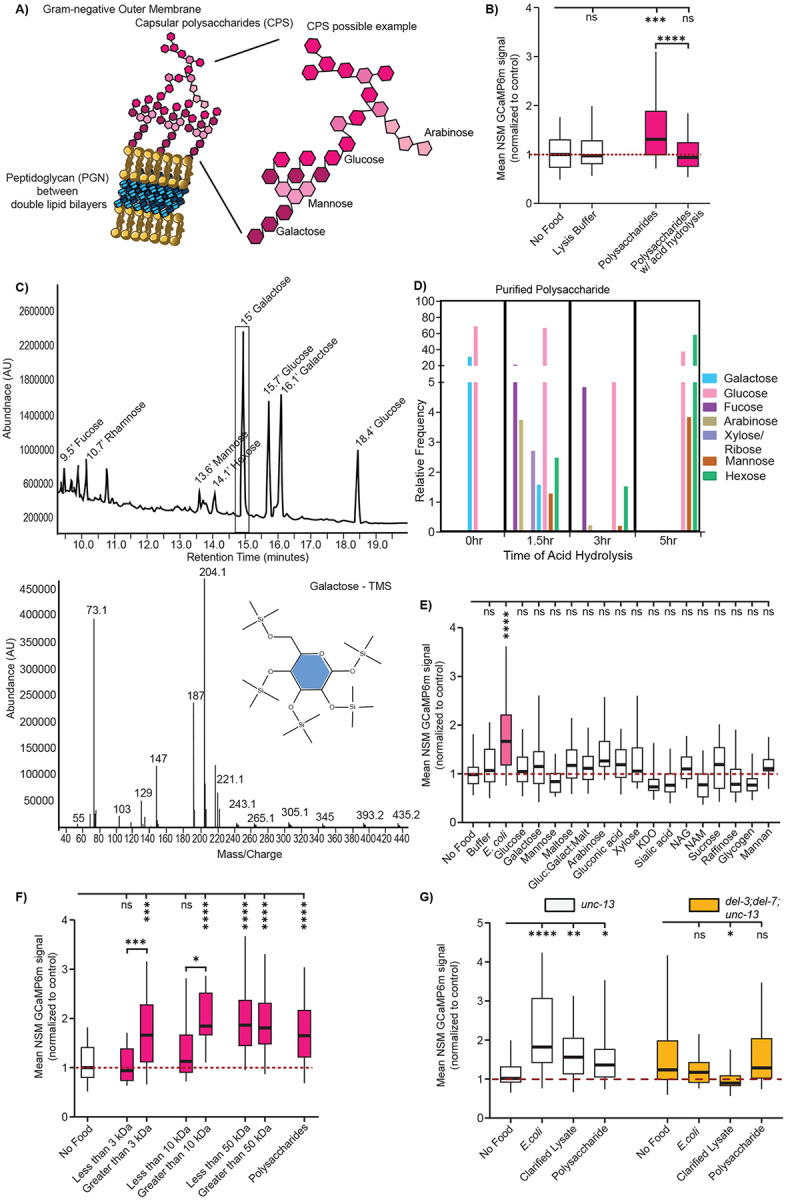
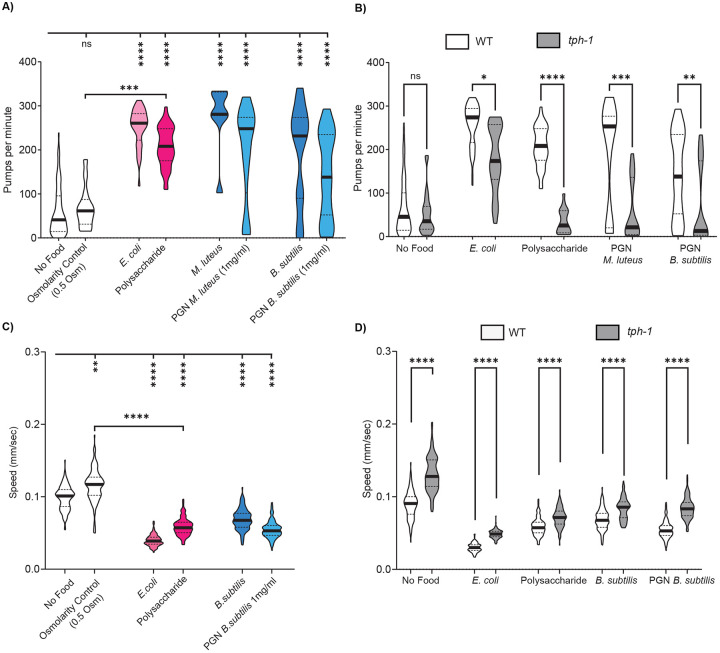
The bacterial microbiome influences many aspects of animal health and disease. Some bacteria have beneficial functions, for example providing nutrients, whereas others act as pathogens. These bacteria are sensed by host cells to induce adaptive changes in physiology and behavior. While immune and intestinal cells detect bacterial signals through well-characterized mechanisms, recent studies indicate that neurons can also directly sense bacterial signals. However, the bacterial sensory mechanisms in neurons are less well understood. In the nematode , the enteric sensory neuron NSM innervates the pharyngeal lumen and is directly activated by bacterial food ingestion; in turn, NSM releases serotonin to induce feeding-related behaviors. However, the molecular identities of the bacterial signals that activate NSM are unknown. To identify these signals, we systematically probed bacterial macromolecules from nutritive bacteria using biochemical approaches and GC-MS identification. We find that polysaccharides from gram-positive and gram-negative bacteria are sufficient to activate NSM. We further identify peptidoglycan from gram-positive bacteria as a specific component capable of activating NSM. NSM responses to polysaccharides require the acid-sensing ion channels DEL-3 and DEL-7, which localize to its sensory dendrite in the pharyngeal lumen. Ingestion of bacterial polysaccharides enhances feeding rates and reduces locomotion, matching the known effects of NSM on behavior. We also examine bacterial signals from pathogenic bacteria that can infect and kill . This approach identifies prodigiosin, a metabolite from pathogenic , as a bacterial cue that prevents NSM activation by nutritive bacterial signals. This study identifies molecular signals that underlie neuronal recognition of nutritive bacteria in the alimentary canal and competing signals from a pathogenic bacterial strain that mask this form of recognition.
细菌微生物群影响动物健康和疾病的许多方面。一些细菌具有有益功能,例如提供营养,而其他细菌则作为病原体起作用。宿主细胞能够感知这些细菌,从而诱导生理和行为上的适应性变化。虽然免疫细胞和肠道细胞通过特征明确的机制检测细菌信号,但最近的研究表明,神经元也可以直接感知细菌信号。然而,神经元中的细菌传感机制尚不太清楚。在秀丽隐杆线虫中,肠道感觉神经元NSM支配咽腔,并通过摄取细菌食物直接被激活;反过来,NSM释放血清素以诱导与进食相关的行为。然而,激活NSM的细菌信号的分子身份尚不清楚。为了识别这些信号,我们使用生化方法和气相色谱-质谱鉴定系统地探测了营养细菌中的细菌大分子。我们发现革兰氏阳性菌和革兰氏阴性菌的多糖足以激活NSM。我们进一步确定革兰氏阳性菌的肽聚糖是能够激活NSM的特定成分。NSM对多糖的反应需要酸敏感离子通道DEL-3和DEL-7,它们定位于咽腔中的感觉树突。摄取细菌多糖可提高进食速率并减少运动,这与NSM对行为的已知影响相符。我们还研究了来自可感染和杀死宿主的病原菌的细菌信号。这种方法确定了灵菌红素,一种来自病原菌的代谢产物,作为一种细菌信号,可阻止营养细菌信号对NSM的激活。这项研究确定了神经元识别消化道中营养细菌的分子信号,以及来自病原菌菌株的竞争性信号,这些信号会掩盖这种识别形式。