Bird Jordan D, Hornby Laura, Hirsch-Reinshagen Veronica, Allen Chloe P, Isac George, Gooderham Peter A, Shemie Sam D, Dhanani Sonny, Thiara Sonny, Stukas Sophie, Grey Rebecca, Foster Denise A, Maier Lauren E, LeBlanc Allana E, Kanji Hussein D, Morelli Tessa F, Agbay Andrew M, Wellington Cheryl L, Chahal Daljeet, Belanger Eric C, Ren Hezhen, Mattu Pushwant S, Su Susan, Hrazdil Chantelle T, Percy Jennifer, Sangha Parveen, Plewes Laurel V, Sweet David D, Romano Kali R, Vu Erik N, Chittock Dean R, Dhingra Vinay K, Henderson William R, Garraway Naisan R, Morad Hameed S, Finlayson Gordon N, MacLeod David B, Gibbons Travis D, Ainslie Philip N, Hoiland Ryan L, Griesdale Donald E, Ronco Juan J, Sekhon Mypinder S
Division of Critical Care Medicine, Department of Medicine, Faculty of Medicine, Vancouver General Hospital, University of British Columbia, Vancouver, British Columbia, Canada.
Department of Pathology and Laboratory Medicine, Faculty of Medicine, Vancouver General Hospital, University of British Columbia, Vancouver, British Columbia, Canada.
Nat Med. 2025 Oct;31(10):3542-3552. doi: 10.1038/s41591-025-03889-z. Epub 2025 Oct 16.
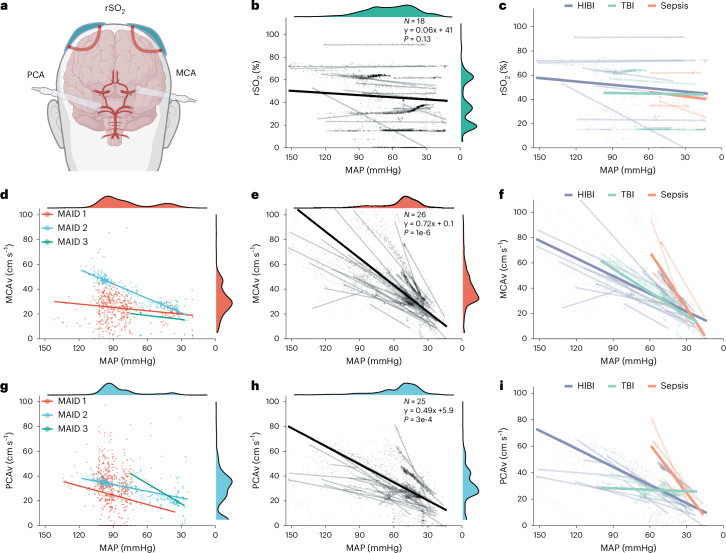
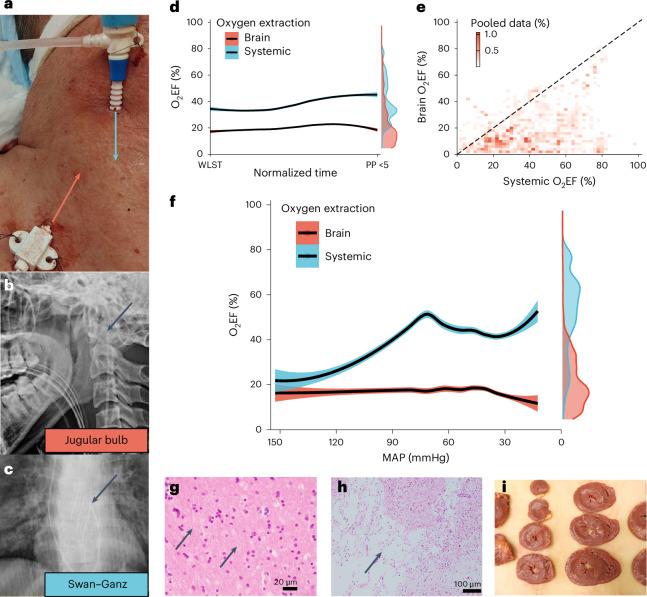
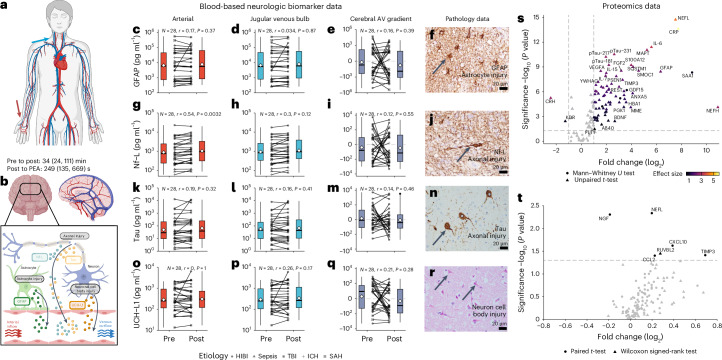
The dying process from circulatory arrest is an underexplored domain in humans and has transdisciplinary pertinence. Here we conducted a prospective, observational cohort study of the dying process in 39 adults, with a multimodal assessment of cerebrovascular and cardiovascular physiology. We found that cerebral blood velocities and brain tissue oxygen tensions ceased before systemic hemodynamics. The brain exhibited diffusion limitation of oxygen extraction during the dying process compared with extracranial tissues. Anterior and posterior brain circulations had differences in timing of cessation of circulation and physiologic responses during the dying process. Blood-based neurologic biomarkers from the brain did not change during the associated ischemia related to the dying process. Heart pathology was associated with the length of the dying process. This study provides proof-of-concept of an in vivo human model to comprehensively investigate severe cerebral ischemia and the human dying process. ClinicalTrials.gov registration: NCT06130033 .
循环骤停导致的死亡过程在人类中是一个未被充分探索的领域,具有跨学科相关性。在此,我们对39名成年人的死亡过程进行了一项前瞻性观察队列研究,对脑血管和心血管生理进行了多模式评估。我们发现,脑血流速度和脑组织氧张力在全身血流动力学停止之前就已停止。与颅外组织相比,大脑在死亡过程中表现出氧摄取的扩散限制。大脑前后循环在死亡过程中的循环停止时间和生理反应存在差异。与死亡过程相关的缺血期间,来自大脑的血液神经生物标志物没有变化。心脏病理与死亡过程的持续时间有关。本研究为全面研究严重脑缺血和人类死亡过程的体内人体模型提供了概念验证。ClinicalTrials.gov注册号:NCT06130033 。