
Pregnancy complications in women with an inborn error of immunity: a systematic review.
作者信息
Yakut Bengisu, Knaapen Anna C R, Cui Xin Yu, van Hagen P Martin, Dalm Virgil A S H, Mulders Annemarie G M G J, Rombach Saskia M
机构信息
Department of Internal Medicine, Division of Allergy and Clinical Immunology.
Department of Immunology.
出版信息
Curr Opin Allergy Clin Immunol. 2025 Dec 1;25(6):464-477. doi: 10.1097/ACI.0000000000001122. Epub 2025 Oct 24.
PURPOSE OF REVIEW
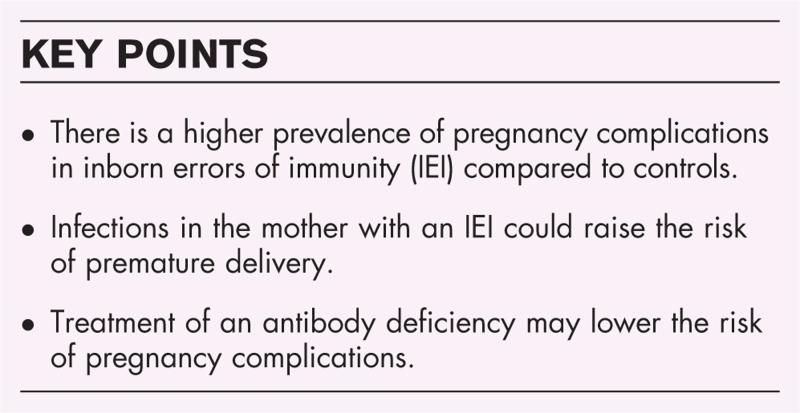
Many patients with inborn errors of immunity (IEI) reach the reproductive age these days. This systematic review focuses on possible complications during pregnancy in women with IEI.
RECENT FINDINGS
The total number of pregnancies reported was 2531 in seven cohort studies. A total number of 97 pregnancies was described in case reports. Based on the cohort studies, there was an increased prevalence of preterm births (10.4-13%), caesarean sections (14-18%) and low neonatal weight at birth (4.5-16.5%) in women with IEI compared to control groups (P < 0.05). There was no difference in the prevalence of ectopic pregnancies, terminated pregnancies, gestational diabetes, spontaneous abortions and stillbirths in women with IEI compared to control populations based on the available cohort studies. Case reports showed infections in women with IEI were associated with premature delivery of the infant and an emergency caesarean section. Furthermore, women with IEI who previously experienced pregnancy complications, had uncomplicated pregnancies after immunoglobulin replacement therapy (IGRT).
SUMMARY
There was a higher prevalence of preterm births, caesarian sections and low neonatal birth weight in pregnant women with IEI compared to control groups. Treatment of antibody deficiencies may lower the risk of pregnancy complications.

 Zotero 插件