Matsaniotis N, Kiossoglou K, Maounis F, Anagnostakis D
J Clin Pathol. 1970 Oct;23(7):553-7. doi: 10.1136/jcp.23.7.553.
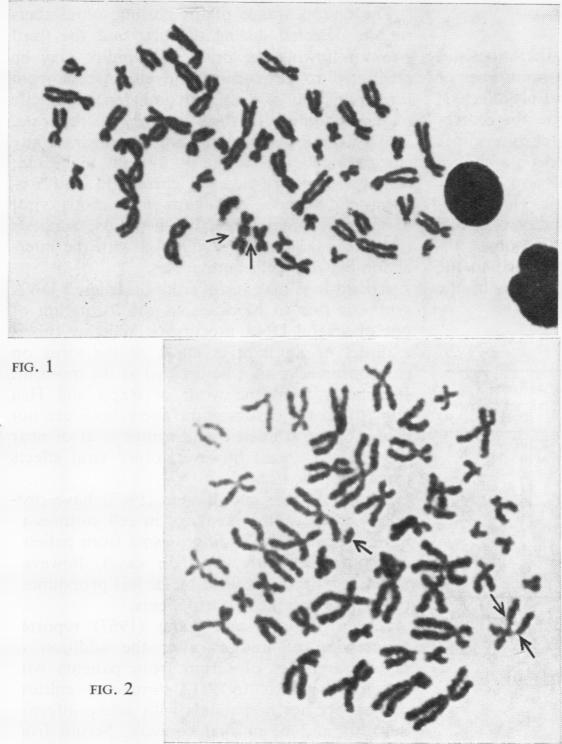
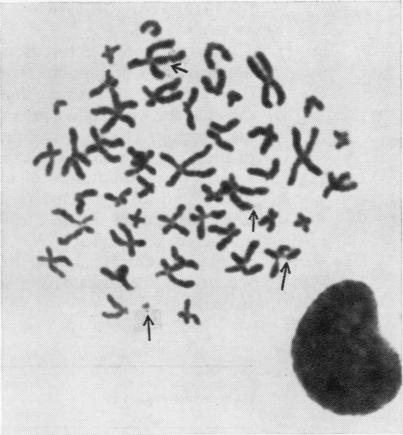
Structural chromosomal aberrations, in the form of breaks, were found in a significantly higher proportion of bone marrow cells in patients with infective hepatitis than in controls. These anomalies were observed during the first and third weeks after the onset of jaundice but had subsided by the sixth week. Chromosomal aberrations did not appear to be related to the severity of infective hepatitis or to the sex or age of the patients.The distribution of chromosomal abnormalities did not appear to be random; they were observed predominantly in the A(2) and B(4-5) series. Since no abnormalities were detected in the G-group chromosomes, no evidence in support of a relationship between infective hepatitis and Down's syndrome was obtained. Numerical chromosomal aberrations were not observed, nor was any evidence obtained that mitotic activity of bone marrow cells is suppressed in patients with infective hepatitis.
与对照组相比,感染性肝炎患者骨髓细胞中出现染色体结构异常(断裂形式)的比例显著更高。这些异常在黄疸出现后的第一周和第三周被观察到,但在第六周时已消退。染色体异常似乎与感染性肝炎的严重程度、患者的性别或年龄无关。染色体异常的分布似乎并非随机;它们主要出现在A(2)和B(4 - 5)系列中。由于在G组染色体中未检测到异常,因此未获得支持感染性肝炎与唐氏综合征之间存在关联的证据。未观察到染色体数目异常,也未获得任何证据表明感染性肝炎患者的骨髓细胞有丝分裂活性受到抑制。