Diener B, Carrick L, Berk R S
Infect Immun. 1973 Feb;7(2):212-7. doi: 10.1128/iai.7.2.212-217.1973.
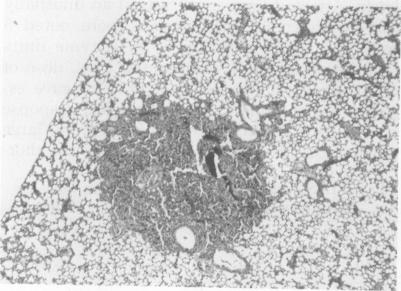
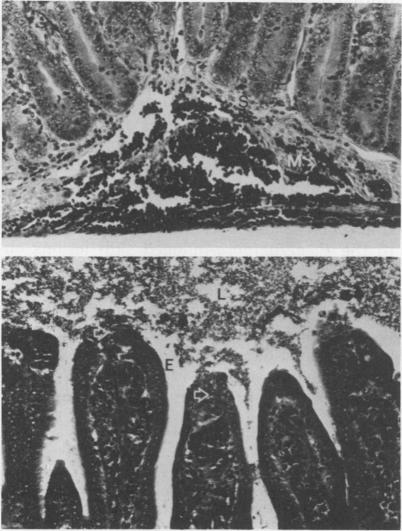
An extracellular protease from Pseudomonas aeruginosa having collagenase activity was assayed in vivo. The lethality of the enzyme for white female mice was determined by use of intravenous, intraperitoneal, intranasal, and subcutaneous routes, respectively. The collagenase exhibited the following 72-hr mean lethal dose values: intranasally, 55 collagenase units; intraperitoneally, 148 collagenase units; and intravenously, 288 collagenase units. In the concentrations tested, no lethality was obtained when the subcutaneous route was employed. Gross and microscopic studies revealed that the collagenase was capable of eliciting a variety of tissue responses in mice depending upon its route of administration. Intranasal instillation resulted in confluent pulmonary hemorrhage, whereas intraperitoneal injections resulted in severe abdominal hemorrhage with foci on the intestinal serosa. Intravenous injections elicited abdominal hemorrhage and petechial hemorrhage with focal necrosis of the lungs, whereas subcutaneous injections resulted in necrotic, ulcerating lesions.
对一株具有胶原酶活性的铜绿假单胞菌胞外蛋白酶进行了体内试验。分别通过静脉内、腹腔内、鼻内和皮下途径测定了该酶对白色雌性小鼠的致死性。该胶原酶表现出以下72小时平均致死剂量值:鼻内给药为55个胶原酶单位;腹腔内给药为148个胶原酶单位;静脉内给药为288个胶原酶单位。在所测试的浓度下,采用皮下途径时未观察到致死性。大体和显微镜检查显示,胶原酶根据其给药途径能够在小鼠体内引发多种组织反应。鼻内滴注导致肺出血融合,而腹腔内注射导致严重的腹部出血,肠浆膜有病灶。静脉内注射引发腹部出血和瘀点性出血,并伴有肺部局灶性坏死,而皮下注射导致坏死性溃疡病变。