Sasaki T
J Bacteriol. 1972 Jan;109(1):169-78. doi: 10.1128/jb.109.1.169-178.1972.
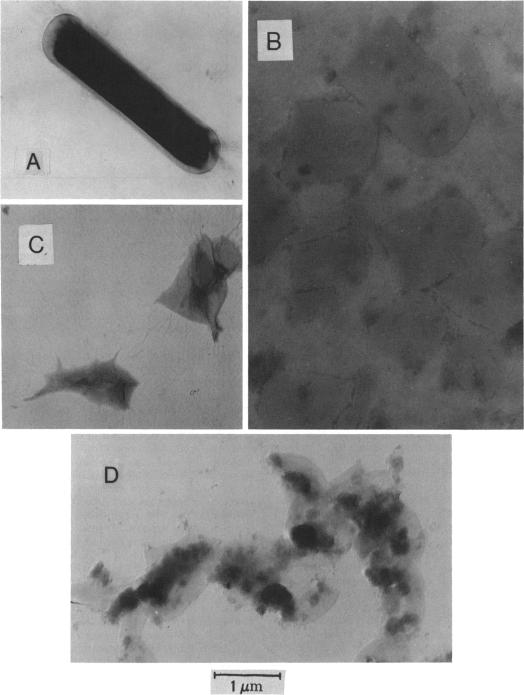
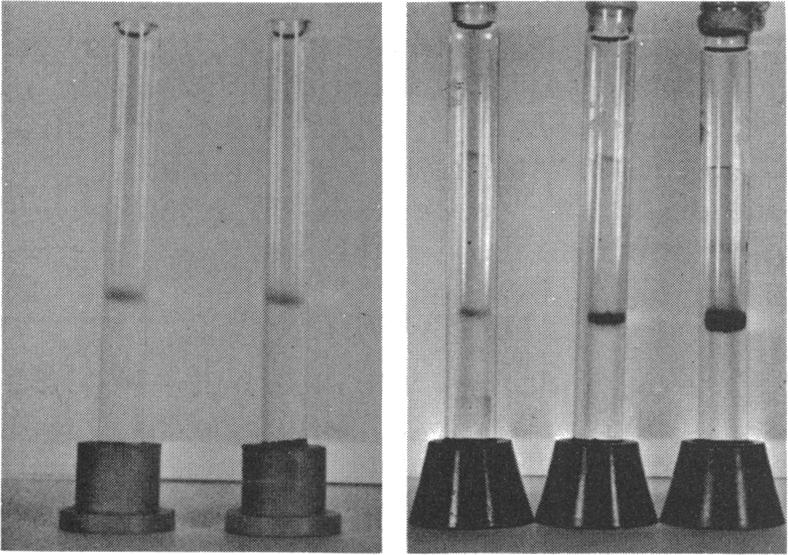
The vitamin B(12)-binding property of Lactobacillus leichmannii ATCC 7830 has been studied. The organism could bind 0.52 mug of B(12) per mg of cells. With regard to the cellular site for B(12) accumulation, three-quarters of the B(12) bound to the cell was found in the crude cell wall fraction, and the remaining one-quarter was found in the particulate (ribosome) fraction. After receiving enzymatic treatments with ribonuclease, lipase, and trypsin, the wall fraction retained three-fifths of the initial B(12). The possibility of cross-contamination of the wall and particulate fractions was excluded by measuring the contents of ribonucleic acid and hexosamines in each fraction. The B(12)-binding activity of the wall was destroyed by pretreatment of the wall with pepsin, Pronase, or trypsin. However, once bound to the wall, the B(12) was not released by the same treatments. These facts suggest that B(12) is bound to a polypeptide in the wall on which these enzymes act and that, once bound, B(12) somehow inhibits the enzymatic actions as described earlier with L. delbrueckii no. 1. A B(12)-polypeptide complex was isolated by treatment with 0.2 n HCl from walls to which B(12) had been bound. The complex was then purified. The complex moves as a single band on polyacrylamide gel electrophoresis. Its molecular weight was estimated around 21,500 with microheterogeneity on a Sephadex G-75 column. The mode of B(12) binding was found to be similar to that of L. delbrueckii.
对赖氏乳杆菌ATCC 7830的维生素B12结合特性进行了研究。该微生物每毫克细胞可结合0.52微克的B12。关于细胞内B12积累的位点,发现结合到细胞上的B12有四分之三存在于粗细胞壁部分,其余四分之一存在于颗粒(核糖体)部分。在用核糖核酸酶、脂肪酶和胰蛋白酶进行酶处理后,细胞壁部分保留了初始B12的五分之三。通过测量各部分中核糖核酸和己糖胺的含量,排除了细胞壁和颗粒部分交叉污染的可能性。细胞壁的B12结合活性可通过用胃蛋白酶、链霉蛋白酶或胰蛋白酶对细胞壁进行预处理而被破坏。然而,一旦B12与细胞壁结合,相同处理不会使其释放。这些事实表明,B12与细胞壁上这些酶作用的一种多肽结合,并且一旦结合,B12以某种方式抑制了如前文所述的德氏乳杆菌1号的酶促作用。通过用0.2N盐酸处理已结合B12的细胞壁,分离出了一种B12 - 多肽复合物。然后对该复合物进行了纯化。该复合物在聚丙烯酰胺凝胶电泳上呈单一泳带移动。在Sephadex G - 75柱上其分子量估计约为21,500,存在微不均一性。发现B12的结合模式与德氏乳杆菌相似。