Aherne W, Bird T, Court S D, Gardner P S, McQuillin J
J Clin Pathol. 1970 Feb;23(1):7-18. doi: 10.1136/jcp.23.1.7.
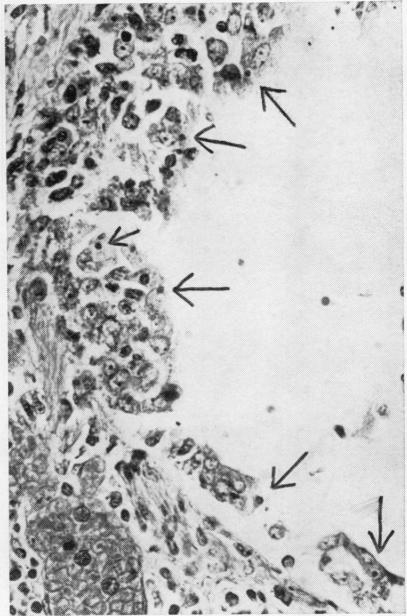
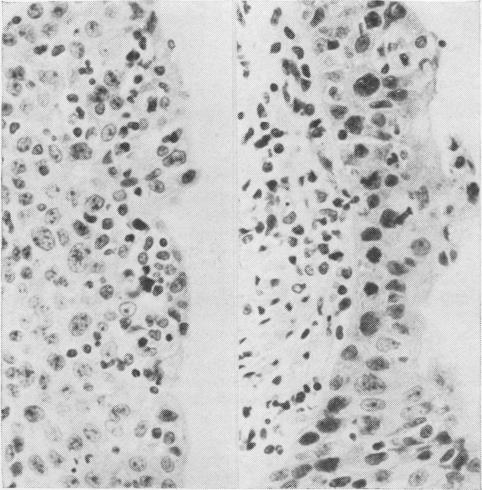
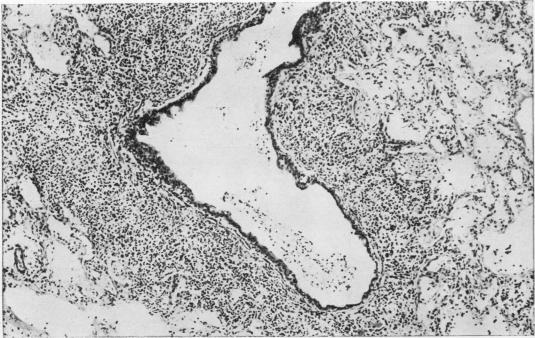
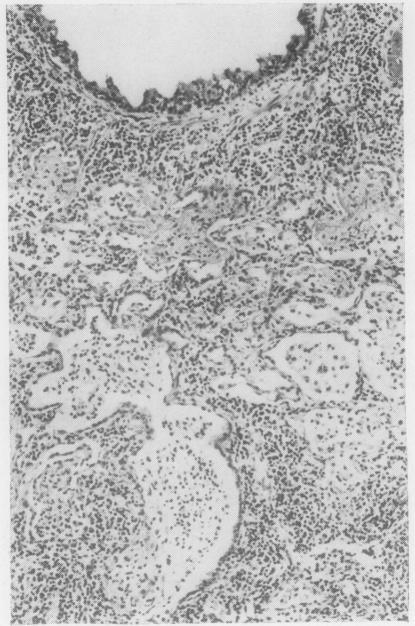
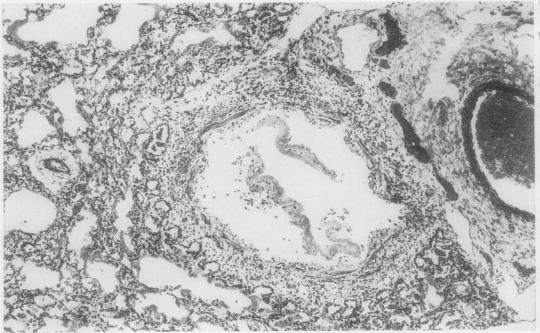
The pathological changes are described in 22 children with proven or suspected virus infection of the lower respiratory tract. Two main patterns of disease were found: acute bronchiolitis and interstitial pneumonia. Particular viruses were not specifically associated with particular histological changes. The prime importance of the respiratory syncytial virus (RSV) as a cause of disease and death in young infants is again shown. Structural lesions and clinical dysfunction correlate fairly well; in acute bronchiolitis the main lesion is epithelial necrosis when a dense plug is formed in the bronchiolar lumen leading to trapping air and other mechanical interference with ventilation: in interstitial pneumonia there is widespread inflammation and necrosis of lung parenchyma, and severe lesions of the bronchial and bronchiolar mucosa as well. The implications of these structural changes for clinical management are discussed. The possibility of a hypersensitivity reaction in the cot death syndrome is raised, mediated by a serum antibody-antigen-complement reaction.
对22名已证实或疑似下呼吸道病毒感染的儿童的病理变化进行了描述。发现了两种主要疾病模式:急性细支气管炎和间质性肺炎。特定病毒与特定组织学变化之间没有特异性关联。呼吸道合胞病毒(RSV)作为幼儿疾病和死亡原因的首要重要性再次得到体现。结构病变与临床功能障碍相当吻合;在急性细支气管炎中,主要病变是上皮坏死,此时细支气管腔内形成致密栓子,导致空气滞留以及对通气的其他机械性干扰:在间质性肺炎中,肺实质广泛炎症和坏死,支气管和细支气管黏膜也有严重病变。讨论了这些结构变化对临床管理的影响。提出了婴儿猝死综合征中由血清抗体 - 抗原 - 补体反应介导的超敏反应的可能性。