Kappen L S, Goldberg I H
Proc Natl Acad Sci U S A. 1984 Jun;81(11):3312-6. doi: 10.1073/pnas.81.11.3312.
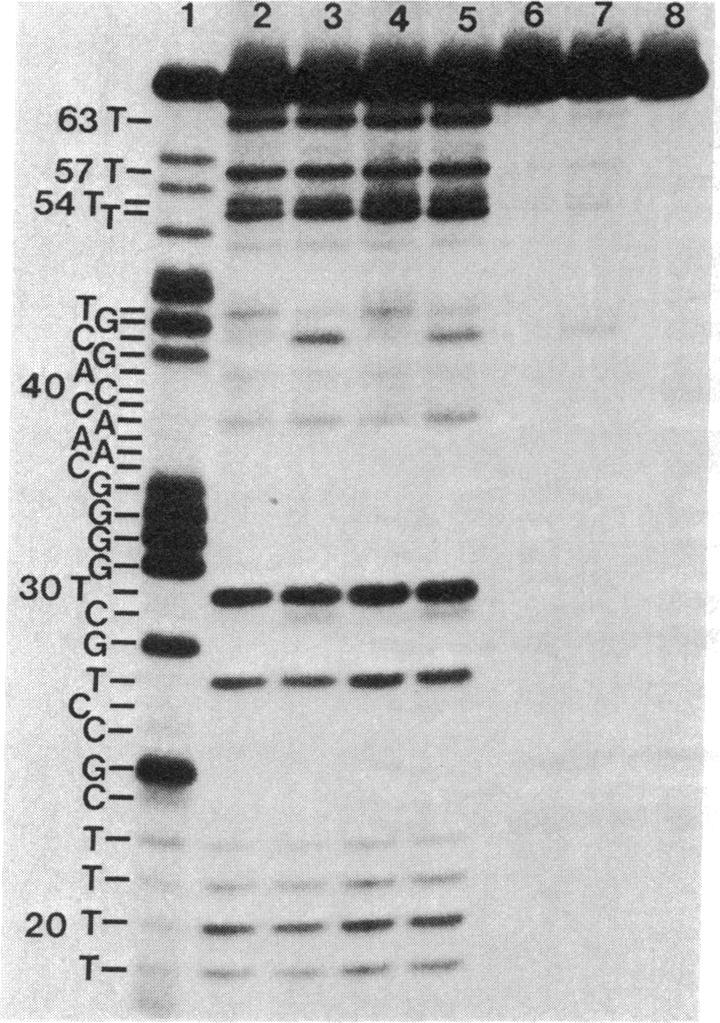
The ability of neocarzinostatin (NCS) chromophore to damage DNA, as manifested by strand breaks and base release, is markedly decreased under anaerobic conditions but can be restored by nitroaromatic radiation sensitizers, which by themselves have no effect. The effectiveness of these compounds is correlated with their electron affinity as measured by their one-electron reduction potentials and is inversely related to the concentration of thiol used to activate the NCS. Whereas strand breaks with thymidine 5'-aldehyde at the 5' end and released thymine are the main DNA damage products in O2, under anaerobic conditions misonidazole causes a marked increase in the release of thymine and in the formation of breaks with 5'- phosphate ends. In both cases the 3' end of the break carries a phosphate group, and the attack-site specificity of spontaneous and alkali-labile DNA strand breakage and base release are identical. In O2, misonidazole does not affect the extent of DNA damage or alter the distribution of DNA damage products found with NCS alone. The data do not distinguish whether the nitroaromatic compounds function by interacting with NCS-induced nascent damage on the DNA, by being converted by activated NCS into a DNA-damaging species, or by participating in the activation of NCS to a DNA-damaging species. The implications of these results for the treatment of hypoxic tumor cells with the combined use of radiomimetic drugs and radiation sensitizers are discussed.
新制癌菌素(NCS)发色团损伤DNA的能力,如通过链断裂和碱基释放所表现的,在厌氧条件下显著降低,但可被硝基芳香族辐射增敏剂恢复,而这些增敏剂本身并无作用。这些化合物的有效性与其通过单电子还原电位测量的电子亲和力相关,且与用于激活NCS的硫醇浓度呈负相关。在有氧条件下,5'端带有胸腺嘧啶5'-醛且释放胸腺嘧啶的链断裂是主要的DNA损伤产物,而在厌氧条件下,米索硝唑会导致胸腺嘧啶释放显著增加以及5'-磷酸末端断裂的形成显著增加。在这两种情况下,断裂的3'端都带有磷酸基团,自发和碱不稳定的DNA链断裂及碱基释放的攻击位点特异性是相同的。在有氧条件下,米索硝唑不影响DNA损伤程度,也不改变单独使用NCS时发现的DNA损伤产物分布。这些数据无法区分硝基芳香族化合物是通过与NCS诱导的DNA新生损伤相互作用、被活化的NCS转化为DNA损伤物种,还是通过参与NCS向DNA损伤物种的活化来发挥作用。讨论了这些结果对于联合使用放射模拟药物和辐射增敏剂治疗缺氧肿瘤细胞的意义。